Committee tables bill to create state nonprofit security grant program after MEMA briefing
Loading...
Summary
The Judiciary Committee held a work session on LD 2107, a proposal to create a Maine nonprofit security grant program to supplement FEMA awards; members asked about eligibility, administration (AG vs. MEMA), and appropriations, and unanimously voted to table the bill so the sponsor can return with a drafted amendment (including housing the program at MEMA and reducing funding from $2 million to $1.5 million).
The Joint Standing Committee on the Judiciary on Monday took up LD 2107, a bill that would create a Maine nonprofit security grant program intended to help nonprofit organizations improve security at property they own or occupy to guard against hate crimes and terror attacks.
Eli Murphy, the committee’s analyst, told members the bill as printed would place the program in the Attorney General’s office but that the sponsor had indicated an amendment would move administration to the Maine Emergency Management Agency and reduce the proposed appropriation from $2,000,000 to $1,500,000. Murphy told the committee the substantive program language in section 1 — the program’s purpose and eligibility criteria — would likely remain the same regardless of where the program is housed.
“This bill would establish the Maine nonprofit security grant program in the office of the attorney general to provide grants to assist nonprofit organizations to improve security . . . to protect against hate crimes and terror attacks,” Murphy said, summarizing the legislation and its federal counterpart.
MEMA deputy director Joe Licki explained the state’s role implementing FEMA’s federal nonprofit security grant process. He said applicants complete an investment-justification form and that MEMA uses FEMA’s scoring and prioritization tools to rank applications before forwarding packets to FEMA, which makes final award determinations. Licki told the committee that FEMA’s priorities and scoring have varied by year.
Committee members pressed on several practical questions: whether religious nonprofits could qualify, how large federal awards have been, and whether the state program would prioritize federal dollars first. Murphy and MEMA staff said eligibility is based on a tax-exempt status umbrella (referencing federal tax exemption rules) and neutral criteria; they noted federal funds historically have favored infrastructure improvements and that federal caps have ranged from $150,000 to $200,000 per award.
Several members said they wanted narrower eligibility and clearer administration language. Chair Anne Carney proposed tabling the bill to let the sponsor file a drafted amendment that (1) houses the program at MEMA, (2) reduces the fiscal-year appropriation to $1.5 million, and (3) clarifies how state funds would interact with federal awards. Sponsor Representative Michael Brennan told the committee he is amenable to working with MEMA and the analyst to craft that amendment; he noted that other states use combinations of state and federal funding for similar programs.
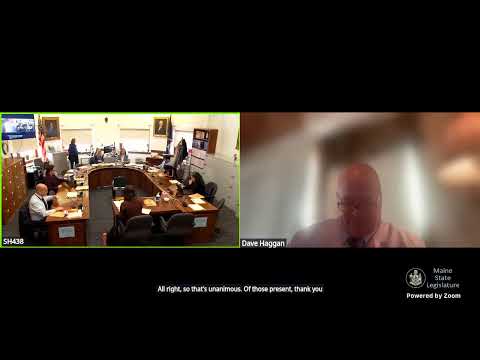
Representative Coom moved to table LD 2107; Representative Sato seconded. The committee approved the tabling motion unanimously of those present.
Next steps: the sponsor will prepare and submit a fully drafted amendment for the committee to consider at a later work session.