Get Full Government Meeting Transcripts, Videos, & Alerts Forever!
Get email alerts on the Procedures topic
No spam. Unsubscribe anytime.
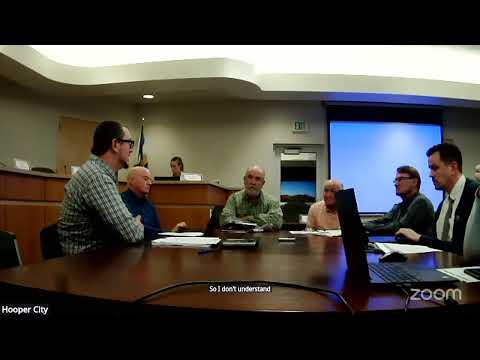
Hooper council debates reading citizens' letters aloud and standards for virtual participation
Summary
Council members discussed whether councilors should read emailed or remote citizens' letters aloud, concerns about verification and perceived authority, and whether Zoom participants should be limited to observation or allowed to speak; the matter was tabled for a future work meeting.
Council members debated a procedural question about whether letters from citizens that arrive by email or through Zoom should be read aloud by council members during meetings. One councilor said that when a member reads another person's letter it can carry added authority and that members must be able to verify authorship before presenting it to the public record.
"My opinion is, more from, like, a procedural courtesy thing... I would not be able to bring them," a council member said about reading letters submitted remotely, describing concerns about verifying that an email author is a constituent. Other members said lengthy emailed submissions could overwhelm meeting time if read aloud and that some limits or verification procedures might be appropriate.
The council also discussed standards for Zoom participants, including expectations for a stable background and an environment free from disturbance; members noted that state code allows presence by video but suggested setting local expectations so speakers can present clearly. Several members said the issue should be refined and brought back in a work-session or future meeting rather than adopted immediately.
Next steps: The council agreed to table formal rule changes and asked staff to draft options for how to handle reading letters and virtual participation in future meetings.