Get Full Government Meeting Transcripts, Videos, & Alerts Forever!
Get email alerts on the Housing topic
No spam. Unsubscribe anytime.
Hooper reviews moderate-income housing monitoring report and ADU policy as state options change
Summary
Hooper heard a presentation from its regional housing adviser about the city's moderate-income housing monitoring report, renewing focus on ADU policy, reporting metrics and new state menu options under HB 37 that can reduce annual reporting burden.
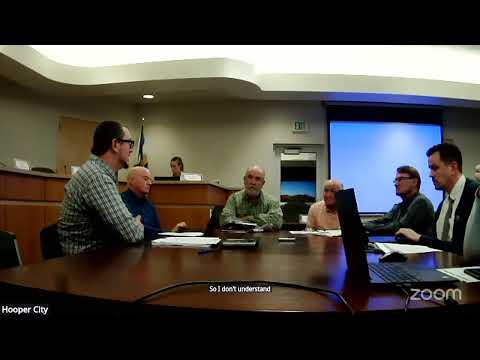
Madison, the city's local administrative adviser from Wausau Regional Council, told the Hooper City Council that the city's next moderate-income housing monitoring report is due Aug. 1 and reviewed the three strategies the city selected in 2023: loosening rules on accessory dwelling units (ADUs); rezoning to allow greater density near transit and commercial centers; and amending land-use rules to permit moderate-income housing in mixed-use areas.
"I work for Wausau Regional Council. I'm your local administrative adviser," Madison said, and walked through the report's required metrics, including parcels available for development, the number of ADU units reported at the date of the report and any business licenses needed to rent ADUs.
The presentation noted that Hooper adopted ADU-related changes in 2024 (ordinance 2024-04 amending Title 10) and has repeatedly considered follow-up amendments such as variance language and licensing. Madison said those actions and planning-commission or council discussions should be documented in the monitoring report as demonstrable progress.
Madison also described recent state legislation (HB 37) that created larger "menu" strategies—examples she named included housing-and-transit reinvestment zones and first-home investment zones—that can count as compliance for multiple reporting years if a city adopts them. "If you are going to do this, make sure it's documented in your monitoring and housing report," she said, noting the advantage of covering multiple years of reporting if the city pursues one of the larger strategies.
Council members asked whether a strategy could be closed out once objectives were achieved and how the state treats rollover of incomplete strategies. Madison said DWS now allows municipalities to list prior actions taken before the 12-month reporting window as ongoing progress if they clearly support the original strategy, and she cautioned that decisions to close or replace a strategy should be made before the fiscal-year cutoff (she said she would confirm the exact deadline).
Several council members also raised the value of a free demographic study offered by the regional council (WFRC) to better define what "affordable" means for Hooper. Madison said using that study would be a valid example of progress to include in the city's next report.
Next steps: Madison recommended the council consider whether to amend milestone dates or select a different menu item before the reporting deadline and said she is monitoring possible legislative changes that could affect reporting requirements.