Get Full Government Meeting Transcripts, Videos, & Alerts Forever!
Get email alerts on the Treatment And Reentry topic
No spam. Unsubscribe anytime.
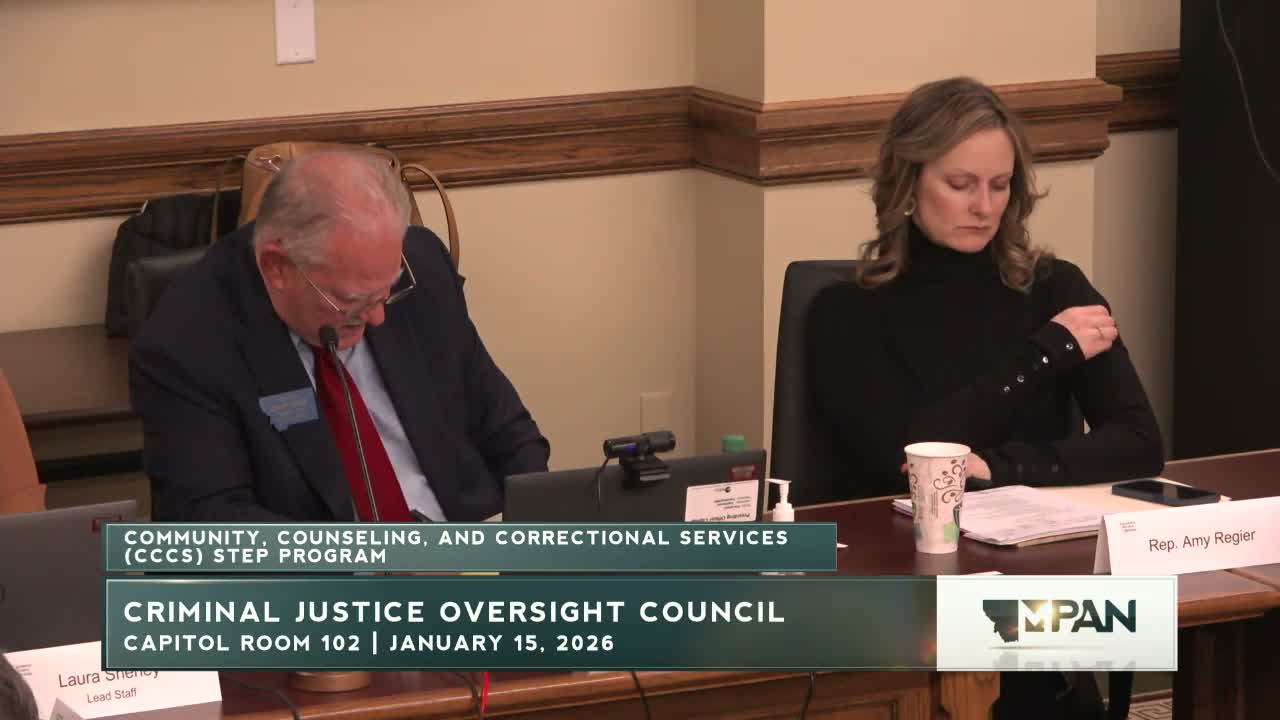
New STEP facility opens in Anaconda; operators describe intensive treatment model for high‑risk offenders
Summary
Community Counseling and Correctional Services and DOC staff briefed the council on STEP, a 68‑bed facility intended to provide intensive ICPM treatment for tier 1–2 offenders with the goal of diverting some people from prison and improving prerelease outcomes; operators asked the council to visit the site and support workforce and outcome measurement needs.
Mike Thatcher, CEO of Community Counseling and Correctional Services (CCCS), described STEP — a 68‑bed program adjacent to the START campus — as an intermediate sanctions and treatment placement for adjudicated high‑risk offenders. Thatcher recounted the project’s design‑build financing history, capacity and the decision to restrict admissions to tier 1 and tier 2 offenders, citing treatment intensity and community safety concerns for excluding tier 3.
Brooks Raymond, STEP unit manager, explained intake assessments, case management, pre‑release planning and the model’s reliance on the Integrated Correctional Program Model (ICPM). Josh Parish, DOC evidence‑based‑practices lead, and Courtney Bergey, clinical director, outlined the program’s modules and the role of risk‑need‑responsivity modeling in assigning tracks.
Thatcher and operators said the facility is nearly staffed and operating (about 46–47 residents on the day of the hearing, roughly 50 admissions in three months). They urged council members to tour the facility and flagged workforce needs, particularly the scarcity of certified clinical staff statewide (noting only roughly a dozen MSOTA‑certified therapists statewide). Operators also emphasized outcome measurement will need multi‑year follow‑up to evaluate recidivism impact, with early internal reporting planned annually and rigorous recidivism studies requiring five years of follow‑up.
Committee members asked about referral flows (parole board referrals and pro‑board activity), length of stay expectations (several months to a year), and whether residents from out‑of‑state placements could return for treatment. Operators said parole and pro‑board referrals are increasing and that STEP intends to serve both in‑prison transfers and other referred candidates. The council encouraged coordination on reporting outcomes and on measures to expand rural capacity and workforce training.