Get Full Government Meeting Transcripts, Videos, & Alerts Forever!
Get email alerts on the Traffic Calming topic
No spam. Unsubscribe anytime.
Nashville DOT proposes speed cushions for Linda Lane after residents report speeding and near misses
Summary
Nashville Department of Transportation presented a preliminary design for Linda Lane that would install three to four speed cushions after residents reported high speeds (85th percentile ~37 mph), stop-sign run-throughs and a knocked-down mailbox; the neighborhood will vote online and the project advances if two-thirds of respondents approve.
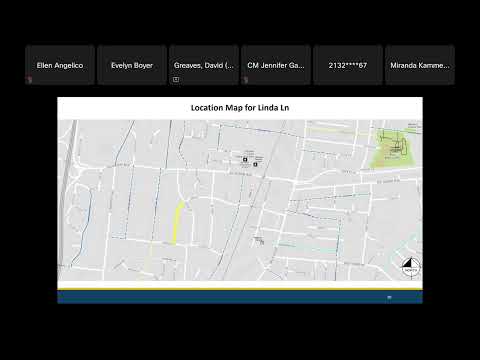
David Greaves, an engineer with the Nashville Department of Transportation’s Neighborhood Street Traffic Calming Program, outlined a preliminary plan on Dec. 9 for Linda Lane that would place three to four sets of speed cushions between Vantreese Road and Beverly Drive and move the project to an online ballot if residents consent.
Greaves said the city selected Linda Lane from roughly 700 applicant streets in September 2025 after measuring vehicle speeds and volumes and reviewing crash history and sidewalk gaps. He reported the street’s 85th‑percentile speed is about 37 miles per hour, a figure he described as “definitely high for a neighborhood,” and said the program’s goal is to encourage travel close to the posted 25 mph speed limit through engineering measures.
Neighbors described frequent commuter cut-through traffic, speeding during rush hours, and safety risks for children and pets. “We just wanted a quieter street,” resident Evelyn said, describing near misses and a fast-moving stream of vehicles during commute periods. Another resident reported a mailbox “taken out” and multiple incidents where drivers ran stop signs, which residents said enforcement alone had not addressed.
Greaves walked through the program toolbox, highlighting speed cushions as the most commonly used device. He said cushions are typically spaced roughly 300 feet apart and are designed with 6-foot gaps so larger emergency vehicles can use the centerline with less impact. He added that cushions do not always fit every location and that alternatives include speed tables, radar feedback signs, lane-narrowing with edge lines, bulb-outs, chicanes and pinch points.
Councilmember Jennifer Gamble voiced support for the neighborhood-driven request and said she would advocate for the neighbors’ preferences. “This is all neighborhood driven,” Gamble said.
Greaves said the next steps are a site visit to confirm widths and grades, refinement of the concept into construction plans, posting those plans online and a mailed invitation to vote. Ballots go to property owners whose lots touch Linda Lane (one vote per owner); the ballot period is six weeks and the project advances to the construction queue if two-thirds of respondents vote yes. Greaves estimated it will take about eight to ten months for the project to reach the front of the construction queue after approval.
On the question of a second neighborhood meeting, residents indicated a second meeting was unnecessary given apparent consensus for cushions; Greaves said the city will proceed with the planned site visit and ballot preparation but will consider changes if neighbors raise objections during the posted comment period or through the survey.
Greaves also noted limits on changing the project footprint at the meeting itself: while the team can look into adding cushions beyond the applied limits, extending a project immediately is uncommon and would typically require a separate application or broader neighbor outreach. He encouraged neighbors who believe adjacent blocks should be included to apply or contact staff so the team can review options.
The DOT will post the final design and voting instructions online at trafficcalming.nashville.gov and notify property owners by mail with a unique ID code for secure voting. For more information or to submit further input, Greaves provided his contact information at the close of the meeting.
The NSTC team will accept public input during the posted comment and survey windows; the formal online ballot will determine whether the cushions move forward to construction.