
Board reviews housing needs assessment, town‑owned site options and $2M federal grant for attainable housing
Get AI-powered insights, summaries, and transcripts
Sign Up Free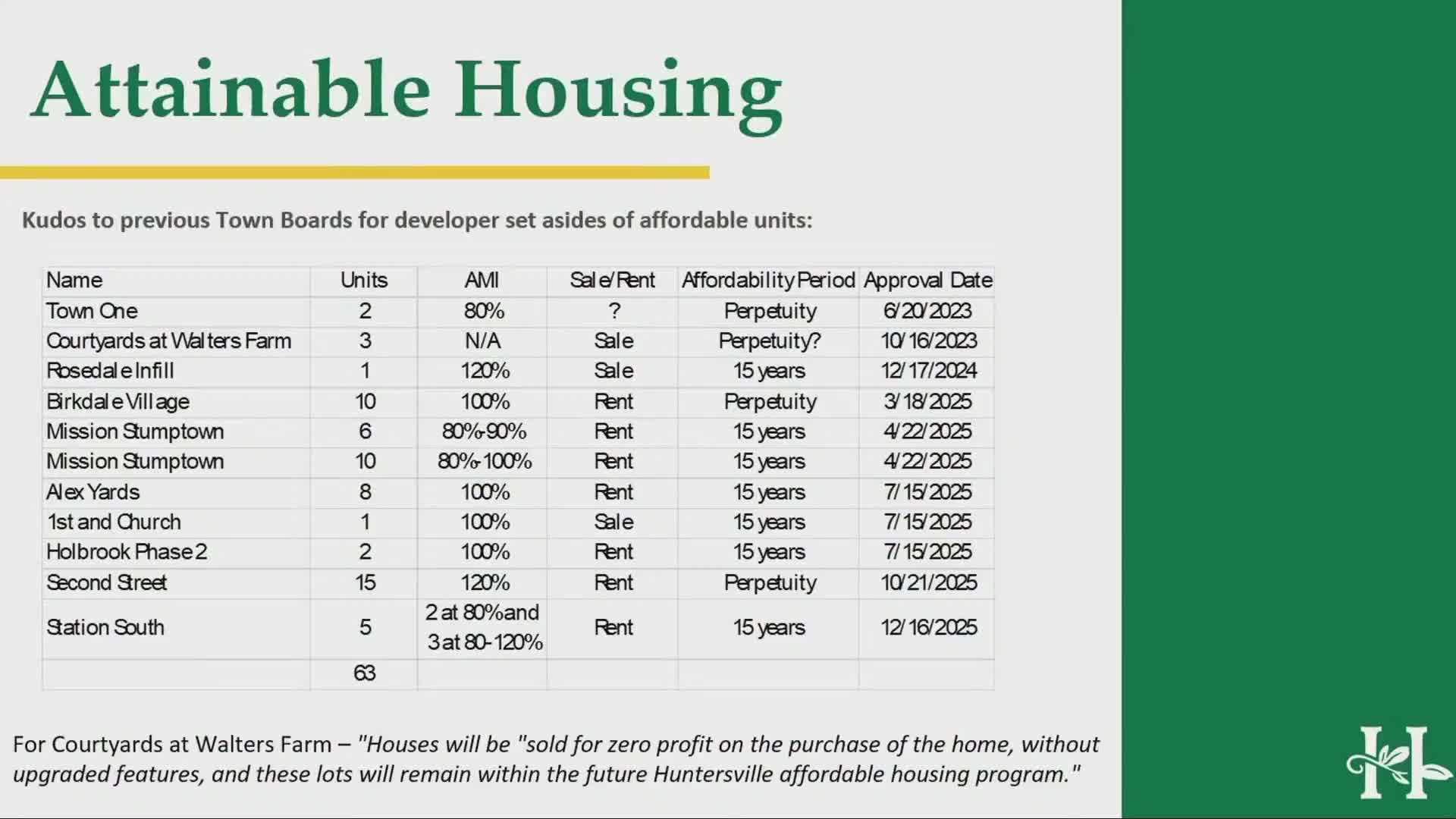
Summary
Staff summarized a DFI housing needs assessment: Huntersville median household income about $120,000, 72% homeownership, more than 2,000 low‑to‑moderate‑income renters with housing need; town has $2 million in federal funds for lot acquisition but sizable funding gaps remain for new construction.
Town staff presented findings from a Development Finance Initiative (DFI) housing needs assessment and reviewed options for using a $2 million federal grant to acquire lots for attainable housing.
DFI’s analysis shows Huntersville has a relatively high median household income (about $120,000) and a 72% homeownership rate, but many workers commute into town and lower‑income residents and workers face affordability pressures. Staff said more than 2,000 low‑to‑moderate‑income renters and over 2,300 low‑to‑moderate‑income homeowners may struggle with housing costs. The report notes local building and land costs have risen substantially since 2018, making subsidy‑dependent projects more difficult to finance.
Staff reviewed town‑owned parcels (including a Rosedale site and others) and said the $2 million federal grant was intended for lot acquisition; the grant is available through about 2031. However, staff explained that typical low‑income housing tax‑credit financing and bank loans still leave a substantial per‑unit gap on hypothetical projects (DFI scenarios showed multi‑million‑dollar deficits for 40–100 unit projects), and that the town currently lacks projects that would qualify for the more favorable 9% tax credits.
Board members discussed negotiating for affordable units during rezoning, potential partnerships with Habitat and faith‑based landowners, and the merits of setting near‑term attainable‑housing goals tied to specific town properties. Staff said they would circulate the full DFI study and follow up with suggestions and feasibility work for preferred town sites.
What’s next: staff will redistribute the DFI report, continue site‑level feasibility work and pursue developer outreach and potential partnerships to close financing gaps.