Get Full Government Meeting Transcripts, Videos, & Alerts Forever!
Get email alerts on the Superintendent Search topic
No spam. Unsubscribe anytime.
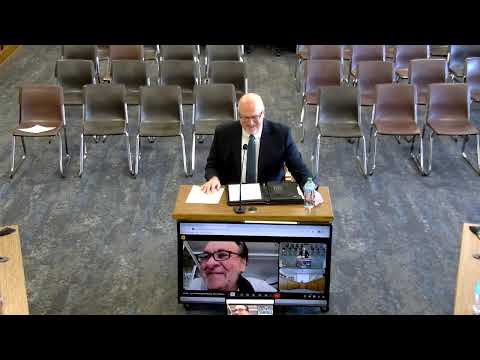
Brainerd board interviews Dr. Mike Neubeck, who cites fiscal turnaround and student-centered programs
Summary
The Brainerd Public School District board interviewed Dr. Mike Neubeck for superintendent. He described prior superintendent experience, a discovered $2 million budget shortfall that required deep cuts, and plans to use diagnostic data and targeted staff development to raise reading and math results.
The Brainerd Public School District School Board on the record interviewed Dr. Mike Neubeck as a candidate for superintendent. Neubeck, currently interim superintendent at Jackson County Central Schools, outlined his career from classroom teacher to district leader and emphasized communication, fiscal stewardship and hands-on student programs as priorities.
Neubeck told the board, "No surprises," when asked how a superintendent should partner with a school board, saying frequent, proactive outreach and visible unity build trust in district leadership. He described meeting regularly with board chairs and offering timely updates so trustees are not surprised by events in the schools.
On finance, Neubeck recounted discovering a significant budget error in a previous district, Byron Public Schools. "By the time March came, we were $2,000,000 in the hole," he said, explaining that prompted roughly $1.6 million in reductions in one round and further cuts later while the district worked with the community and eventually ran a successful referendum cycle. He said similar prioritization would guide any necessary reductions in Brainerd and that, at his current district, administrators are using the strategic plan to target $450,000 in near-term savings.
To address Brainerd’s low proficiency rates in reading and math (board members noted roughly 52% reading and 43% math), Neubeck recommended a data-driven approach. He described using diagnostic tools such as FastBridge and EduCLIMBER to identify student-level gaps and to deliver tiered interventions, combined with concentrated staff development. "If you are going to move the needle, you have to move the needle in staff development," he said, emphasizing frequent monitoring and celebrating incremental gains.
Neubeck described instructional initiatives from his prior roles: a "profile of a graduate" model and project-based learning that led students to design prototypes and digital solutions, which the district showcased to local business and civic partners. He said those efforts improved engagement and provided real-world learning opportunities.
On student safety and mental health, Neubeck described PBIS-style positive recognition ("Mustang cards") and small-group interventions that he said reduced referrals and improved student self-esteem. He cited a small pilot where 20 students with D/F grades were pulled into concentrated supports and by the next semester "we only had 2 that had D's." He presented that as evidence that targeted, relationship-based interventions can yield measurable classroom improvements.
Regarding technology, Neubeck portrayed devices as instructional tools rather than teachers: hands-on materials and workbooks remain important for early grades, while Chromebooks and iPads serve diagnostics and practice. He favors age-appropriate cell-phone limits in school (lockers or caddies during the instructional day) to reduce distraction.
On enrollment decline, Neubeck said districts must retain students by offering distinctive programs and better marketing. He described sending a weekly community newsletter to promote school successes and recommended researching why families leave to guide program development and outreach.
Board members asked what they needed from the superintendent; responses emphasized communication, timely information, and strong relationships. The session concluded with the board preparing round-two questions and a short break to tabulate feedback.
No formal action or vote on hiring occurred during the interview; the board moved to a short break and to prepare next-round questions.