Get Full Government Meeting Transcripts, Videos, & Alerts Forever!
Get email alerts on the Land Use Wetlands topic
No spam. Unsubscribe anytime.
Nashua zoning board denies fire department’s request for gated driveway through wetland buffer
Summary
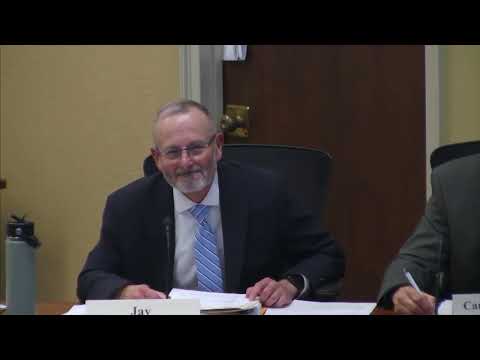
After more than three hours of testimony and objections from neighbors and an alderman, the Nashua Zoning Board of Adjustment denied the City of Nashua’s special-exception request to build a gated driveway through wetland buffer to a proposed fire training facility at the 4 Hills landfill.
The Nashua Zoning Board of Adjustment on Oct. 14 denied a City of Nashua request to construct a gated driveway through wetland buffer to a proposed fire training facility at the 4 Hills landfill, concluding the proposal failed to meet zoning criteria related to neighborhood character and traffic impacts.
Chief Steve Buxton, Nashua Fire Rescue, told the board the department has trained at the landfill for more than 40 years and needs a modernized local training site so crews can train without leaving the city. Buxton said the plan would tap an existing power source near a cell tower, extend a water line roughly 1,000 feet from Teague Drive (instead of a costlier 3,000-foot route), and build a gated driveway used only for scheduled training access. "This will not be utilized as a backdoor to the landfill," Buxton said, adding he had discussed the plan with Department of Public Works staff.
Wetlands consultant Bridal Quigley of Grove Environmental Services said the driveway alignment was shifted to avoid a sensitive vernal pool and minimize impact. She described mitigation measures tracked in permit applications — a large culvert sized for wildlife passage, pollinator-friendly restoration seed mix, erosion control, and timing restrictions for work to reduce harm to wildlife.
Neighbors and Ward 5 Alderman Ernest Jetty urged the board to deny the special exception. Jetty pointed to a subdivision plan and deed language that label the parcel as reserved for drainage and retention and said the proposed use would be "out of character" for a quiet residential neighborhood. Resident Paula Johnson referenced state listings for species such as eastern box turtle and hognose snake in the area and said construction would harm habitat. "This is a residential neighborhood, and you're asking to put a gate there to have fire trucks go through," Johnson said.
Residents raised several practical concerns: narrow local streets used by walkers and children, the need for substantial grading and fill on sloped terrain, potential blasting through ledge rock, uncertainty in notification to nearby households, and a lack of financial detail for mitigation. Multiple speakers asked why city-owned industrial land on Northwest Boulevard or other landfill access points were not used instead.
City Engineer Dan Hudson told the board that "nonbuildable" labels on the original plan typically mean a parcel cannot be used for a residential lot but do not always preclude driveways or nonhabitable structures; he said the training structure itself would be sited on landfill property where structures are allowed. Quigley said the project team is incorporating state Fish & Game comments and that permit conditions would address timing, signage and species protections.
Board members expressed sympathy for both firefighters’ training needs and neighbors’ quality-of-life concerns. Several members said they were satisfied the wetland standards had been addressed, but could not, with a straight face, find the proposal met two key special-exception criteria: that the requested use "will not create undue traffic congestion or unduly impair pedestrian safety," and that the use "will not impair the integrity or be out of character with the district or immediate neighborhood." Board member Robert Shaw moved to deny the special exception; the motion was seconded and the chair announced the board denied the request. The chair noted a 30-day window for appeal or reconsideration.
The board also acknowledged the City Division of Public Works matter on the same landfill property was postponed to Oct. 28; the DPW application could affect future traffic and access decisions. For now, the ZBA concluded the wetlands-permitting route and proposed operational profile did not outweigh neighborhood impacts.
What happens next: the denial stands unless the city files an appeal or a motion for reconsideration within 30 days. The DPW application remains scheduled for Oct. 28 and could prompt further review of landfill access planning.