Get Full Government Meeting Transcripts, Videos, & Alerts Forever!
Get email alerts on the Education topic
No spam. Unsubscribe anytime.
Stewart County students tell Prevention Coalition: make schoolwork relevant, boost teacher supports and expand teen activities
Summary
Three Stewart County students told a Prevention Coalition forum that boredom, curriculum timing and peer pressure are driving disengagement; they urged more teacher supports, regular mentoring programs and community spaces to reduce substance use and broaden youth activities.
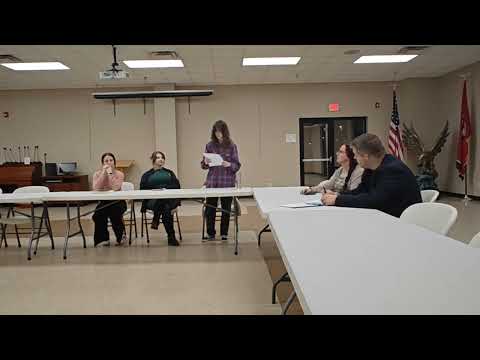
Stewart County students who presented at a Prevention Coalition CATS team forum urged officials and educators to make classroom work more relevant, expand mental-health supports for teachers, and create more activities and spaces for teens.
Melissa Fields, who introduced the forum and identified herself as director of the Prevention Coalition, framed the event as a chance to hear student-proposed solutions. "We have the group chat, and we kinda toss ideas back and forth about what we could do," she said, noting three students presented at the meeting after seven were originally invited.
Student speakers emphasized three recurring themes. Billy White said disengagement often comes from repetitive material and a lack of real-world connections: "students may feel disengaged when the content they are learning is too familiar or repetitive." He proposed more applied lessons, such as using state tax examples to teach algebra, and praised a classroom ticket system that provided timely feedback.
Abigail Inoski, a senior, urged stronger mental-health supports for teachers and a redistribution of non-teaching duties so instructors are not asked to perform work outside their credentials. "I propose that workload to be spaced out better where the appropriate people are hired for extra positions that need to be filled," she said, adding that better counseling awareness for teachers could reduce stress and improve classroom interactions.
Daja Lancaster described peer pressure and early substance use as serious barriers. She said student-led prevention presentations were effective and reported that, when team members asked elementary students about substance use, "Almost all students raise their hands." Lancaster recommended student-facing education tools in addition to apps for anonymous reporting.
During a facilitated discussion students and organizers identified gaps in communication and access to services. Presenters said guidance counselors and coaches can help, but students sometimes do not know who to contact or how to access resources. Teachers and students described prior programs such as "lunch buddies," in which seniors met middle-schoolers, as beneficial and urged repeating the program monthly.
A District 6 school board member commended the students and encouraged them to consider multiple perspectives when making comparisons. Amy Peterson, an eighth-grade teacher who identified herself by name, suggested building sustained programs that begin in middle school and recommended seeking grants to fund mentorship and arts programming.
Organizers said they would pursue follow-ups with school officials to resume student outreach and programming. Fields asked attendees to complete a student survey left on a back table and noted refreshments were provided by Dover Care Center. "If you've got a little folder, it's got a lot of our information in it," she said.
The forum produced no formal votes or policy actions; organizers said they hope to repeat the event and broaden outreach to capture more student voices.