Get Full Government Meeting Transcripts, Videos, & Alerts Forever!
Get email alerts on the Budget topic
No spam. Unsubscribe anytime.
Green Bay board warned of $5M–$8M structural shortfall; staff offers a menu of cuts and community meetings before possible referendum
Summary
District leaders said a structural deficit for 2025–26 now stands at roughly $5M–$5.5M and could reach about $8M if step increases/CPI are restored; staff presented a tiered list of possible reductions and scheduled community feedback sessions ahead of planning for an operational referendum.
The Green Bay Area Public School District reported a projected structural deficit for 2025–26 of about $5 million to $5.5 million, with officials warning that the figure could grow to about $8 million if cost-of-living steps and CPI increases are included.
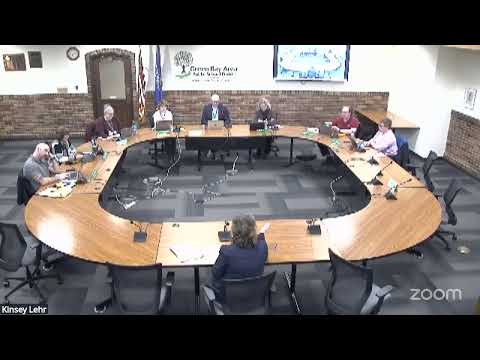
Superintendent Beyer and finance staff told the board at a Feb. 9 work session that the district’s finances reflect longer-term pressures: revenue limits set by the state, declining enrollment, and lower-than-expected special-education reimbursements. District staff said the revenue-limit per-pupil baseline used in the calculations is roughly $11,006.50 and that the district’s operational revenue ceiling places the district below statewide averages. Chief finance presenters noted the district relies heavily on property taxes and state aid—together about 84% of revenues—and that a change in how the state funds vouchers and charter per-pupil payments has accelerated local costs.
Angie Robley and other staff briefed board members on the district’s recent retreat work: administrators, managers and teachers compiled a prioritized list of potential savings and categorized items into tiers. Tier 1 items are mandated by state or federal law and therefore not cuttable; Tier 2 items closely align with the district’s mission; Tier 3 are enhancers and Tier 4 have low impact on students or staff. Examples for public review include transportation revisions, revisiting technology choices (elementary 1:1 device programs), vendor and health-benefit management, limits on nonessential events, and program consolidations.
“These are the things that really make us who we are, and regretfully we need to take a look at some of those operations,” the superintendent said as staff prepared to post the full list in BoardDocs and present it at two community sessions next week (East High School and Southwest High School, both at 6 p.m.). Board members were told that community feedback will be returned to the board for deliberation in March and that final decisions affecting the 2026–27 budget will follow a public timeline.
Board members expressed sharply different views about how to proceed. Member Andrew urged caution about drastic austerity, arguing that programs such as alternative-pathway schools draw students and that eliminating them would accelerate enrollment loss: “We can't be destroying things that will cost us hundreds of students,” he said. Other board members, including James, said they would press for difficult choices now to avoid repeated structural deficits and to preserve fund balance policy (a 15% minimum). Member Alex warned that some proposed changes, such as staff freezes or elimination of key programs, would be “terrible with real deep student and staff impact.”
District staff highlighted one near-term constraint: special education reimbursement. The district said its Special Education Fund (Fund 27) totals about $59 million in budgeted expenditures; historically the district budgeted a conservative 39% state reimbursement but recent estimates have been nearer 35%, creating an estimated $1.5M–$2M shortfall.
Officials said the district’s unassigned fund balance at 06/30/2025 was roughly $60.3 million — around 18% of general fund expenditures — which they described as a healthy reserve that avoids short-term borrowing. Board members debated whether to use a portion of reserves to soften cuts, with some urging limited drawdown and others urging preservation in case of unforeseen federal or state funding changes.
The board was reminded that the district’s $16.5 million operational referendum—approved previously—will expire in 2027–28, and staff said planning toward a possible operational referendum in November is underway. Several board members and staff emphasized that failing a future referendum would force deeper cuts.
Next steps: staff will post the detailed proposed savings list to BoardDocs, hold two community sessions next week, and return consolidated community feedback to the board in March. No final reductions were adopted at the Feb. 9 meeting.
Sources: Superintendent and finance staff presentations and board Q&A at the Feb. 9, 2026 Green Bay Area Public School District work session.