Get Full Government Meeting Transcripts, Videos, & Alerts Forever!
Get email alerts on the Municipal Budget topic
No spam. Unsubscribe anytime.
Mayor Smith and CFO present challenging FY26–27 budget to Norwalk BET; health care, contracts and revaluation drive increases
Summary
Mayor Smith and CFO Jared Schmidt presented the initial FY26–27 operating budget to the Board of Estimate and Taxation, citing three main cost drivers—health‑care increases, several settled collective bargaining agreements and the property revaluation phase—and proposing measures including a $3 million salary lapse and a $7 million fund balance drawdown.
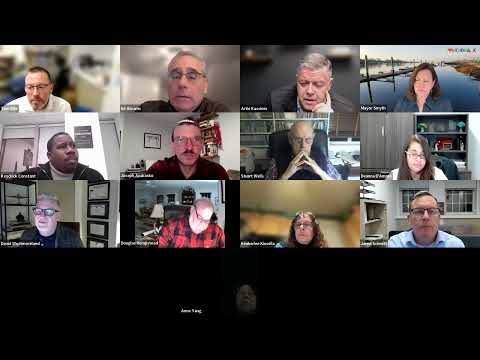
Mayor Smith and CFO Jared Schmidt presented Norwalk’s initial FY26–27 operating budget to the Board of Estimate and Taxation on Feb. 9, framing the year as “challenging” because of rising health‑care costs, multiple collective bargaining settlements and the ongoing property revaluation phase.
“First, skyrocketing health care costs,” Mayor Smith said. “Second is contractual obligations. … Third, as you know, we're still in the middle of the revaluation phase.” She urged public engagement in the budget process and outlined upcoming steps: the budget will go to the City Council the next day, the Finance and Claims Committee will hold a public hearing later in the week, BET deliberations with departments begin in early March, BET’s public hearing is scheduled for March 25, and the City Council must set the final budget cap by April 21.
CFO Jared Schmidt provided detailed budget assumptions and options, describing health‑care cost increases of roughly the mid‑teens (he noted Fairfield County typically sees 13–14% increases), the need to stagger collective bargaining agreements in future years, and reductions in investment income. Schmidt told the board he included a $3,000,000 citywide unallocated salary lapse line in the budget and proposed a $7,000,000 drawdown of fund balance for FY27 to help balance the plan.
Schmidt said the Board of Education requested a 6.5% increase but the mayor is proposing a 4% increase; he noted that $4.5 million had been included in the base FY26 budget and the mayor’s 4% proposal roughly equates to a $10 million increment in the FY27 request. Schmidt also highlighted an estimated $14.5 million increase in the city’s employee benefits/internal service fund driven largely by health‑care and other insurance buckets.
Board members focused questions on the internal service fund and the practice of using internal reserves to smooth budget impacts. Commissioners asked for a historical summary of recovery/reimbursement for the relocation assistance discussed earlier, a five‑year outlook and a detailed breakdown of the internal service fund buckets. Miss Yang requested a deeper analysis of the grand list composition — which properties and developments are driving growth — and asked for a 3–5 year projection of what the grand list mix will look like at the end of the phase‑in. Jared agreed to provide more detailed modeling and to schedule a specific session on the grand list and assumptions.
Tom reported an updated contingency balance: after transfers approved at the meeting the contingency tracker showed approximately $336,000 remaining with about five months left in the fiscal year. Board members asked staff to share modeling and financial assumptions in advance of departmental deliberations.
Next steps: BET will hold review meetings with departments beginning in early March, hold a public hearing March 25, and continue to refine the budget ahead of the City Council’s final cap decision by April 21.