
Sioux Falls board hears special-education child-count surge, plans larger transition campus
Get AI-powered insights, summaries, and transcripts
Subscribe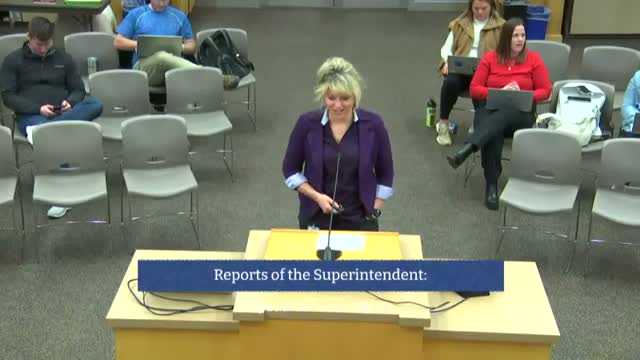
Summary
The district reported an all-time high special-education child count of 4,437 students in 2025, outlined growth in speech-language disorders and autism, and previewed a mid‑July opening of expanded transition space for 18–21 students at the community campus.
Miss Kennedy, the district’s special-education presenter, told the board the district’s December 1 child count reached an all-time high of 4,437 students in 2025, an increase of 204 from the prior year. She said the largest growth areas were speech-language disorders, autism, developmental delay and multiple disabilities.
“We have over 1,000 students with a specific learning disability,” Miss Kennedy said, noting that the district serves students ages 3 through 21 and that birth‑to‑3 counts are collected separately. She described the evaluation process (multidisciplinary teams) and emphasized child‑find obligations and three‑year reevaluations.
Kennedy outlined the district’s continuum of services, including birth‑to‑3 in-home supports, resource rooms at attendance centers, blended and specialized early‑childhood programs, and RISE (Reaching Independence through Structured Environment) placements in 17 buildings. She said the district is projecting 115 students in its 18–21 transition program next year and is renovating more than 15,000 square feet of Learning Lab space to support transition goals.
Board members asked how the new space would affect programming and student outcomes. Kennedy said the renovated community campus at Southeast Tech is intended to strengthen vertical alignment across pre‑K through 12 RISE programming so students enter transition with stronger adaptive‑communication and independence skills. She said the space should be ready by mid‑July and the district will arrange tours at opening.
The board moved and seconded to accept the special‑services report; discussion focused on outcomes and budget planning ahead of the superintendent’s upcoming budget presentation.
The board did not take further formal action on program changes at the meeting; Kennedy flagged staffing and adult‑services constraints in the community as a key implementation risk for graduates who need adult services.