
U.S. and Armenia complete '1‑2‑3' civil nuclear cooperation deal, officials say
Get AI-powered insights, summaries, and transcripts
Subscribe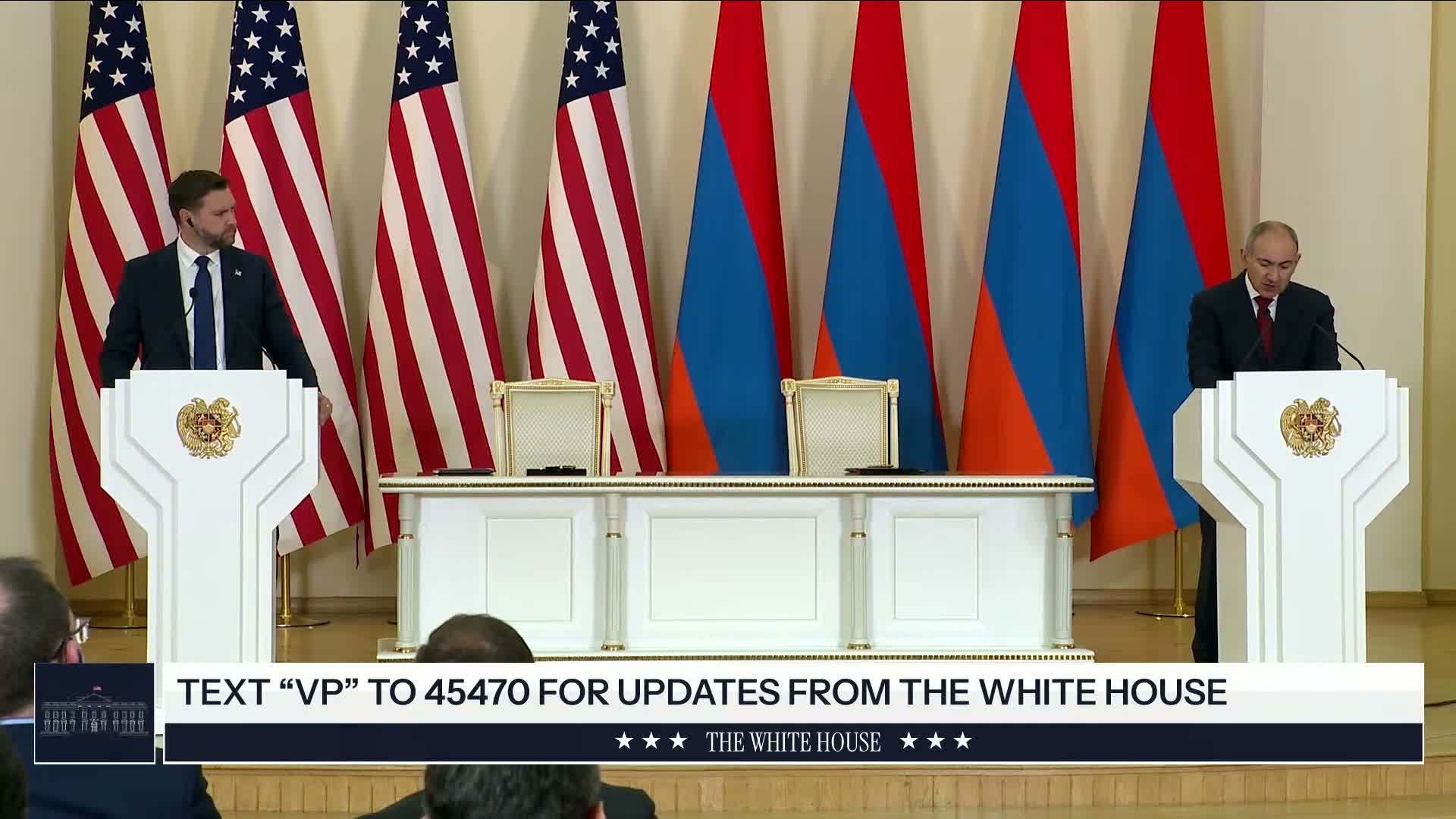
Summary
Vice President JD Vance and Prime Minister Nikol Pashinyan announced completion of negotiations on a '1 2 3' civil nuclear cooperation agreement, which U.S. officials say could enable civil nuclear projects and significant U.S. exports and support contracts.
Vice President JD Vance and Prime Minister Nikol Pashinyan announced the completion of negotiations on a ‘‘1 2 3’’ civil nuclear cooperation agreement between the United States and Armenia, saying the accord opens the door to U.S.–Armenian civil nuclear projects.
In remarks at a joint press event, Vance said, "we're also very proud to announce that our nations have completed negotiations on a 1 2 3 civil nuclear cooperation agreement." He added that the arrangement "could pave the way for American and Armenian companies to strike deals on civil nuclear projects" and quoted projected economic figures: "that means up to $5,000,000,000 in initial US exports, plus an additional $4,000,000,000 in long term support through fuel and maintenance contracts."
Prime Minister Nikol Pashinyan described the agreement as a step to "deepening energy partnership between Armenia and the United States," saying it will contribute to diversifying Armenia's energy resources through "safe and innovative technologies."
Both officials framed the deal as part of broader energy and security cooperation. Vance specifically referenced small modular reactors as an example of U.S. technology that could be deployed in Armenia, saying "American technology is gonna be coming to this country." Pashinyan emphasized the agreement's role in strengthening Armenia's energy options.
The officials did not provide text of the agreement in the press session, nor did they give a timetable for project approvals, regulatory steps, or expected start dates for individual projects. Vance characterized the deal as a framework that would allow U.S. and Armenian companies to pursue commercial contracts; Pashinyan said the agreement will support implementation of the broader TRIP project and other bilateral initiatives.
Next steps described in the session were general: further implementation actions, feasibility studies and private‑sector negotiations. The press session did not record a formal legal citation for the agreement text or provide details on regulatory authorizations, export controls, or the specific companies that will bid on projects.