Get Full Government Meeting Transcripts, Videos, & Alerts Forever!
Get email alerts on the Wildfire Code topic
No spam. Unsubscribe anytime.
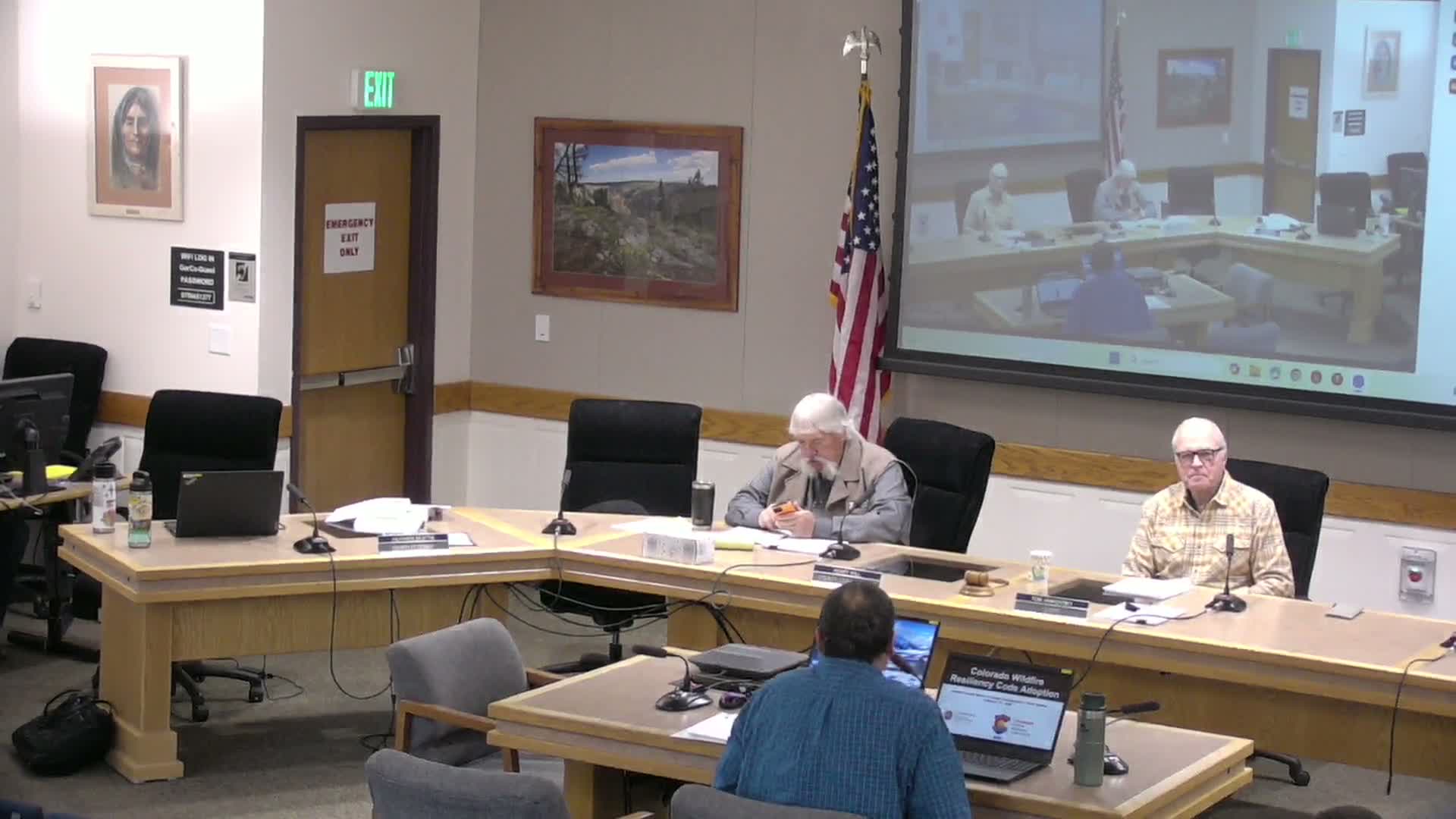
Garfield County staff brief commissioners on Colorado Wildfire Resiliency Code; mapping and cost questions loom
Summary
County building staff presented the state-mandated Colorado Wildfire Resiliency Code and a short adoption timeline; presenters and fire officials emphasized the need to adopt the state's map to meet deadlines while planning local remapping and ground-truthing to correct perceived inaccuracies that could affect homeowners and insurance.
Garfield County officials received a detailed briefing Feb. 3 on the Colorado Wildfire Resiliency Code and the county’s options for complying while refining local wildfire maps.
John Plano, Garfield County’s chief building official, said state timelines require counties to adopt the code by April and be enforcing it by July; he said the county would likely initially adopt the state map in order to meet that schedule and then use local science and the county’s Community Wildfire Protection Plan (CWPP) to develop a more accurate, county-specific map.
Ryan Handy of Headwaters Economics, participating remotely, explained the state map “measures intensity of a fire” — how intense flames could be — but does not measure likelihood of ignition or risk to structures. "It just reflects how intense a fire would be, not whether or not it's likely to happen," Handy said, and she warned that producing a map that departs from the state’s results requires rigorous, evidence-based submissions to the state.
Fire chiefs and district representatives urged adoption of science-based measures and offered to assist with assessments and enforcement. Robin Pitt of the Glenwood Springs Fire Department called the code “based in fire science” and stressed the importance of addressing ember-driven home losses and the first five-foot ignition zone around structures.
Presenters also summarized construction implications. Headwaters’ cost work found wildfire-resistant construction typically increases new-construction costs by about 2–3% for an average 2,000-square-foot home, with roofing, decking and landscaping the major cost drivers; noncombustible siding can offset siding-related expense in many cases. Handy said jurisdictions adopting codes have seen better insurance retainment and fewer nonrenewals, but she cautioned that existing evidence does not show a guaranteed immediate premium reduction.
Commissioners raised several policy questions, including how the code applies to existing structures, the meaning of the 35-acre provision (which some officials called poorly written), and whether local map updates will be accepted by the state. County staff flagged an intent to propose clarifying amendments, particularly to the "greater than 35 acres" language, and to return with a resolution for formal adoption.
No formal vote occurred; staff will continue outreach, ground-truthing and interagency coordination before bringing adoption documents back to the Board.