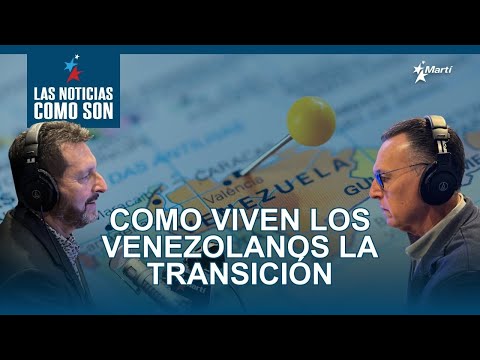
Analyst Gustavo Manso: Jan. 3 action began a fragile process of transition in Venezuela
Loading...
Summary
In a Tertulia interview, political scientist Gustavo Manso said a Jan. 3 'acción bélica' that led to high-profile detentions has reconfigured Venezuela’s political map, but he warned that freedoms, economic hardship and legal hurdles mean an electoral return of the prior government is unlikely in the near term.
CARACAS — Gustavo Manso, a Venezuelan political scientist and professor of constitutional law at Universidad Metropolitana de Caracas, said in a radio interview that a Jan. 3 action marked the start of a fragile process that has reconfigured Venezuela’s political map but stopped short of calling it a full transition.
Manso said: "Este proceso ha comenzado y y el comienzo fue el 3 de enero. El 3 de enero se dio una acción bélica, vamos a denominarla de esa forma." He told hosts that the action resulted in the detention of the president and his wife and their transfer to U.S. courts in New York, a development he said has had major political consequences.
Why it matters: Manso argued the sequence of events has created a period of "accompaniment" or "tutelage" in which international actors and interim authorities prioritize economic and public-service stabilization before political reforms. He said the changes are significant even if, in daily life, Venezuelans do not yet feel markedly freer.
On civil liberties and public perception, Manso said "todavía nosotros estamos sometidos a muchas limitaciones en cuanto a la libertad se refiere," adding that authoritarian structures that existed before remain influential in shaping outcomes.
On accountability and justice, Manso pointed to newly passed laws, including a "ley de amnistía," and emphasized debates over their content. He also highlighted the need for non-repetition, reparations and reconciliation in any transition: measures he compared to past peace processes in other countries.
On detainees and monitoring, Manso listed high-profile detentions and said some released prisoners left custody with ankle monitors; he also recounted instances of re-arrest. He said these measures and ongoing legal processes complicate the human-rights picture and the pace of political normalization.
On the economy, Manso estimated the average monthly wage is roughly "200 dólares al mes" for many Venezuelans and described day-to-day hardship. He noted short-term stabilization of exchange-rate volatility tied to interventions from a stabilization fund in Qatar but cautioned that stability is not yet secure.
On elections and legal hurdles, Manso argued that, from a legal-administrative perspective, alleged fraud in the contested election produces grounds for nullity and therefore requires new elections rather than an automatic elevation of the runner-up. "Porque ahí hubo trampa ... la consecuencia ... es la nulidad de la elección. Es decir, una vez que la nulidad la elección ... hay que llamar a nuevas elecciones," he said.
Looking ahead, Manso said he hopes the country can move toward elections and restored pluralism but urged patience and careful sequencing, warning that rapid moves can produce backlash. He framed the process as "irrevocable" but risky, urging a focus on stability and ‘‘sosiego’’ as tools to achieve political goals.
The interview aired on Tertulia, produced by the Office of Cuba Broadcasting. Hosts closed by thanking Manso and saying they expect to invite him again.