Get Full Government Meeting Transcripts, Videos, & Alerts Forever!
Get email alerts on the County Budget topic
No spam. Unsubscribe anytime.
Chaffee County budget report flags rising benefit costs and $300,000 projected overspend
Summary
County budget staff told commissioners that rising child-welfare and benefit costs are driving an estimated $300,000 overspend this year and would reduce the department fund balance to about $1.2 million; staff warned revenue forecasting remains uncertain because of state and federal reimbursement processes.
Chaffee County budget staff reported a tight fiscal picture Thursday, saying higher benefit payments and caseload demand have pushed program spending beyond earlier estimates and left the county watching reimbursements from state and federal partners.
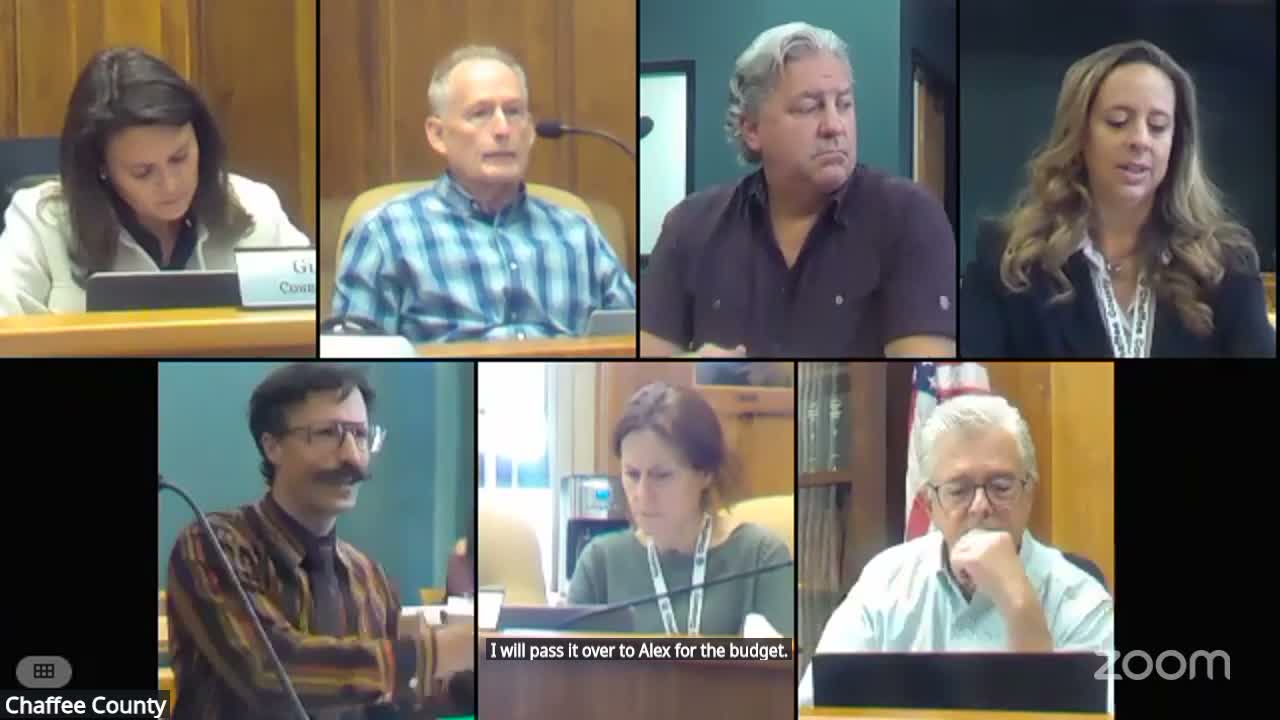
Alex (Speaker 9), introduced as the staff member responsible for the quarterly budget presentation, told the board that through the third quarter the county is roughly 2.2% under overall budget in some program administration lines but faces a significant overrun in benefit-related spending. He said benefit-line costs — including child-welfare payments and pass-through food-assistance benefits — are the largest driver of the county’s projected variance and that, after reimbursements, the county is projecting an overall expense total “a little over $11,000,000” for the year and a potential $300,000 overspend that would reduce the DHS fund balance to about $1.2M.
Commissioners pressed staff for analysis rather than raw counts. Alex said the monthly data spreadsheet can show year-to-year tabs going back roughly a decade and that staff use those trend lines when reconciling reimbursements from the state, but he acknowledged volatility and that predicting revenue from state and federal programs remains difficult.
On specific program lines, Alex said family-and-youth grant programs had shortfalls after some grants ended or were reduced; the county is actively pursuing new grants that could fund several positions. He emphasized that many benefit costs are pass-through dollars (e.g., SNAP/EBT) that the county administers and for which much is reimbursed, but that a small local match or nonreimbursed portion can meaningfully affect the county’s available funds for other services.
The board discussed the potential fiscal effect of pending state and federal policy changes. Staff noted some provisions of a recent federal bill will not affect county finances until late next year, but they cautioned that program-eligibility changes could alter client needs and the county’s administrative burden.
Next steps: commissioners asked staff to return with clearer program-level impact analysis and reconciliation detail to show how much spending is reimbursed versus locally borne in order to better prioritize budget decisions for the coming year.