Get Full Government Meeting Transcripts, Videos, & Alerts Forever!
Get email alerts on the Budget Elections topic
No spam. Unsubscribe anytime.
Story County auditor frames FY27 budget around rising election costs for hotspots, poll workers
Summary
Auditor Lucy Martin told county staff on Feb. 9 that the FY27 budget will absorb higher election-administration costs — notably an up-to-$15,000 estimate for mobile hotspots and poll-worker pay that makes up about 60% of election expenses — while relying on supplemental funds and reimbursements where available.
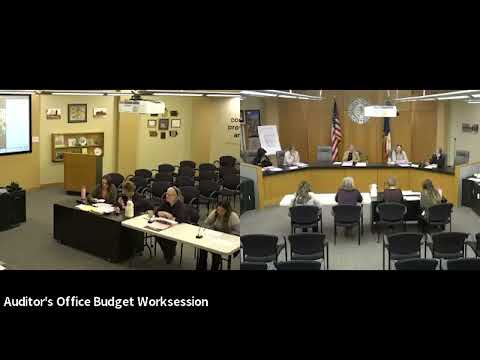
Story County Auditor Lucy Martin presented the auditor's office FY27 budget request on Feb. 9, flagging rising election-administration costs driven by new device and vendor pricing and by increases in mandated mailings.
Martin said the budget reflects both recurring expenses (software contracts and maintenance) and one-time or cyclical costs tied to elections. "15,000 is kind of like the high point," she said of the office's current estimate for MiFi hotspots. She also noted that poll workers "are probably 60% of it right there," identifying poll-worker pay, mailing and ballots as the largest single expense components.
Why it matters: the auditor's office is responsible for running elections across Story County's 48 precincts. Changes in vendor pricing, carrier consolidation and state-driven mailing requirements can shift local costs and affect whether the county must draw on the supplemental fund, levy reimbursements to cities and school districts, or reallocate general-fund dollars.
Key budget components and clarifications - Revenues: Martin said some election-related revenues (for example, voter-list requests) are unpredictable; the office charges a $10 minimum for voter lists and some users can obtain lists from the Secretary of State instead of the county. Special-election revenue shows a three-year average of just over $10,000 but varies by election type. - Hotspots and connectivity: the office uses MiFi hotspots at precincts to report voting status back to the office. Martin said the county previously acquired devices for free or near-free but now faces per-device charges of about $50–$65; the current FY27 estimate for hotspots is $15,000 as staff negotiate contract terms with a carrier after UScellular was bought by T-Mobile. She said the county would own devices and therefore be responsible for maintenance and replacement. - Software and equipment: recurring costs include contracts for Modus (poll-worker scheduling) and 10x (e-poll books and reporting); recent requirements forced replacement of poll books for security patching. Maintenance vendor work (named in the discussion as Henry Atkins) and shared equipment such as letter openers and folding machines were listed as budget items. - Staffing and operations: FY27 anticipates increased temporary help for the general election, overtime or comp-time payouts, training (state and national programs such as CIRA) and small-office replacements (chairs, standing desks). Martin said some primary-year costs fall in the current fiscal year but the budget reserves money in FY27 for invoices that arrive after the fiscal-year cutoff. - Postage and mandated mailings: Martin said increased mandated mailings, tied to recent law changes, have raised postage estimates (she reworked the phone-lines estimate and noted the postage line is an informed guess based on required mailings).
Budget mechanics and reimbursements Martin clarified that many election costs billed to cities and school districts (for example, tech wages or extra-help payroll) come from multiple line items rather than a single election line, which can make the budget look "lumpy." She also said the county typically covers general-election costs and can use the supplemental fund or shift entries within the budget ("Lisa will move it around depending on where we are in the funds," Martin said).
What was not decided No formal motions or votes were taken at the Feb. 9 meeting. Martin and staff discussed estimates, procurement strategies and contract negotiations; final appropriation decisions and any transfers to the supplemental fund were not recorded as formal actions in this session.
Who spoke Auditor Lucy Martin delivered the budget narrative and answered questions about procurement and operating estimates. Sandra King (director of external operations) and other supervisors and deputies were present and participated in clarifying exchanges.
Next steps Staff will continue negotiations with carriers and suppliers, refine line-item calculations (phone lines, hotspots, postage) and present finalized numbers as part of the formal FY27 budget process; no formal budget adoption occurred at this meeting.