
Baton Rouge task force highlights paid internships, career-alignment to curb graduate outmigration
Get AI-powered insights, summaries, and transcripts
Sign Up Free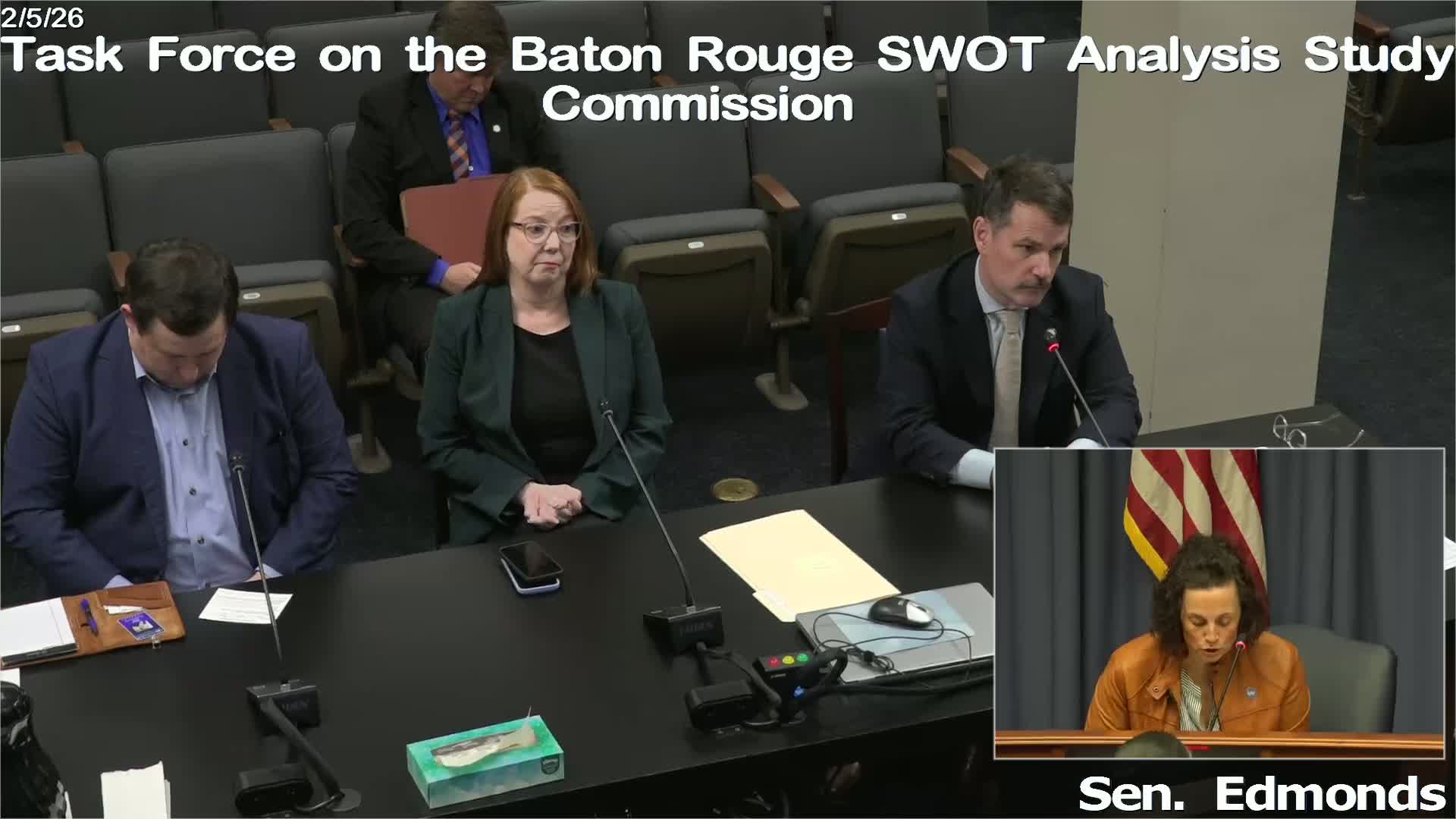
Summary
Regional economic and workforce officials told the Baton Rouge SWAT Analysis Study Commission that paid high-school internships and closer alignment between education and employers are central to keeping graduates and raising wages; officials cited 700 paid summer internships and 1,100 paid internships statewide last year and previewed legislation to expand campus-based business partnerships.
At a Feb. 5 meeting of the Baton Rouge SWAT Analysis Study Commission, regional leaders said expanding paid internships and aligning school curricula with employer demand are top tools for keeping graduates in Louisiana and improving economic outcomes.
Laurie Meloncon of the Greater Baton Rouge Economic Partnership said the partnership operates a hub-and-spoke internship model and reported last year’s scale: “We just last year, we had 700 students last summer and paid high school internships. 1,100 students had paid high school internships last year,” Meloncon said, noting the program is the largest in the state so far and that partners want to scale it regionally.
Why it matters: Commissioners and workforce officials framed internships and career-aligned credentials as ways to reduce outmigration and poverty, connect students to living-wage pathways and limit student debt. Senator Rick Edmonds and others said roughly 40% of graduates from Louisiana institutions are leaving the state after graduation — a figure cited in committee discussion that the task force seeks to address with coordinated policy.
Louisiana Works Secretary Susie Showen told the committee her agency is working closely with K–12, the Louisiana Department of Education and BEAD-related programs to embed career and technical education and to increase on-campus work opportunities. She emphasized internships and school-based enterprises that give students experience “as close as possible to what it’s like to actually work in a real job.”
Officials acknowledged legal and administrative hurdles to placing businesses on high-school campuses and said they expect to introduce legislation this session to clarify those rules and enable wider campus-based business operations. The partnership said some existing legal opinions limit expansion today.
Participants discussed sustainability and follow-through: companies and schools agreed more structured “wraparound” supports are needed so internships lead to continued employment or training. The partnership said a cross-provider effort is mapping what a complete internship-to-work pipeline looks like, from employer readiness and soft-skills training through post-internship supports.
The meeting closed with the commission asking staff to reconvene the task force before the legislative session to follow up on internship expansion, career-alignment legislation and related workforce items.