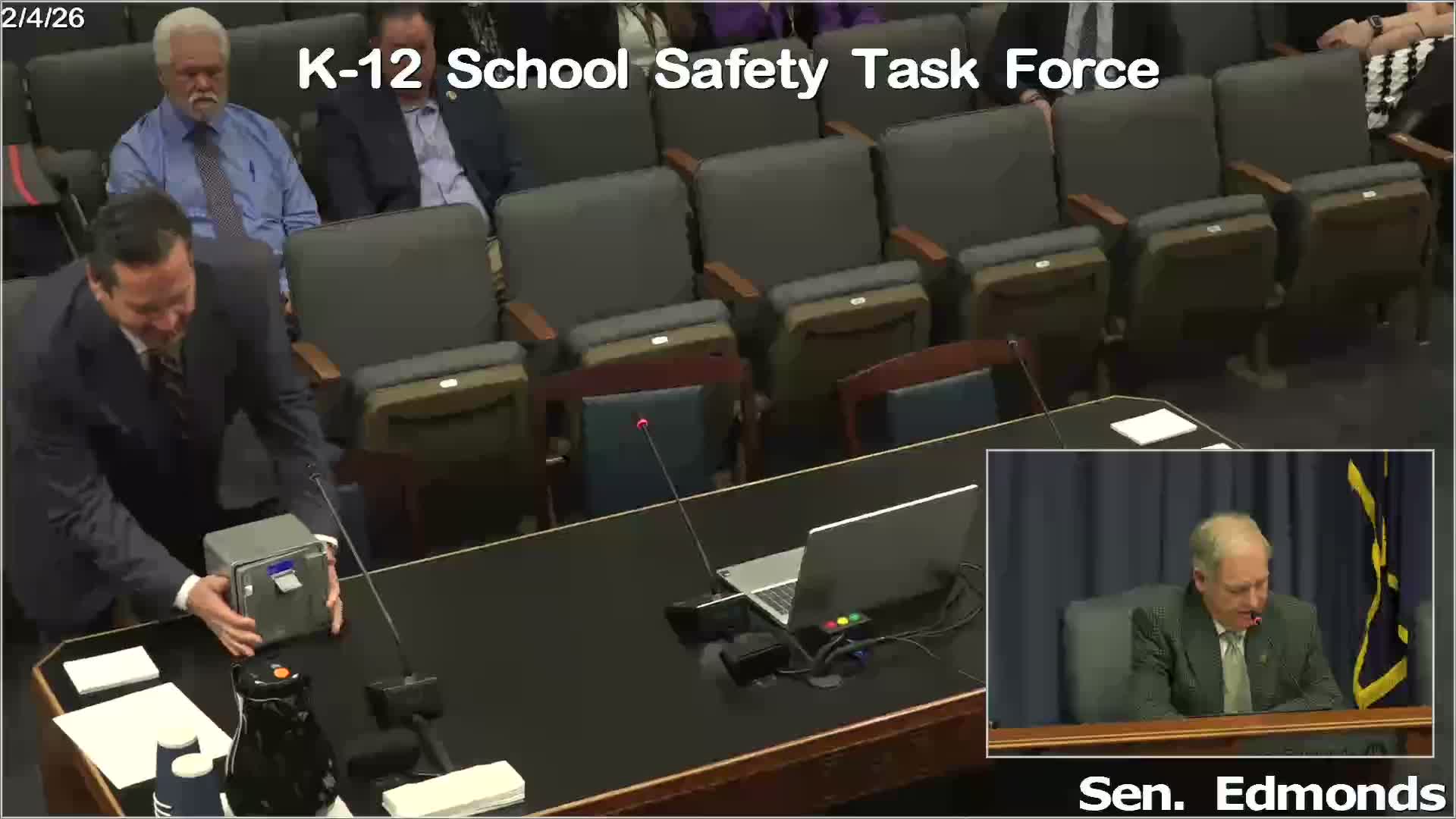
ZeroEyes presents AI firearm-detection service; vendor says service integrates with existing cameras and uses human verification
Loading...
Summary
ZeroEyes told the task force its AI analyzes existing security-camera streams to detect brandished firearms, routes verified alerts through a 24/7 watch center, and dispatches notifications to on-site security and law enforcement; the company reported deployments in Louisiana and said typical contracts run three to five years.
Burgess Nichols of ZeroEyes told the Louisiana K–12 School Safety Task Force that the company uses artificial intelligence to analyze existing security-camera streams and identify brandished (visible) firearms.
"We use existing security cameras," Nichols said. "The analytic is only looking for a brandished visible firearm. Once it detects the brandished firearm, it sends that image to our 24/7 operation center staffed by former law enforcement and military veterans. They review that detection to verify that it's a true positive... and then dispatch that."
Nichols said ZeroEyes does not perform facial recognition and asserted compliance with privacy standards (transcript references to GDPR, CCPA, FERPA). He described the company’s human-in-the-loop review: detections are sent to a watch center in Pennsylvania and Hawaii where analysts review key frames and can 'investigate' surrounding frames before dispatching notifications to on-site security and local law enforcement.
The presenter showed examples from Baton Rouge and other U.S. cities that he said led to arrests or faster law-enforcement response. Nichols said the company is active in 45 states and on roughly 100,000 cameras nationwide, with approximately 2,000 camera streams in Louisiana (presenter-reported figures). He described contract models that vary by district (single-school, district-wide or multi-district deployments) and typical 3–5 year subscription agreements; larger deployments and longer durations reduce unit costs, he said.
In questions, Nichols said ZeroEyes manages a low rate of detections per camera (presenter-stated false-positive metric: ~0.2 per camera per day) and does not 'take over' cameras. He said the system uses existing camera nomenclature and produces breadcrumb mapping to help law enforcement locate the most recent and first detections. Nichol's presentation emphasized rapid communication, human verification and integration with existing workflows.
The task force raised privacy, funding and operational questions but took no formal action on procurement or mandates at this meeting. Staff and legislators said they would consider vendor materials in drafting recommendations for the 2026 session.