Lancaster County schools propose pay bumps, longevity bonuses as insurance costs loom
Loading...
Summary
School leaders presented two salary-increase options, a new longevity-bonus plan for licensed staff and energy savings projections from geothermal and solar at the new high school; officials said a projected 20% health-insurance spike and longevity bonuses will materially affect local funding and require more detailed claims data.
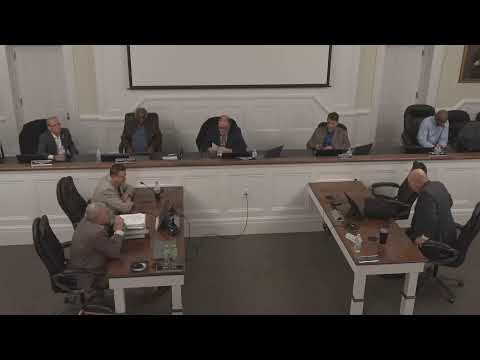
Lancaster County public-school officials presented a budget plan at a Jan. 29 joint work session with the Board of Supervisors that includes two salary-increase options for teachers and staff, a proposed longevity-bonus program for licensed staff and expected energy savings when geothermal and solar systems come online at the new high school.
"This is about investing in our people," Jessica, the school presenter, told the board as she outlined the options. Option 1 would deliver roughly a 2% total increase (a step plus a 0.5 percentage point across-the-board adjustment) and would set starting teacher pay at about $51,085.02. Option 2 would amount to a roughly 3% total increase (1.5% step plus 1.5% across-the-board) and would raise the starting teacher salary toward $52,036.08. Administrators and directors would receive 1.5% under both options, Jessica said.
School staff also flagged a potential sharp rise in health-insurance costs: Jessica said the current draft assumes a worst-case, 20% premium increase and that the budget currently includes an estimated $343,000 local impact to cover that change. The division expects a final premium figure by the end of the week and cautioned that even modest deviations from the assumed number would change the local funding requirement.
Board members pressed for historical claims data before making choices about combining insurance pools or pursuing self-insurance. An unidentified board participant said, "We paid $1,500,000 worth of claims," and urged staff to compile five to 10 years of paid-claims versus premiums so the county can judge whether premiums or claims trends make pooling or self-insurance viable.
Longevity-bonus plan
The division proposed a new, non-pensionable longevity bonus for certified/licensed staff designed to retain high-performing teachers, nurses and other licensed personnel who meet summative evaluation thresholds. Jessica described a stepped award schedule that would give $2,000 annually for years 5–9 and $5,000 annually for years 10–14 for staff who meet the top two categories of the division’s eight-standard evaluation. At years 15–19 the proposal provides $7,500 annually; the plan changes again after year 20. Jessica emphasized these would be bonuses paid on top of salary so they would not increase VRS pensionable wages.
In response to a question about scale and cost, Jessica said the initial FY27 cost to implement the longevity payments would be about $215,000 under the division's eligibility count and distribution assumptions.
Noncertified staff and operations
Board discussion broadened to noncertified employees—nutrition staff, bus drivers, custodians and instructional assistants—where Jessica said scale adjustments are planned to raise base pay for hourly and salaried nonexempt workers. Members emphasized recruitment and retention challenges for transportation and custodial roles and urged faster action on starting wages; Jessica agreed those groups are critical to operations and that pay adjustments are included in the current proposals.
Special education and transportation costs
Jessica also reported a steady increase in special-education enrollment and said special-education transportation is a major driver of unplanned spending due to fuel, drivers and vehicle needs. The division participates in a regional special-education consortia and is seeing growth at younger ages, she said.
Energy offsets from new school construction
School staff noted that expected geothermal systems and planned solar-panel installations at the new high school should materially reduce operating costs once active. Jessica said the division anticipates substantial electrical-cost reductions once solar is installed in the fall but cautioned those savings were not yet built into the current draft budget.
Next steps
School staff said they will return Feb. 26 with more refined numbers and that they will share the evaluation rubric the board requested. The board asked for additional claims and premium history, and members discussed tying some performance or underspending to create a potential funding source for bonuses as a contingency. The work session closed with the school promising deeper budget detail at the next work session.