Get Full Government Meeting Transcripts, Videos, & Alerts Forever!
Get email alerts on the Budget topic
No spam. Unsubscribe anytime.
King William supervisors hear budget updates and tax-rate proposal; public raises questions about transparency and reserves
Summary
County staff presented updated FY2026 revenue and expenditure estimates and proposed a modest real‑estate tax increase; residents and supervisors pressed for clearer accounting, reconciliation of reserve balances and details on how new revenue would be spent.
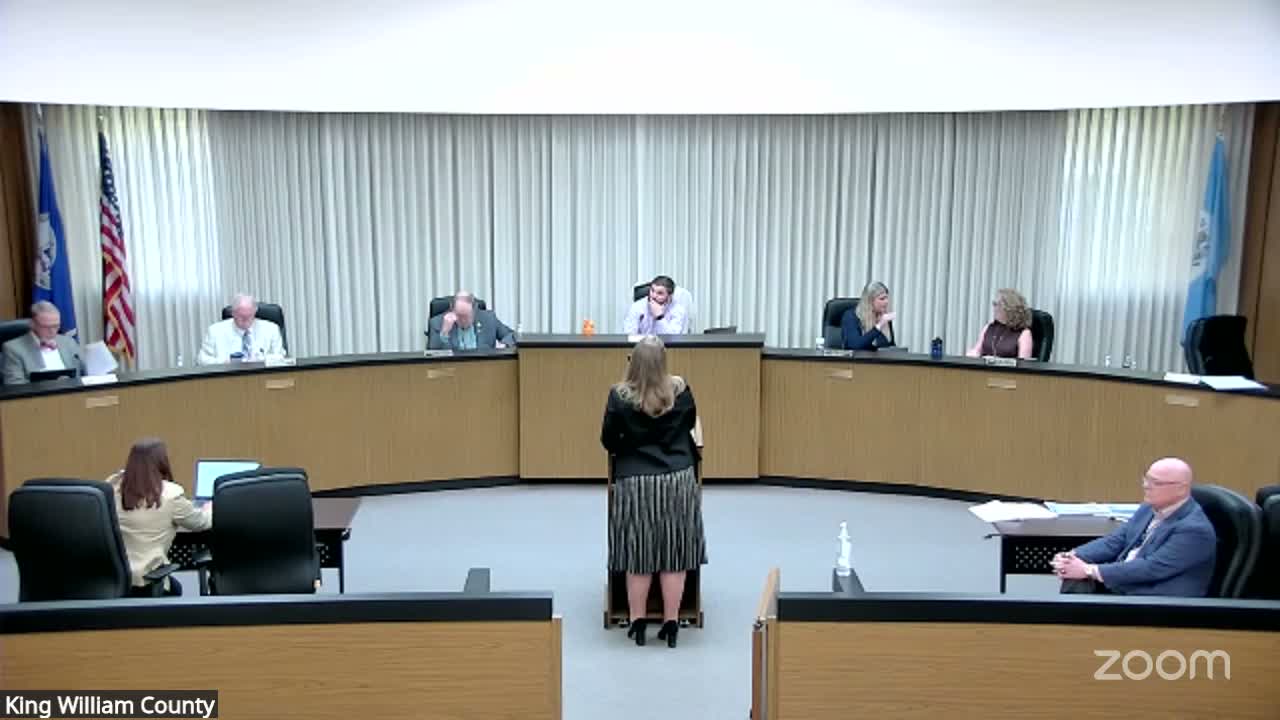
King William County staff presented an updated FY2026 budget and a proposed real‑estate tax increase at the Board of Supervisors’ April 22 meeting, prompting extended discussion and public comment about the county’s financial reporting and reserve policy.
County finance staff told the board that new information increased the county’s projected total revenue to $54,325,389 and raised general fund revenue to $38,842,754. That estimate included an anticipated $569,025 from additional certificates of occupancy if the proposed tax rate change is adopted and applied retroactively, and $32,135 in added compensation‑board reimbursements. The presentation also incorporated an estimated $250,000 the county expects to owe Nestle based on an ongoing audit, and reiterated a proposed 3% across‑the‑board salary increase and a package of new positions.
"That would result in an additional $569,025 in revenue if that tax rate increase does go into effect," finance staff said during the presentation.
Officials said the proposed real‑estate tax increase — the first in nine years for the county — would still leave the county below tax rates seen in some earlier years. Staff estimated the average King William household (assessed at about $300,000) would pay roughly $105 more per year under the change and that the full‑year impact would be about $953,000 in additional revenue.
The presentation drew sustained questioning from supervisors and residents about the way numbers were presented and reconciled. Public commenter Chris Couch said the county's shift in presentation format had produced apparent calculation errors and called for a CAFR‑style reconciliation and clearer documentation of restricted and unassigned fund balances. "If you start at the high level and numbers are wrong, it really draws into question when you start looking at things at the lower level," he said.
Several supervisors said they were sympathetic to public safety funding needs — noting sheriff’s office staffing and fire/EMS requests — but urged that any tax increase be accompanied by clear, itemized explanations of how revenue would be spent. The board did not act on a final tax rate that night; staff and the treasurer discussed printing and mailing deadlines that make an early decision prudent if the board chooses to adopt a rate this spring.
The board scheduled more work on the budget and directed staff to provide additional reconciliations and clarifications ahead of any final vote.