Get Full Government Meeting Transcripts, Videos, & Alerts Forever!
Get email alerts on the Parks And Recreation topic
No spam. Unsubscribe anytime.
Historic commission sends Brackenridge Park Phase 2 to design committee after public outcry over trees, picnic tables and parking
Summary
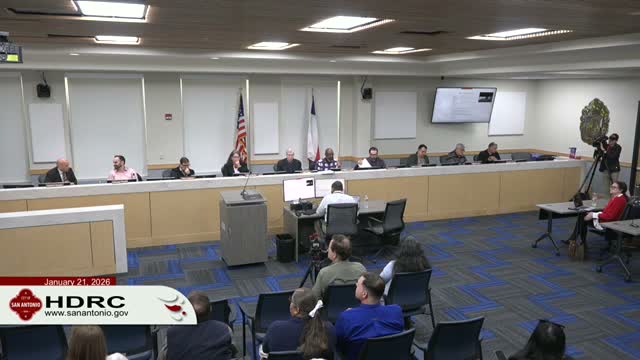
After hours of testimony from dozens of residents and tribal representatives, the Historic and Design Review Commission voted Jan. 21 to refer the Brackenridge Park Phase 2 proposal to the Design Review Committee and schedule a site visit for further study of trees, picnic tables, parking and kiosk relocation.
The Historic and Design Review Commission voted Jan. 21 to send the City’s Brackenridge Park Phase 2 plans to the Design Review Committee and to schedule a site visit after an extended public comment period that voiced strong opposition to aspects of the proposal.
The Phase 2 plan, presented by Jamal Moreno of the City of San Antonio’s Capital Delivery Department and Ashley Williams of SWA Group, would rehabilitate historic park features including the 1877 pump house, the acequia and raceway, and the upper lily pond; stabilize the Upper Labor Diversion Dam; restore two historic restroom pavilions; relocate utilities underground; and add planting and erosion control measures. The design team said the project reduces impervious surface by about 10 percent, proposes native Blackland Prairie plantings, and plans for 88 new shade trees and 177 understory trees as part of ecological restoration.
Why it matters: residents, neighborhood groups and tribal representatives said the drawings set out to repair historic features but would also remove long‑lived heritage trees, displace picnic tables and reduce parking in and around a portion of the park used for family gatherings, Easter camping and community events. Several speakers, including legal counsel John Bridal representing Gary Perez and Matilda Torres, said litigation is pending and urged the commission to avoid authorizing removal of two cypress trees near the pump house that some Indigenous practitioners say are religiously significant. "That was false information" that the lawsuit was resolved, Bridal said of recent news coverage, adding the case is at a preliminary injunction stage.
Supporters of the plan, including Chris Matrey of the Brackenridge Park Conservancy, said the northernmost acres are degraded by asphalt and access that hides historic features; restoring the acequia and raceway and removing asphalt will enable the public to better see and learn the site's history. "This project is about preserving and sharing the portion of Brackenridge Park that doesn't need to live in books anymore," Matrey said.
What the commission did: after more than three hours of public testimony and detailed questioning of staff on tree counts, relocation feasibility and Section 106/permitting status, Commissioners voted to refer the item to the DRC and to hold a site visit so commissioners and staff can view the proposed work in person. Chair announced the motion carried.
Next steps: Staff and the design team will coordinate a DRC meeting and a site visit; the commission directed that the referral explicitly include review of tree removal/relocation plans, picnic table and parking replacements, the proposed kiosk relocation, and any outstanding archaeological or permitting questions. The project team said they will continue archaeological compliance and follow THC guidance. The referral means no final HDRC certificate of appropriateness is issued at this meeting.
Sources: Presentation and Q&A by Jamal Moreno and Ashley Williams; public testimony including John Bridal; roll call action by the Historic and Design Review Commission.