Get Full Government Meeting Transcripts, Videos, & Alerts Forever!
Get email alerts on the Nixon Parcel Archaeology topic
No spam. Unsubscribe anytime.
EDA authorizes archaeological surveys on Nixon parcel after cultural resources flag graves and Native‑American artifacts
Summary
After prior Phase 1 work flagged Native American archaic components, wetlands and possible unmarked graves on the Nixon (Parcel 2) land, the EDA authorized phase‑2 work including boundary determination, targeted survey and GPR; members discussed sequencing and cost, and the board moved to authorize a $61,450 expenditure for consultant work.
Staff briefed the board on cultural‑resources findings for Parcel 2 (the Nixon property). A previous Phase 1 study (2013) and a recent consultant review identified Native American archaic‑period components on the parcel's western side, confirmed wetlands, a historic farmstead and at least one marked cemetery plus an area that may contain unmarked graves.
Staff said consultants recommended three follow‑up steps: (1) a boundary determination to define the extent of archaic‑period resources, (2) a targeted Phase 2 survey of the historic farmstead, and (3) a ground‑penetrating radar (GPR) survey to locate any unmarked cemetery plots. Board members questioned the cost estimates and noted the GPR line item appeared low relative to expectations; staff said the county had worked previously with the James River Institute of Archaeology and expected a formal proposal with the same numbers.
Members discussed sequencing: the boundary determination provides the area to focus for the other surveys; yields from the surveys could require additional mitigation or make portions of the parcel unsuitable for development. Staff noted if remains or certain finds are discovered the county can confine work and protect resources or require archaeologists to monitor initial ground‑disturbing activities.
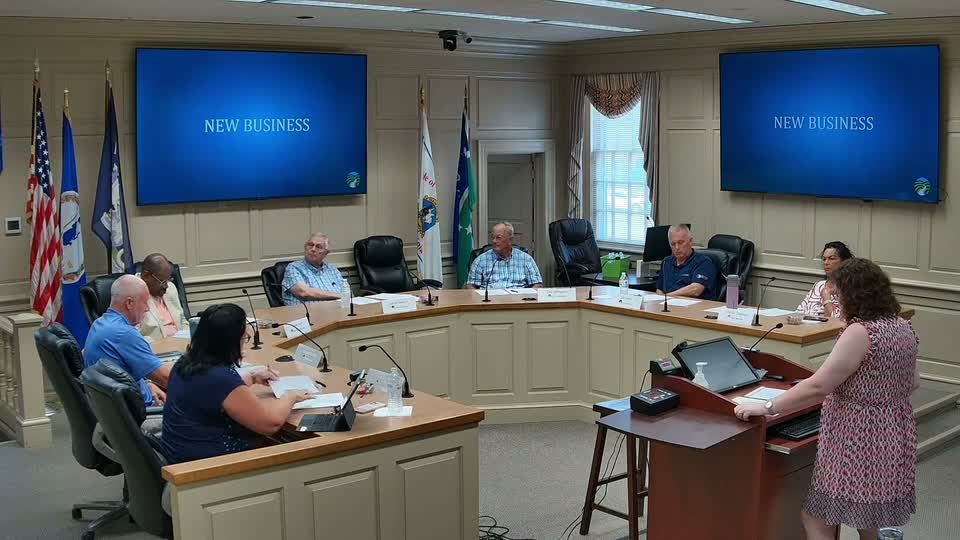
A motion was made in open session to authorize execution of the contract for the archaeological work at a cost shown in the motion as $61,450. Counsel said the contract would be reviewed before signing. The motion was seconded and discussed; the transcript records the motion and followed counsel's advice to review the contract prior to execution.
Next steps: staff will obtain the formal proposal from the consultant, have counsel review any contract terms and confirm procurement rules. The board asked staff to obtain additional quotes if necessary and to return final contract documents for review before execution.