Get Full Government Meeting Transcripts, Videos, & Alerts Forever!
Get email alerts on the Elections Timing topic
No spam. Unsubscribe anytime.
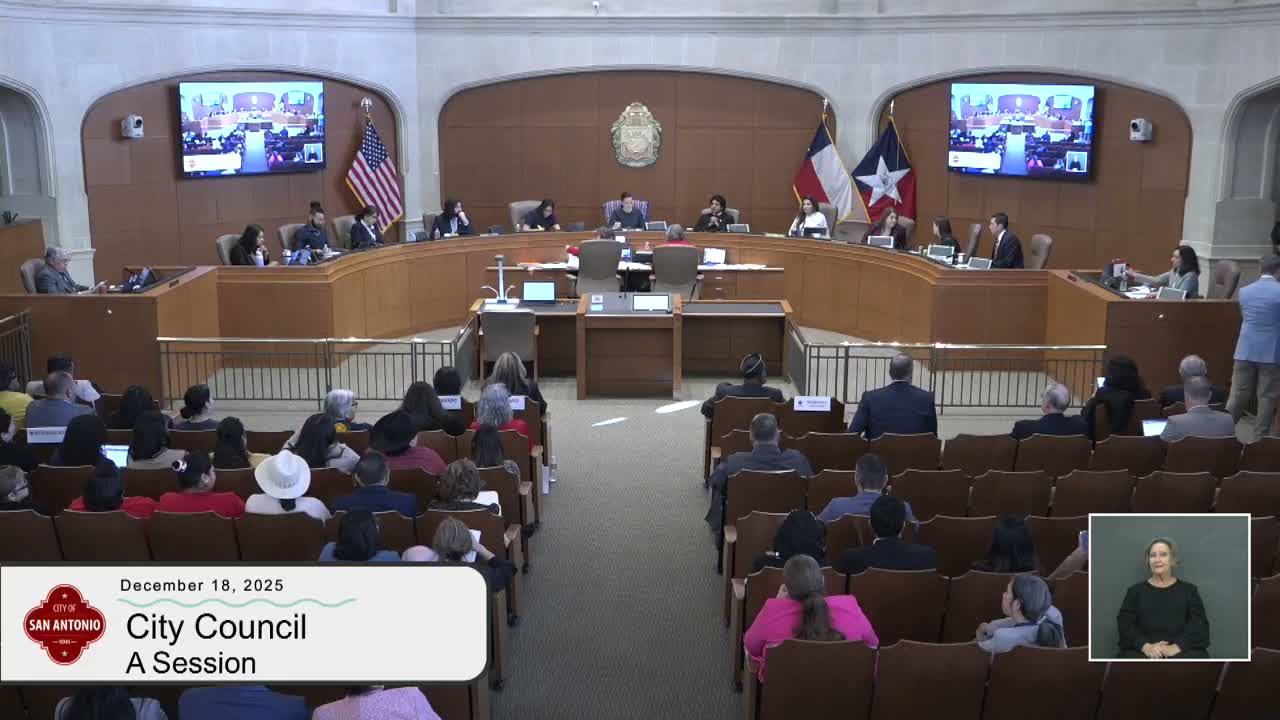
San Antonio council moves municipal elections from May to November in odd years
Summary
The City Council approved a resolution to shift San Antonio's municipal elections from May to November in odd-numbered years, citing low May turnout and equity concerns; the 6-5 decision sets a public-awareness campaign and leaves implementation questions for local school districts.
San Antonio City Council voted to move the city's general election for mayor and council from May to November in odd-numbered years, approving a resolution that proponents say will raise turnout and improve equity in local democracy.
Assistant City Manager John Pateric told the council the change is possible after recent state action (Senate Bill 1494) that allows cities to alter their municipal election dates. "This item would move, if approved, the elections from May to November of odd-numbered years," Pateric said during a staff presentation on the bill's history, the charter implications and the calendar for runoffs and term starts.
The resolution drew hours of public comment. Dolores Huerta, introduced to the dais as an honored guest, urged the council to make the change and framed the decision as a civil-rights moment. "By your symbolic vote, you're gonna be able to help many of the lost voters find their way to the ballot box," she said, charging the council to vote unanimously. Dozens of local organizations —including Move Texas, the League of Women Voters, MALDEF, disability advocates, veterans' groups and labor unions—testified in favor, citing consistently low turnout for May elections and barriers that fall hardest on working families, students and language-minority communities.
Opponents warned of downstream effects. Council members and public commenters raised concerns that moving the city date could increase costs or reduce turnout for independent school districts that do not align their elections, and several council members said the council should seek broader public input before acting. "We owe it to San Antonio residents to work in coalition and in coordination," Councilmember Patricia Castillo said during debate, asking for more analysis of cost and school impacts.
Council debate focused on two recurring points: whether November timing would actually bring different voters to municipal contests, and whether it is appropriate for the council to extend the current term length by roughly six months without a voter-approved charter change. Several council members said they had polled constituents and heard strong support for the change; others asked for more time to consult the many school districts that overlap city boundaries.
When the roll call began, votes recorded in the chamber showed a narrowly split council; the mayor announced, "The ayes have it," and the motion carried. Mayor Gina Ortiz Jones said the change is an opportunity to increase participation: "We cannot let process get in the way of progress," she said.
The resolution requires administrative follow-up. City staff said communications and engagement teams will run a public-awareness campaign ahead of the elections and will work with the clerk's office on changes to candidate filing and election administration. The city also noted the statutory deadline to act under state law; staff told the council the shift will supersede the charter temporarily, and that some charter text will need future amendment.
What's next: the council approved the resolution and will direct staff to plan outreach and implementation steps. Several council members who voted for the change said they will also press state and local partners to help school districts adapt and to monitor whether the move raises turnout among groups the city aims to reach.
(Reporters: quotes and on-the-record attribution come from council and public testimony at the Dec. 18, 2025 council meeting.)