Get Full Government Meeting Transcripts, Videos, & Alerts Forever!
Get email alerts on the Public Comment topic
No spam. Unsubscribe anytime.
Hundreds of San Antonians urge council to refuse or limit SAPD cooperation with ICE, demand transparency
Summary
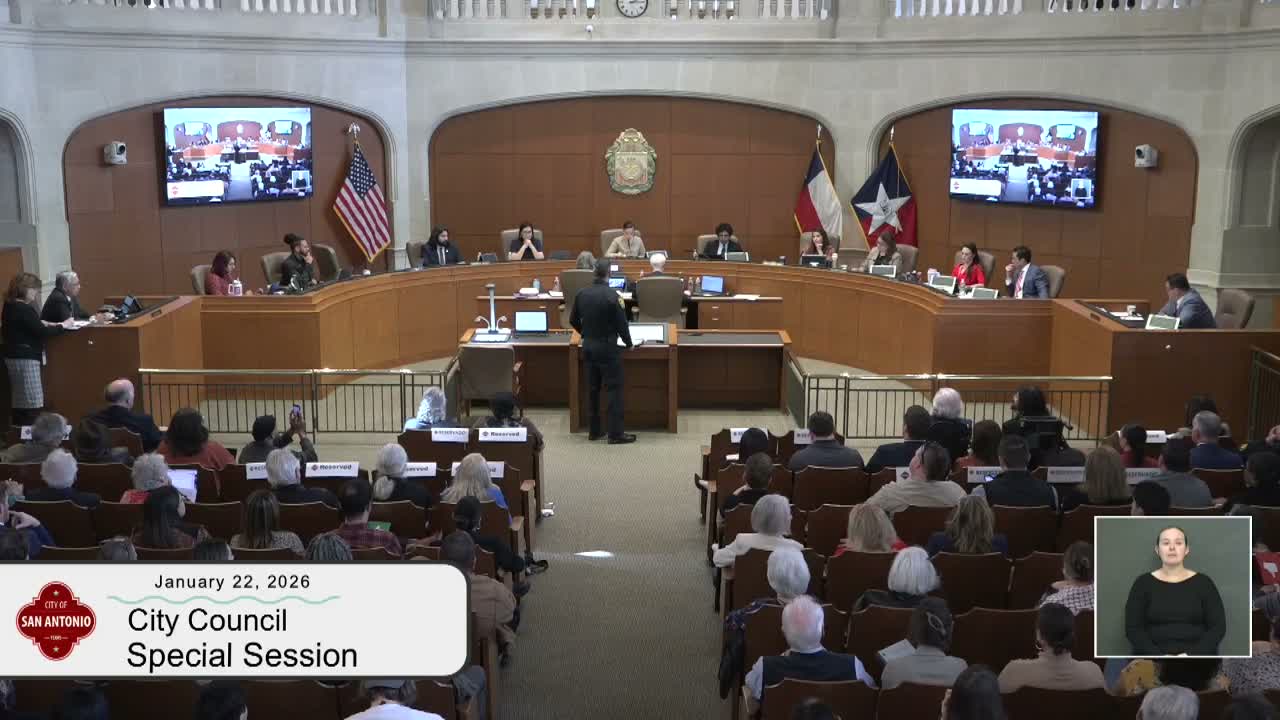
More than 150 people filled City Hall on Jan. 22 to urge San Antonio's council to stop or limit police cooperation with ICE, demand reporting on past joint operations (including the November San Pedro operation) and call for rights advisories and local policies to protect schools and families.
San Antonio — Hundreds of residents pressed the San Antonio City Council on Jan. 22 to end or sharply limit the San Antonio Police Department's cooperation with U.S. Immigration and Customs Enforcement, pressing for immediate transparency and local safeguards.
The meeting moved from a staff briefing into a prolonged public-comment period in which dozens of speakers recounted fear in their neighborhoods, asked how the city would protect schools and hospitals, and asked the council to adopt local rules that require federal agents to show judicial warrants before city resources or personnel are used.
Bexar County Commissioner Grama Moody told council members that —public safety is priority number 1— and that coordination among law enforcement is important, while a large majority of other speakers urged the opposite: that cooperation with ICE was causing fear and harming community trust. Frank Zamora, a former city and state employee, told the council, —we must cease all cooperation between SAPD and ICE in San Antonio.— (public comment)
Several speakers recounted the November operation on San Pedro that involved federal agents and local perimeter support; public commenters said many of the detained people were later not charged and demanded a public accounting. Ruby Jimenez, who pressed the council for follow-up, noted that —143 people detained— in the November operation remain without full public explanation and urged the city to require reporting and oversight for any joint enforcement operation.
Immigration attorney Alicia Perez described the practical consequences she sees in her work: —Arrest leads to ICE contact at the jail. ICE contact leads to detention. Detention leads to deportation.— She urged the council to use discretion and write policies to reduce predictable harms, noting that compliance with state law can be met at a minimum without volunteering additional local resources.
Speakers urged a range of policies: recorded and timely public reports after any joint operation that involves city personnel; an ordinance requiring a judicial warrant before use of city resources in federal operations; advising residents of their rights when SAPD interacts with federal agents (mirroring an Austin policy referenced by commenters); and funding for legal-help and community organizations to support people affected by enforcement.
Council members responded that they heard the public's concerns and asked staff for follow-up data and options. Multiple members proposed tracking complaints related to alleged federal misconduct and looking for ways to make department interactions with federal partners more transparent; staff said they would provide additional information. No ordinance or vote was taken.
The meeting ended after the council committed to further work on disclosures, reporting and possible policy language that would aim to protect residents while the city complies with state law.