Get Full Government Meeting Transcripts, Videos, & Alerts Forever!
Get email alerts on the Water Rates And Infrastructure topic
No spam. Unsubscribe anytime.
SAWS outlines $3.2 billion five‑year capital plan and draft rate needs; council presses for maps, cost details and protections for low‑income customers
Summary
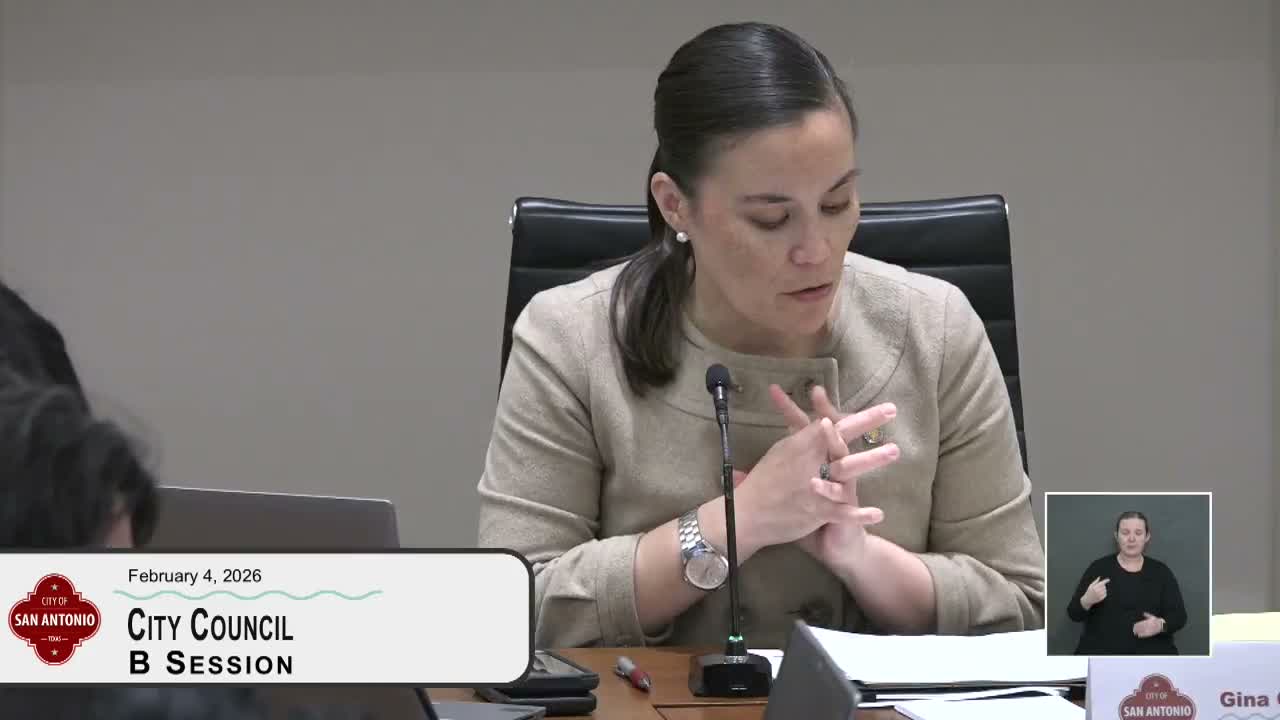
San Antonio Water System trustees told City Council on Feb. 4 that a draft cost‑of‑service study finds current rates won’t cover about $3.2 billion in near‑term capital needs, and staff outlined potential multi‑year rate revenue increases; council members pressed SAWS for district‑level project maps, sample bills and clearer protections for vulnerable households.
San Antonio Water System officials told City Council on Feb. 4 that current rates are unlikely to cover the utility’s projected five‑year capital and operating needs, and staff presented a draft cost‑of‑service study that staff said would require significant rate revenue over the next five years unless alternatives are identified.
Jillian Jamieson, chair of the SAWS Board of Trustees, opened the briefing by describing board accountability and a performance scorecard validated by an outside consultant and saying the board sought council feedback before finalizing any recommendation. “We asked the board of trustees to join me today so that we could hear collectively the input from the city council,” Jamieson said.
Why it matters: SAWS staff described a capital improvement program (CIP) totaling roughly $3.2 billion for 2026–2030 to replace aging mains, upgrade wastewater plants, meet regulatory mandates and finish resiliency work begun after Winter Storm Yuri. Doug Evenson, SAWS chief financial officer, summarized a draft Carollo Engineers cost‑of‑service analysis and told council that the draft study finds current rate levels are insufficient; the draft study staff summarized calls for nearly 30% cumulative additional potable‑water rate revenue and more than 35% cumulative wastewater rate revenue across 2026–2030, which SAWS emphasized are study findings and not final recommendations.
Staff described the main drivers. Evenson cited elevated O&M costs since 2020, higher construction costs, the $200 million investment in AMI “connect H2O” meters, $340 million already spent for mandated generator work after Winter Storm Yuri, and continuing obligations tied to the Vista Ridge water supply contract. SAWS also described large replacement needs: roughly 8,000 miles of water mains (about 22% over 50 years old), more than 6,000 miles of sewer mains (about 19% over 50 years old), and a multi‑hundred‑million‑dollar suite of treatment‑plant projects.
Council reaction: Council members responded with questions about equity, program delivery and alternatives to large rate increases. Councilwoman Aldrete Gavito said residents demand accountability for water loss and pressed SAWS on a 2024 loss figure; SAWS replied it has reduced loss compared with earlier public reporting and is accelerating leak response times and main replacements. “We agree we cannot afford to lose this water,” a SAWS presenter said, noting response times have fallen from weeks to days for priority breaks.
Several council members asked SAWS to break the CIP into a minimum, mandate‑driven floor (projects required to meet regulatory obligations or public‑safety thresholds) and discretionary projects that could be delayed or re‑phased. Councilmembers repeatedly requested district‑level maps and specific project schedules, sample customer bills showing class impacts under any proposed rate scenario, and a clear list of which projects are driven by new state or federal requirements (for example, TCEQ permit changes, MS4 requirements and the federal EPA lead‑and‑copper rule).
Affordability and program questions: Council members pressed on the Uplift affordability program after SAWS showed that a portion of Uplift participants still consume higher volumes. Councilmember Vigañon and others urged more targeted outreach and automatic enrollment pathways for eligible households, and asked SAWS to expand plumbers‑to‑people pilots to find and fix customer‑side leaks. SAWS said the new AMI meters and conservation outreach allow earlier detection and notification of leaks, and staff said they can provide program participation counts and outreach plans.
Staff follow‑ups and next steps: SAWS staff told council the Carollo report is in draft and has been provided to city staff; staff committed to send council the draft study, district maps of aging mains and proposed CIP projects, sample bill impacts by customer class, and estimates showing the cost to replace mains versus projected water savings. The SAWS board is continuing to gather input before taking any formal recommendation.
No formal vote was taken at the Feb. 4 briefing; the meeting adjourned after council requests for follow‑up materials and the announcement of a public comment period.
What to watch next: SAWS staff will return with the Carollo draft, project maps, bill‑impact scenarios and clarifications about which projects are legally or regulatorily required. Council members said those deliverables will inform whether they can support a rate plan and how the city will protect low‑income households if rates rise.
Quote highlights: “Carollo has reached the same conclusion for both water and wastewater and that is the current rates and charges are not sufficient to meet the identified revenue requirements,” SAWS CFO Doug Evenson said, emphasizing the study was a draft. “We agree we cannot afford to lose this water,” a SAWS presenter said in response to council concerns about leak response and water loss.
Ending: SAWS and council agreed on a follow‑up schedule for the draft study, localized project lists and bill‑impact examples; council members continue to press for a clearer minimum CIP and stronger affordability protections before supporting rate changes.