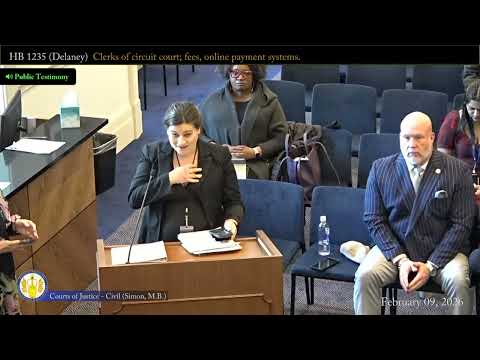
House panel advances bill widening who may seek substantial risk ("red flag") orders after contested hearing
Loading...
Summary
The House civil subcommittee on Feb. 10 advanced HB 901, a package of changes that would expand who may petition for emergency and final substantial risk orders and clarify risk factors and procedures. Supporters said the bill increases access to lifesaving intervention; opponents warned of due-process and privacy risks. The committee reported the substitute 7–3.
Delegate Dawn Sullivan presented HB 901, a substitute that would expand who may seek emergency and final substantial risk orders and clarify factors courts should consider when deciding whether to temporarily restrict a person’s access to firearms. "What this bill does, mister chair, is add extra layers of protection so that we're not entirely relying on the policies or approaches of a single person to ensure that we can prevent avoidable tragedies," Sullivan said during her opening remarks.
The proposal adds immediate family members and a limited set of professionals to the list of eligible petitioners, codifies a nonexclusive list of risk factors for judges to weigh, and permits general district courts and juvenile and domestic relations courts to issue final orders in appropriate cases. Supporters told the panel that access to the remedy has been uneven across the Commonwealth and that family members are often the first to notice escalating risk.
Laurie Haas of the Center for Gun Violence Solutions testified in favor, arguing that risk orders are a civil, temporary tool that can prevent suicide and mass shootings. "Risk orders create a protective factor for people at risk of harm to self and others," she told the committee. Additional proponents including public-safety and public-health groups and university clinic students said the changes align Virginia with other states and would make the process more accessible in jurisdictions where law enforcement and prosecutors use the tool infrequently.
Opponents raised concerns about lowering evidentiary thresholds and possible misuse. Philip Van Cleave of the Virginia Citizens Defense League warned about expansion and said there have been "cases of vindictiveness" in other jurisdictions, urging retained safeguards such as independent investigations by law enforcement before ex parte filings move forward. Several witnesses said broadening eligible petitioners could chill confidential communications with health professionals and risk mistaken or retaliatory filings.
The substitute preserves criminal penalties for materially false statements and keeps commonwealth's attorneys involved in final-order proceedings, but the committee discussed details including return-of-firearm procedures when the gun belongs to a third party (roommate or parent) and which court should hear petitions involving minors.
After extended testimony and debate the subcommittee voted to report the substitute out of committee by a vote of 7–3. The record of the hearing shows the competing policy considerations — expanded access to a preventive civil remedy versus concerns about due process, evidentiary standards and confidentiality — that the bill's supporters and opponents asked lawmakers to resolve as the bill moves forward.