
Committee debates HB 978, a sales-tax modernization that would tax many services; businesses press for exemptions
Get AI-powered insights, summaries, and transcripts
Subscribe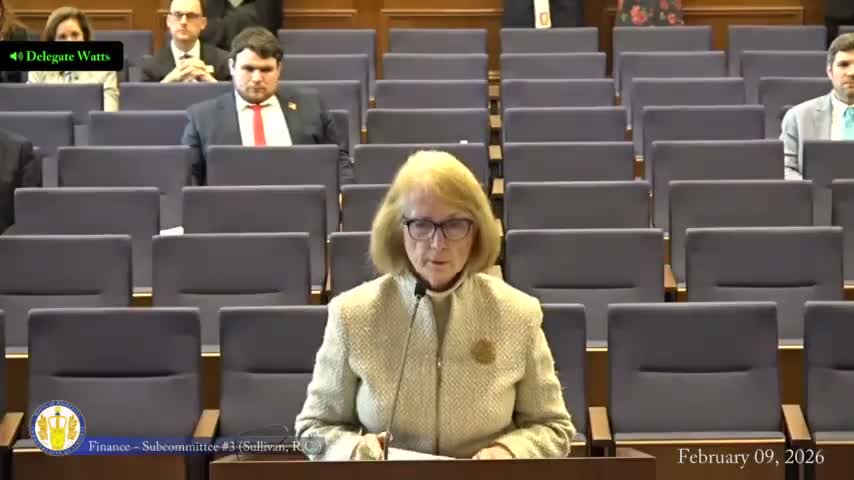
Summary
Delegate Watts' HB 978 would expand Virginia's sales-tax base to selected services and digital/consumable services while exempting licensed health care and specified professional services; business groups including the Virginia Self Storage Association and chambers asked the committee to carve out self-storage, fitness and delivery services. The committee adopted amendments and carried the bill over to 2027.
Delegate Delia Watts presented HB 978 as an effort to modernize Virginia's sales and use tax base to reflect a service-heavy economy. "Fifty years ago the average family began spending more on services than goods," Watts said, arguing the state's sales-tax base is narrow and misses many discretionary services.
Watts stressed the bill would exclude licensed health-care services and functions requiring state licensure or certification, and she indicated an expanded definition of "professional" would be part of the amendment package. She said the bill is meant to tax discretionary services while protecting essential services and public-safety work that requires permits.
Supporters testified that modernizing the sales tax would generate revenue for schools and localities and make the tax code more equitable; advocates included the Commonwealth Institute, Legal Aid Justice Center and housing advocates. Opponents from industry groups warned of unintended consequences: Jim Mertz of the Virginia Self Storage Association said "self storage is not a luxury, it's a necessity," and argued taxing monthly storage rentals would disproportionately affect low-income customers. Representatives of the restaurant, lodging and travel, retail and grocery industries raised concerns about delivery taxes, admissions taxes and impacts on vulnerable populations.
The committee adopted a series of clarifying amendments (including exemptions requested by members, such as exemption for accountants/bookkeepers in one amendment) and recorded the amendments as part of the bill's record. Following discussion the committee voted to continue HB 978 until 2027 so sponsors and stakeholders can refine definitions and exemptions.
The transcript records a mix of technical testimony (including fitness and wellness operators describing thin margins and public-health programs) and written-submission concerns from tech trade groups about taxable items like companion care and delivery services. Sponsor Watts said amendments adopted address several points raised and emphasized the need for careful analysis to ensure the tax targets discretionary services rather than essentials.