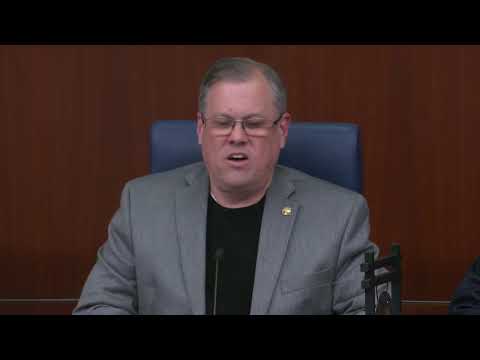
Gaithersburg weighs city-run Common Ownership Communities program to resolve HOA disputes
Loading...
Summary
City staff presented a mediation-first framework Feb. 9 proposing a city-managed Common Ownership Communities (GCOC) program to handle governance and procedural HOA disputes while clarifying limits on city authority, staffing needs and possible fee options; public commenters urged enforcement teeth and clearer jurisdictional rules.
Gaithersburg city staff on Feb. 9 presented an exploratory framework for a city-managed Common Ownership Communities program, proposing a mediation-first approach and a citizen-appointed commission to handle governance and procedural disputes in homeowner associations and condominium communities.
The presentation, led by Sebastian Andeon of Neighborhood Services, described the plan as an early, conceptual framework meant to solicit Mayor and City Council guidance rather than seek immediate ordinance or budget approval. "This presentation provides an overview of a conceptual framework for a city Managed Common Ownership Communities program," Sebastian said.
Why it matters: proponents said the county-level Office on Common Ownership Communities (CCOC) had left many homeowners without an effective remedy, and a municipal alternative could offer clearer jurisdiction, faster resolution and a local intake point. Public speakers recounted lengthy, costly experiences with the county process: "I wasted months of my life and thousands of dollars on a lawyer... which eventually resulted in $40,000 of my own money," Carol Kaplan told the Council.
Program outline and limits: staff emphasized the city model would be mediation-forward and procedural in scope. It would focus on whether associations follow their governing documents and procedures — for example, meeting notices, election procedures, access to records and quorum rules — and would not seek to regulate association budgets, set assessments, or substitute city judgments for board decisions.
Legal and enforcement mechanisms: Assistant City Attorney Eric Perla explained options for enforcement and appeals. He said municipal infractions could be created in city code to punish failures to comply with GCOC orders, adjudicated in district court, while administrative decisions of a city commission would be appealable to circuit court under Maryland procedure. "Whatever code that we decide to enact would in essence be a consumer protection law with respect to COCs," Eric said, describing how state consumer-protection provisions can authorize municipal enforcement tools.
Structure, staffing and cost: staff proposed a separate city-appointed commission modeled structurally after the Commission on Landlord Tenant Affairs (COLTA) but distinct because condominium and HOA matters fall outside COLTA's Chapter 13 authority. Neighborhood Services estimated initial workload at roughly 15–20 staff hours per week and projected an early-case volume in the range of 10–20 complaints per year. Staff presented two funding approaches: a modest household participation fee similar to the city's prior $5-per-household estimate (about 14,085 households → ~$70,000 annually) or funding from the city's general fund.
Public input and council concerns: dozens of residents testified in favor of a municipal program, urging clear jurisdictional rules, robust ethics and vetting for commissioners, and meaningful enforcement. Deb Wenzel (Colonnade) said she "strongly support[s] the creation of a City Managed Common Ownership Communities program" to provide transparency and accountability. Council members pressed staff on appeal paths, whether tenants could file complaints directly depending on issue type, and how to ensure compliance beyond modest fines (for example, daily penalties or court-ordered abatement).
Next steps: staff sought Council guidance on whether to proceed with drafting ordinance language and on initial choices about scope, authority and funding. No ordinance or budget was approved at the meeting; staff will incorporate feedback and return with draft code concepts, stakeholder engagement and more detailed cost and staffing proposals if the Mayor and Council direct them to proceed.
The Council adjourned after setting its next regular meeting for Feb. 17, 2026.