
Substitute for HB 669 advances; bill bars AI from performing tasks requiring professional licenses without human oversight
Get AI-powered insights, summaries, and transcripts
Subscribe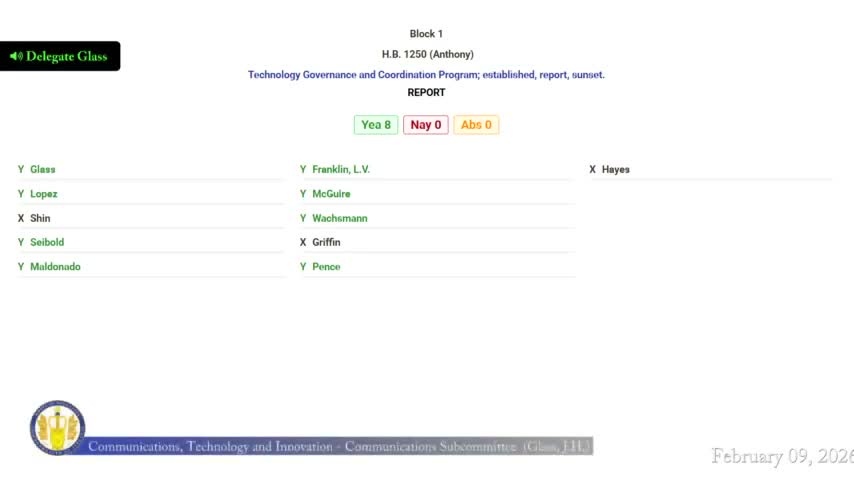
Summary
The subcommittee unanimously reported HB 669 as substituted; the substitute limits AI from engaging in activities that would require a human license, includes a cure period and reasonable-person standard, and places enforcement with the Attorney General rather than a private right of action.
The House Communications, Technology and Innovation Communications Subcommittee unanimously reported House Bill 669 as substituted after a patron presentation and brief comment from TechNet.
Delegate Maldonado introduced the substitute and said it resulted from broad stakeholder negotiation. The substitute narrows prior provisions, specifies that AI systems may not perform activities for which a human would be required to hold a state license if that would violate licensing requirements, and does not prohibit the use of AI per se. It provides a cure period, applies a reasonable-person standard to account for reliance, requires clear indication when a user is interacting with technology rather than a person, and limits the enforcement mechanism to the Attorney General’s Office instead of allowing a private right of action.
Margaret Durkin of TechNet said she briefly reviewed the substitute and welcomed the additions on reasonable-reliance standards, the cure period and enforcement placement. The subcommittee moved and seconded to report the bill as substituted; the clerk recorded the vote as 8 to 0 in favor.
With the substitute approved by voice/roll call, HB 669 moves forward to the next committee stage.