Virginia Senate commerce committee advances broad energy docket on data centers, undergrounding, EV charging and utility political‑spending limits
Get AI-powered insights, summaries, and transcripts
SubscribeSummary
The Senate Commerce and Labor Committee heard hours of testimony and reported a package of energy bills on March 1, 2026, including measures on data‑center oversight, an undergrounding pilot for high‑voltage lines, shared solar expansions, an EV charging framework and a proposal to bar utilities from passing political‑influence costs to ratepayers.
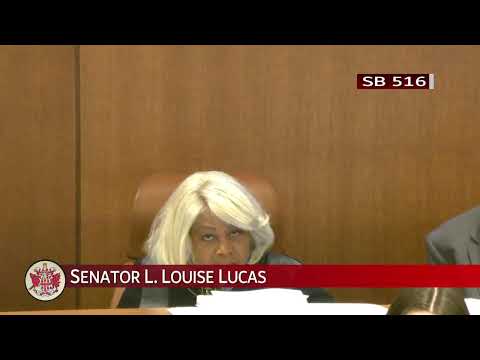
The Senate Commerce and Labor Committee met in Richmond on March 1 to consider a packed energy docket that ranged from limits on utility recovery of political‑influence costs to pilot programs for undergrounding high‑voltage transmission lines, revisions to data‑center oversight and funding for interconnection and distributed solar programs.
Shelby Green, a researcher with the Energy and Policy Institute, told the committee that Senate Bill 761 would prevent investor‑owned electric and gas utilities regulated by the State Corporation Commission from recovering political‑influence and promotional advertising costs through retail rates. "This bill would remove the cost of political influence activities such as lobbying and promotional advertising from customers' bills," Green said, adding that in recent Dominion rate cases regulators had identified roughly $22 million in costs the company sought to recover and that, she said, customers were charged about $35 million for trade‑association dues in Dominion’s last rate case.
Dominion Energy and other utilities urged caution. Chris Nolan of McGuireWoods, speaking for Dominion, warned that the substitute language could be read so broadly that routine economic development engagement and other legitimate interactions with public officials might be classified as "political influence activity." "This does not reflect current practice," Nolan said, arguing the bill could redefine long‑standing distinctions the State Corporation Commission uses in rate proceedings.
Committee members heard lengthy testimony on several bills tied to rising demand from data centers. Senator Srinivasan and others presented bills to study or authorize demand‑response and load‑flexibility programs; Senator McPike’s substitute to create on‑the‑ground programs was adopted by the committee (substitute adoption announced on the record as 15‑0‑0). The committee discussed whether study bills and implementation bills should be consolidated or handled through enactment clauses.
On transmission siting and appearance, a multi‑hour debate focused on SB 827 and related measures that would allow localities to seek State Corporation Commission review of undergrounding high‑voltage lines that run near residential zones. Sponsors proposed a pilot structure in which a locality would pay at least 50 percent of the incremental cost to put a line underground, with caps on local residential levies and SCC review to determine feasibility and public‑interest findings. Former delegate Joe May, who sponsored an earlier pilot, said prior underground projects "proved the approach is practical," while local residents described towers and large poles proposed near homes and schools.
The committee also considered bills to expand shared (community) solar capacity and to create a solar interconnection grant program (a $2 million budget item was noted by the sponsor). Senator Van Valkenburg presented a substitute to support energy efficiency and on‑bill financing pilots; sponsors said the measures could help low‑income customers and accelerate residential solar plus storage deployment.
Senator Boyse’s bill to clarify and facilitate electric vehicle fast‑charging and make‑ready investments drew broad industry support from truck‑stop operators, EV advocates and retailers. The patron worked with utilities and private businesses on guardrails; the committee reported that bill for further consideration.
What the committee did and where the bills go next
- SB 371 (McPike) — substitute adopted and the bill was reported out of committee in substitute form (substitute adoption announced on record as 15‑0‑0). The substitute directs the SEC to develop programs and, if feasible, for utilities to propose programs by May 2027. - SB 619 (Van Valkenburg) — sponsor described a solar interconnection grant program; the committee moved and recorded a roll call on the motion to report and re‑refer to finance (roll call announced on the record as 'Eyes 9, No 0, 6'). - Multiple bills on undergrounding (Srinivasan, Perry, Lucas, others) — committee adopted targeted amendments (zoning language, megawatt thresholds) and reported at least one undergrounding pilot vehicle; sponsors and Dominion agreed there remain technical and cost‑allocation details to finalize before floor consideration. - EV charging bill (SB 407) — committee reported the substitute after broad stakeholder engagement; roll call summary appears in the hearing record.
The State Corporation Commission, Dominion, data‑center companies, environmental groups and local representatives all told the panel the bills carry tradeoffs between speed of deployment, costs and local impacts. Several witnesses urged further refinement; advocates for utility ratepayer protections urged the committee to be explicit about the kinds of trade‑association and political spending excluded from rate recovery.
What happens next
Reported bills go next to the Senate floor and — where required — committees on finance. Several bills reported today carry fiscal notes or refer to the finance committee (for example, interconnection grants and the SCC staff expansion referenced in the record). Sponsors and stakeholders signaled willingness to continue negotiations before floor action.
The committee hearing record and testimony quoted above appear on the Senate broadcast and transcript; committee staff will post bill-specific amendments and fiscal language before further consideration.