
Virginia Senate advances wide package of bills; contentious assault-weapons and National Popular Vote measures pass by narrow margins
Get AI-powered insights, summaries, and transcripts
Subscribe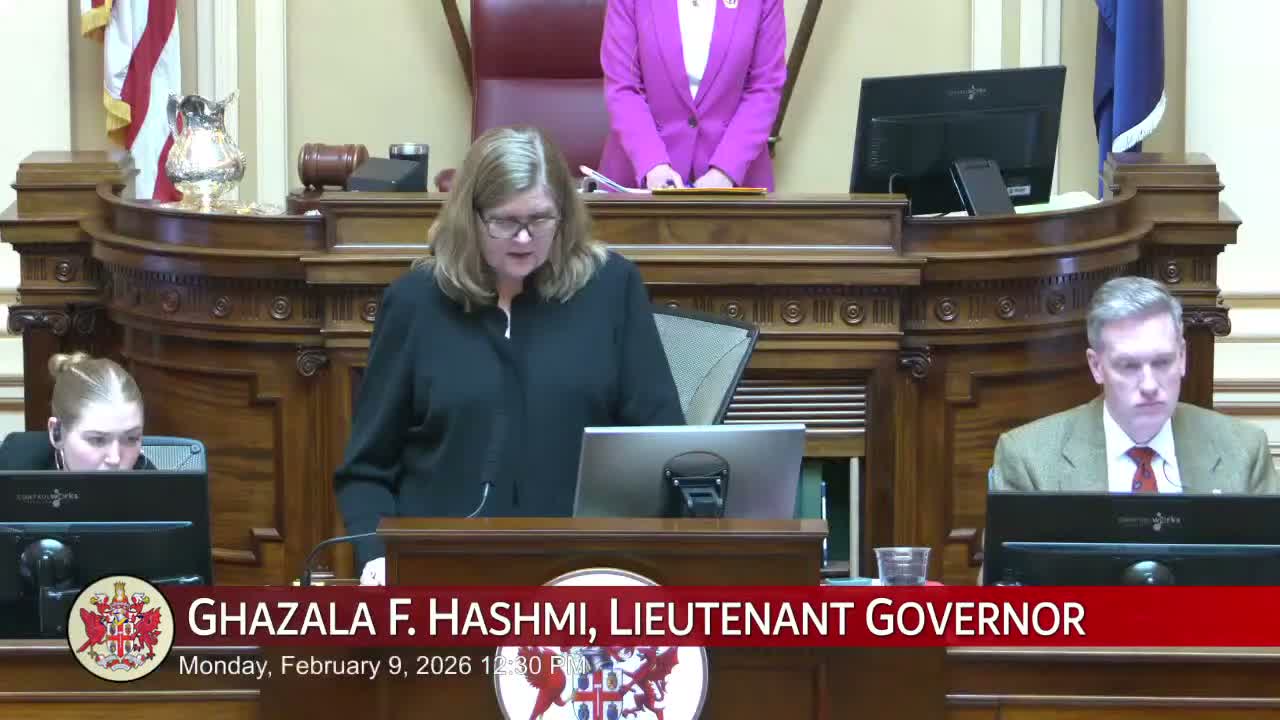
Summary
The Virginia Senate on Feb. 9, 2026 passed a broad set of bills on firearms, elections, energy and technology. Notable narrow votes included a ban on certain assault-style firearms (Ayes 21, Noes 19) and adoption of the National Popular Vote Interstate Compact (Ayes 21, Noes 19).
The Senate of Virginia met in Richmond on Feb. 9, 2026 and approved a large package of measures after floor debate and roll-call votes that stretched into evening. Lawmakers passed several firearms-related bills, a bill joining the National Popular Vote Interstate Compact, consumer protections for virtual-currency kiosks and measures addressing correctional visitation, data-center water reporting and artificial-intelligence studies.
The most closely contested measures were firearms restrictions and voting-structure reform. The chamber approved a bill to prohibit the future sale, import or transfer of a defined class of "assault firearms" (Senate Bill 7-49) on a 21–19 vote; sponsors said the measure would ban future commerce in certain rifles and high-capacity magazines while allowing current lawful owners to retain firearms purchased before the effective date. The Senate also passed Senate Bill 3-22 to add Virginia to the National Popular Vote Interstate Compact, also by a 21–19 margin.
Why it matters: the votes change the state’s statutory posture on multiple issues. If enacted as passed by the Senate, the assault-weapons measure would restrict future transactions of defined firearms and take effect July 1, 2026 (as discussed on the floor). Joining the National Popular Vote Compact would bind Virginia’s electoral votes to the national popular vote only after the compact has enough member states representing a majority of electoral votes to take effect. Both measures drew sharply divided debate and narrow margins on the roll calls.
What supporters and opponents said: supporters of the assault-weapons restrictions framed the bills as public-safety steps aimed at reducing mass-shooting harms. "Assault style weapons are weapons of mass destruction," the senator from Arlington said on the floor, urging colleagues to pass the measure as a public-safety step. The sponsor of the assault-weapons bill, the senator from Central Fairfax, told the Senate, "If you lawfully own one today, you get to keep it," emphasizing the measure would not seize currently owned firearms.
Opponents challenged enforceability and the burden on law-abiding citizens. "I don't think this is going to make anyone any safer," the senator from Lynchburg said, questioning how possession would be proven in an enforcement action and warning the change could create ambiguity for law enforcement in the field. The senator from Rockingham argued the bill "turns law-abiding citizens into criminals," saying the statute would be difficult to implement and would sweep in common firearms by outward features.
On the National Popular Vote bill, proponents said the compact would ensure the presidency reflects the national popular vote and make campaigns more nationwide in scope. The sponsor on the floor said the compact would only take effect after states representing 270 electoral votes enact it. Opponents warned that it would cede Virginia’s electoral influence to more populous states and could be the subject of post-election political maneuvering.
Other votes and actions at a glance: the Senate also passed SB 27 (standards for firearm industry conduct, Ayes 21, Noes 19), SB 38 (transfer restrictions tied to domestic-abuse convictions or protective orders, Ayes 21, Noes 19), SB 160 (expanding intimate-partner protections, Ayes 22, Noes 18), SB 173 (prohibiting weapons in hospitals that provide mental-health services, Ayes 21, Noes 19), SB 261 (making malicious killing of a companion dog or cat a Class 6 felony, Ayes 40, Noes 0), SB 276 (corrections visitation work group and reporting, Ayes 40, Noes 0), SB 3-23 (requirements on parts used to make unserialized/ghost guns, Ayes 21, Noes 19), SB 3-84 (study of independent verification for AI systems, Ayes 40, Noes 0), SB 4-89 (virtual-currency kiosk consumer protections, Ayes 40, Noes 0) and SB 5-53 (reporting water volumes supplied to data centers, Ayes 25, Noes 15). The Senate also reconsidered and advanced or engrossed many committee substitutes and floor amendments across the calendar.
A representative exchange on enforcement and burden of proof came during debate on the assault-weapons measure. The senator from Eastern Fairfax emphasized criminal-procedure norms: "The government has to believe that those exceptions don't exist before you can be charged," and noted that probable cause of a post-enactment purchase would be required for an arrest. Opponents questioned how officers would establish the purchase date during a field encounter.
Legal sources and next steps: bill sponsors and floor debate repeatedly referenced state code sections when discussing exemptions and definitions (floor debate referenced a weapons definition tied to section 18.2-308.1 as read on the floor). Many bills passed the Senate and will be transmitted to the House of Delegates (and, if passed there, to the governor) for further action. The Senate adjourned until 12 noon the following day.
Notes on sourcing and attribution: all quotes and vote tallies in this article are drawn from the Senate floor transcript of Feb. 9, 2026. Where the transcript does not give a speaker's personal name, the article attributes remarks to the role used on the record (for example, "Senator from Central Fairfax"). Where roll-call tallies were reported on the floor, those official tallies are reported verbatim.
The Senate adjourned until 12:00 p.m. the next day pending further action by the two houses.