Get Full Government Meeting Transcripts, Videos, & Alerts Forever!
Get email alerts on the Environment topic
No spam. Unsubscribe anytime.
Kennesaw resident urges council to adopt ‘conservation landscaping’ incentives
Summary
Steven Lautjens, owner of Conservation Landscaping LLC, told the Kennesaw City Council on Jan. 5 that native-plant landscaping can cut water use, reduce stormwater pollution and lower maintenance costs; he asked the city and Cobb County to explore grants, tax benefits, pilot projects and limits on selling invasive plants.
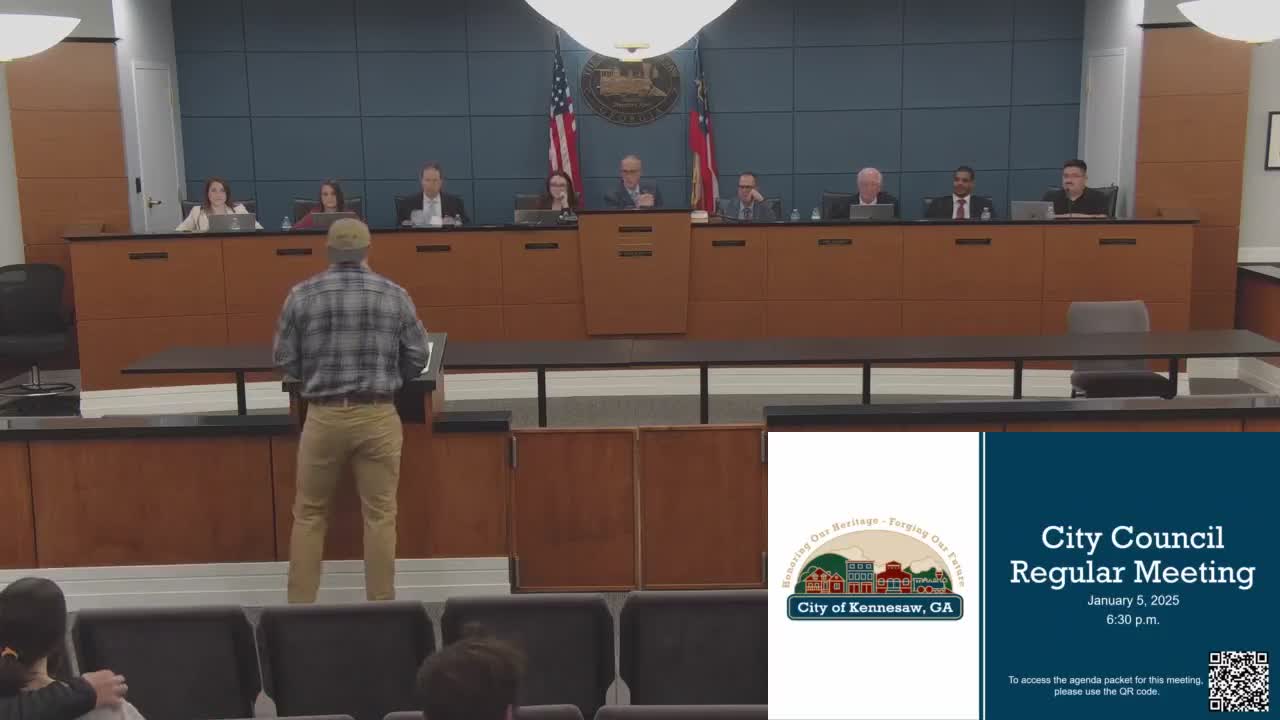
Steven Lautjens, a Kennesaw resident and the owner of Conservation Landscaping LLC, told the Kennesaw City Council on Jan. 5 that the city should encourage "conservation landscaping" to protect habitat, reduce water use and lower long-term maintenance costs. Lautjens said native plants stabilize soil, filter stormwater and "reduce runoff, which accounts for nearly 70% of the pollution in our creeks, rivers, and lakes," and argued that turfgrass consumes substantially more water than native plantings.
Lautjens described conservation landscaping as practical and cost-saving when properly designed. "When designed and installed correctly, systems such as bioswales and bioretention areas don't just look good, they function," he said. He also told council members that native plantings do not require fertilizer or pesticide and can suppress invasive species when installed after removal.
In his requests to the council, Lautjens asked the city to consider grants to fund conservation projects, tax benefits for properties that implement conservation landscaping, pilot projects and education campaigns, and potential restrictions on the sale of invasive plant species within city limits. He said he was interested in partnering with the city and Cobb County and asked for information on current or upcoming municipal projects where his services could be useful.
The council thanked Lautjens for his presentation; there was no council action tied to his requests during the Jan. 5 meeting.
The public comment occurred during the general comment period; the council proceeded to other business after the remarks.