Get Full Government Meeting Transcripts, Videos, & Alerts Forever!
Get email alerts on the Education Policy Act 313 topic
No spam. Unsubscribe anytime.
Katy Perry School Board adopts Act 313-driven policy changes, affirms two ESSER project completions
Summary
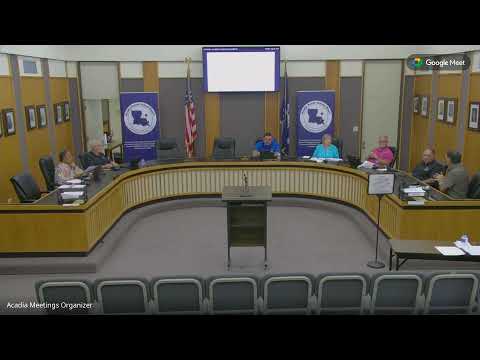
At a special session Aug. 20, the Katy Perry School Board approved policy updates required by 2024 Act 313 — changing rules on expulsions, truancy, cell phones and allowing homeschool students to try out for extracurriculars — and accepted substantial-completion reports for two ESSER projects.
The Katy Perry School Board on Aug. 20 approved a package of policy changes required by 2024 State Legislative Act 313 and accepted substantial-completion reports for two ESSER-funded construction projects.
The policy updates, approved by voice vote after discussion, implement changes the Legislature required this year on student discipline, truancy enforcement, electronic-device rules and participation of home-study students in co‑curricular and extracurricular activities. At the same meeting the board voted to accept substantial completion of ESSER project E-13 (Iota Elementary classroom addition and covered rider) and ESSER project E-025 (Crowley interior gym renovations).
Why it matters: Act 313 alters what districts may and must do in several areas that affect students and families. The changes raise practical and fiscal questions for school leaders — from how principals document and apply discipline under the revised expulsion rules to how districts verify eligibility and manage increased demand on athletics and booster-club resources.
Discipline and expulsions Staff told the board that, under the law, a device that contains a marijuana derivative can trigger expulsion.
“Now it is something that they can be expelled [for] if it has any type of derivative of marijuana,” staff said during the meeting. Board members asked for clearer, school-level guidance so parents understand the difference between suspensions and expulsion and what conduct or substances trigger the stricter penalty. Staff reiterated that principals retain discretion on suspension length but that expulsions are more likely under the new statutory framework, for example after multiple suspensions.
Homeschool students and extracurriculars The board heard that Act 313 requires districts to allow home‑study (homeschool) students to try out for teams and participate in extracurricular activities if they meet the same rules, regulations and eligibility requirements as other students. Staff said home‑study students must meet district eligibility standards (attendance, academic minimums and coach selection) and noted the law does not guarantee placement on teams.
Several board members raised equity and implementation concerns: how the district will verify GPAs for homeschooled students, whether homeschooled students can attend credit-bearing physical-education classes during the school day, and the financial impact on booster clubs (uniforms, travel, equipment and insurance). One board member urged the district to consider legislative advocacy next year for any additional state funding needed to cover expanded participation.
Truancy enforcement and parental accountability Board discussion covered new truancy provisions that require parents or legal guardians to ensure make‑up work and to attend regular progress meetings until students catch up. A board speaker warned that, under the law, a parent who intentionally defies attendance requirements "could be arrested for the crime of negligent supervision of students," and urged the district to coordinate with law enforcement and the district attorney to develop local enforcement protocols.
Staff also noted non‑criminal enforcement tools used elsewhere, such as temporarily suspending hunting and fishing licenses, as an example localities have used to compel compliance.
Cell-phone policy and rollout District staff said they issued a parish-wide letter and school-level notices (Remind, website posts, flyers) explaining the cell-phone policy changes. Principals reported that, in the first days of school, problems were limited and that most students complied when devices were properly stowed and turned off. Board members asked staff to ensure consistent school-level practices so students are not penalized by unclear rules.
Votes at a glance - Substantial completion: ESSER project E-13 (Iota Elementary classroom addition and covered rider). Motion by "mister Seymour," second by "mister Higginbottom." Outcome: approved by voice vote (chair recorded "Ayes have it"). - Substantial completion: ESSER project E-025 (Crowley interior gym renovations). Motion by "missus Kenteta," second by "mister Bibbidot." Outcome: approved by voice vote. - Policy package implementing Act 313 changes (discipline, truancy, cell phones, home-study extracurricular participation and related items). Motion to approve the said policies moved and seconded; outcome: approved by voice vote (chair declared "Ayes have it").
What’s next: Staff said they and local partners will follow up on implementation details — clarifying student-handbook language, working with principals on consistent enforcement, coordinating with courts and law enforcement on truancy protocols, and returning to the board with any recommended operational adjustments or budget requests.
The special session adjourned after the votes.