Get Full Government Meeting Transcripts, Videos, & Alerts Forever!
Get email alerts on the Immigration Policy topic
No spam. Unsubscribe anytime.
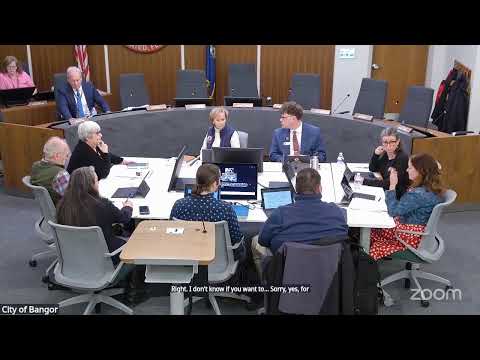
Bangor council advances review of ordinance limiting city use of resources for civil immigration enforcement
Summary
After hours of debate about legal risk, community fear and enforcement practicality, the council voted 5–4 to refer a proposed Chapter 46 ordinance (prohibiting use of city funds, facilities or personnel for federal civil immigration enforcement absent a judicial warrant) for first reading and committee review; city solicitor said the draft needs substantial legal work.
Councilors spent the workshop examining a proposed ordinance (Chapter 46) that would restrict the use of city resources for federal civil immigration enforcement unless a judicial warrant is presented.
Councilor Beck, who introduced the draft, said the ordinance ‘‘protects our budget by prohibiting the use of city funds, facilities, and personnel for federal civil immigration enforcement unless the federal government provides a judicial warrant.’’ Beck framed the proposal as a measure to protect municipal resources, reduce legal exposure and preserve trust between residents and local public-safety officials so witnesses and victims will report crimes.
Opponents raised a mix of legal, operational and fiscal concerns. Councilor Fish said the city’s police have not historically engaged in immigration enforcement and warned of possible unintended consequences, including liability and the risk of jeopardizing federal or state funding. Fish said, “So, no. I’m not for this, and it doesn’t mean that I’m not for the immigrants. I expect due process.” Other councilors questioned whether the measure would meaningfully change federal practice, how enforcement would be verified (who would confirm a judicial warrant), and whether the municipal code should be used when a less legally fraught resolve might address community fear.
Councilor (speaker 9) recounted community examples collected with the Maine Multicultural Center, describing detentions and deportations of people with no criminal history and families who have kept children home from school out of fear; the councilor said a legal clinic has had 18 families sign up for powers-of-attorney preparations. “If any family is living in fear in our city, then we should, as city councilors, feel obligated to take some action,” the councilor said.
City solicitor Dave Heception told the council he had only a few days to review the draft and identified multiple provisions that, as written, present constitutional or employment-law problems and potential conflicts with federal law. Hecepcion said some language may violate the Fourteenth Amendment’s equal-protection clause and warned that publicly accessible complaint records about employees could conflict with employment-law protections. “These ordinances as written, I really cannot recommend be passed,” he said, and advised a substantial legal analysis before proceeding.
After discussion the council moved two items: a motion by Councilor Beck to refer the Chapter 46 ordinance for first reading and referral to committee for legal review passed on a roll-call vote recorded as 5 yes, 4 no. A separate motion to amend and refer changes to chapters 28 and 33 was moved later; the city solicitor later characterized the votes as 5–4 in favor on the first motion and 4–5 on the second.
Council leadership and the city manager clarified process: first reading on the full council will refer the ordinance to committee for legal vetting, the committee may request postponement if more legal work is necessary, and any changes may be made prior to second reading. The council also moved to enter executive session for consultation with the city solicitor under 1 MRSA §405(6)(E).
Next steps: the ordinance as drafted will be referred to committee and legal staff for review and revision before any second reading or final vote.