Get Full Government Meeting Transcripts, Videos, & Alerts Forever!
Get email alerts on the Volunteer Response topic
No spam. Unsubscribe anytime.
Local volunteer network and foundations mobilize: nearly 800 households helped, muck-and-gut teams deploying
Summary
COAD leaders and the San Angelo Area Foundation described rapid volunteer mobilization, shelter and intake statistics and the plan to deploy vetted muck-and-gut teams and coordinated distribution of donated goods starting Monday.
Community Organizations Active in Disaster (COAD) leaders and nonprofit partners described a week of volunteer response that provided food, clothing, shelter vouchers and intake assistance to flood survivors and outlined the next phase of cleanup and financial support.
Mike Burnett, executive director of the Concho Valley Community Action Agency, said Paul Ann Baptist Church operated intake and distribution services and had served "just shy of 800 households" (about 1,900 individuals) in seven days and placed about 140 households into emergency non-congregate hotel shelter. He said volunteers and partner nonprofits have sorted donations and staffed intake and supply operations.
COAD is organizing 'muck-and-gut' cleaning crews and has vetted six teams to lead coordinated household clean-outs: local TLC and five national teams — Team Rubicon, Samaritan's Purse, Minutemen Disaster Relief, God's Pit Crew and Texans on a Mission — which officials said will begin operations this weekend. COAD's coordinator for that effort is Stephanie Hamby of Galilee CDC, Burnett said; residents who receive private help were asked to coordinate with COAD to avoid duplication.
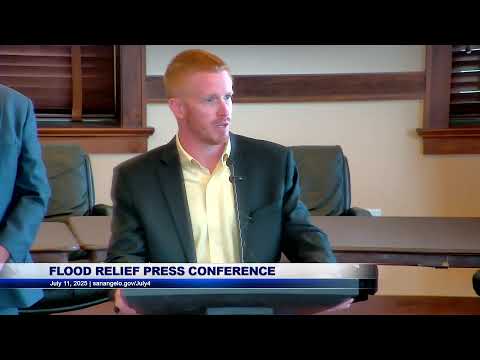
The San Angelo Area Foundation is serving as the fiduciary for monetary donations. Matt Lewis, the foundation’s president and CEO, reported roughly 800 donations to the disaster fund and said the fund had exceeded $1,000,000. He cautioned that "$1,000 per household" (if divided evenly across a hypothetical 1,000 households) would not cover large repairs and said the foundation and COAD will develop a mechanism to distribute emergency grants when authorized.
COAD leaders also said utility providers have pledged not to disconnect service for affected customers who notify their providers they live in an impacted area, and the Red Cross will provide case management for people moving from shelters into more permanent housing.
Leaders urged local donors to give money to the disaster fund and asked volunteers and groups providing direct cleanup help to coordinate with COAD to ensure households are prioritized and not serviced twice.
Next steps: COAD will release a specific list of needed physical donations and drop-off locations on Monday, and muck-and-gut teams will deploy in coordination with the ISTAT damage-assessment list.