Get Full Government Meeting Transcripts, Videos, & Alerts Forever!
Get email alerts on the Land Use Subdivision topic
No spam. Unsubscribe anytime.
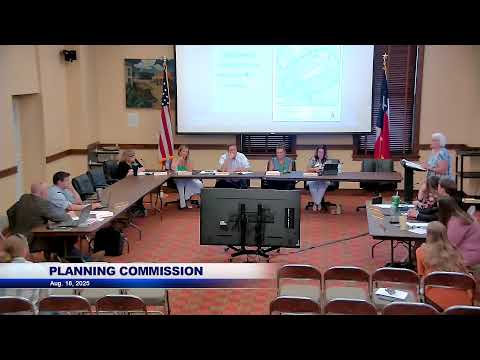
Planning commission approves Section 1 of Baptist Memorial subdivision, delays Section 2 for 30 days
Summary
After lengthy debate and staff opposition, the San Angelo Planning Commission approved the final plat for Section 1 of the Baptist Memorial retirement community (49 lots) and granted multiple variances while voting to delay Section 2 for 30 days to allow further review of complex infrastructure and maintenance issues.
The San Angelo Planning Commission voted to approve the final plat for Section 1 of the Baptist Memorial retirement community, a 9.066-acre subdivision to be divided into 49 residential lots, and granted several variances to allow existing, narrower streets and other adjustments. The commission also voted to delay consideration of Section 2 — a larger, more complicated 47.288-acre area with 136 lots — for 30 days under a statutory waiver so staff can continue review.
Austin Reed, senior planner, told the commission Section 1 includes existing 8-inch water and sewer mains and recommended approval of the final plat subject to 10 conditions and three notes, but staff recommended denial of several requested variances affecting right-of-way and paving widths because accepting substandard roads would represent a long-term financial burden for the city. "Taking on these roads in a substandard condition would really represent a financial deficit for the city," Reed said (staff presentation).
Public works staff voiced formal opposition to granting the variances without further analysis. Shane Kelton, executive director of public works, warned that converting parts of a gated private development to public streets raises maintenance and access issues, including fence ownership and how the city would access and maintain edges of pavement and landscaping. "There's a lot of things that we need to look at here," Kelton said, noting the need to evaluate mowing, street maintenance and long-term repair obligations.
Applicants and their engineer urged the commission to approve Section 1 with variances, saying many utilities are already in easements and that the configuration of the lots and streets functions today. Russell Gully of SKG called the situation "very complex" but said Section 1 is "relatively straightforward" compared with Section 2, which he described as "a mess from all different perspectives." Gully said the corporation intends to convey properties to individuals, which would begin property-tax collection on those parcels.
Commissioners pressed staff for more detail on costs and the timeline for the city to complete a full assessment. Public works provided a preliminary 20-year maintenance estimate — including mowing and street upkeep — of roughly $1,000,000, a figure commissioners cited when weighing short-term costs against projected property-tax revenue. One commissioner estimated a section of 52 lots could yield about $3,800 per home annually, producing nearly $200,000 per year in taxable revenue for that phase once homes convert to privately held parcels.
After deliberation and public comment, the commission approved Section 1 and granted variances referenced in conditions 4–8 and the applicant’s requested three-foot incremental half on North Poe. The motion recorded that approval is subject to conditions 1, 2, 3, 9 and 10 being met and to executing the required drainage study and potential developer agreement prior to recordation. The commission also agreed to a 30-day waiver postponing Section 2 to allow additional vetting by city staff.
The commission’s action does not obligate the city to accept dedicated streets; staff counsel clarified the city accepts dedication and begins maintenance only when municipal authorities make an appropriation or demonstrate acceptance by entry, use or improvement. Next procedural steps: applicant to satisfy the cited conditions, complete required studies and, if necessary, return with any revised documents or appeals to city council.