Get Full Government Meeting Transcripts, Videos, & Alerts Forever!
Get email alerts on the Finance topic
No spam. Unsubscribe anytime.
San Angelo staff detail indirect cost allocation plan; board seeks clearer direct-vs-indirect view
Summary
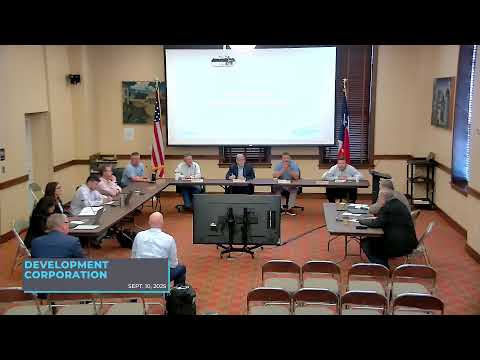
Assistant Finance Director Ryan Gaddy briefed the San Angelo Development Corporation board on the city's annual indirect cost allocation plan, saying COSADC's share is about $222,000 (roughly 1.5% of the $14.7M total allocated cost). Board members asked for clearer side-by-side reporting of direct and indirect costs.
Assistant Finance Director Ryan Gaddy presented the San Angelo Development Corporation board with the city's annual indirect cost allocation plan, explaining how the city distributes shared administrative costs to operating programs and funds.
Gaddy said the current fiscal-year allocation to COSADC is about $222,000, which he characterized as roughly 1.5% of the approximately $14.7 million total allocated administrative cost across receiving departments. He said legal and finance are the largest service-provider components and that the city contracts with MGT Consulting to prepare the detailed allocation study.
"An indirect cost allocation is an accounting function by which estimates are made to distribute indirect costs to programs or functions in order to approximate their full cost," Gaddy said, describing the methodology and how cost drivers vary by function. He said allocations for purchasing are driven by purchase orders and contract activity, payroll allocations are based on assessed time by function, and utility-billing functions (water billing) are allocated directly to those funds.
Board members pressed staff for clarity about a recent decline in allocated amounts compared with prior years and whether that decline reflected a drop in activity or changes in accounting practice. Gaddy said activity levels have declined and cited a change made in fiscal 2024 to move IT into an internal service fund as one example that reduced allocations to COSADC. "The activity levels are a function of how much activity is brought forth to the board," he said.
Directors also asked for a more comparative presentation showing direct costs alongside indirect allocations. One board member asked for a five-year table that places indirect allocations next to direct expenses so the board can assess the full operating cost of COSADC year-by-year. Staff agreed to produce a digital copy of the study and to provide side-by-side columns showing indirect allocations and direct costs for future review.
The board discussed the consultant's data inputs; Gaddy said the city provides the consultant with the full municipal budget and identifies cost centers or items that should be excluded from allocation. He also noted that the process supports federal grant accounting requirements and full-cost allocation where required.
The presentation concluded with staff offering to return with a focused walk-through on particular departments if the board wanted deeper analysis.
Next steps: staff will provide the requested digital reports and a comparative table that separates direct and indirect costs for COSADC for the board's review.