Get Full Government Meeting Transcripts, Videos, & Alerts Forever!
Get email alerts on the Historic Preservation topic
No spam. Unsubscribe anytime.
Holladay planning commission approves conditional use for David McDonald House jewelry shop
Summary
The Holladay Planning Commission unanimously approved a conditional‑use permit allowing J. Brooks Jewelers to operate at the newly designated David McDonald House (4659 S. Highland Drive), with conditions to retain the historic fence, add two small‑to‑medium trees in front, and comply with waterway and parking rules.
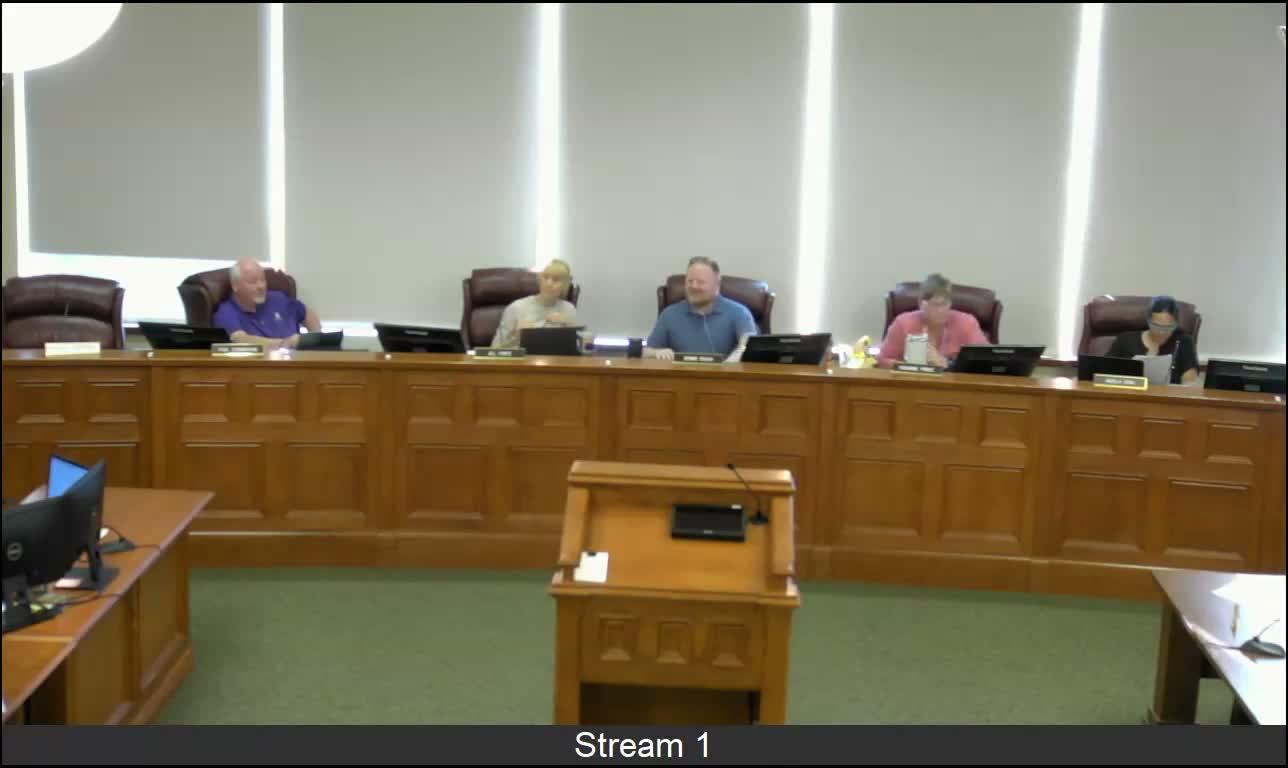
The Holladay City Planning Commission on Sept. 2 approved a conditional‑use permit allowing a small custom jewelry shop to operate at the David McDonald House, a property recently added to the city’s historic sites list.
City staff told commissioners the house at 4659 South Highland Drive was designated a historic site by the city council last week and that the owner proposes limited, historically sensitive exterior work and interior adaptations to support a low‑scale retail use. City staff noted the project includes ADA access, window replacements for energy and security reasons, parking refinements and a structural rebuild of a rear porch to support a new second‑floor sunroom.
"It is being proposed for use as a jewelry store, doing custom jewelry, very low scale, very similar to an antique shop or art shop," city staff said, describing the application and the Technical Review Committee suggested findings. Staff also explained tree‑replacement requirements that apply when front trees are removed.
Applicant John Brooks, owner of J. Brooks (Jay Brooks) Jewelers, told the commission he and his team plan to preserve the front fence and reinstatement details where feasible, expand or reconfigure some parking behind the building, remove dead front trees and otherwise restore the property’s appearance. "If I tried to remove that fence in the front, my wife would divorce me," Brooks said, adding that several of the McDonald family’s descendants have visited and support reuse of the house.
Architect Corey Sullivan of Think Architecture said the design team will repair and, where necessary, refabricate historic elements (including the frieze and window trim), attempt to reinsert original stained‑glass modules into new windows where possible, and reuse salvageable sections of the iron fence as part of a redesigned entry.
Commissioners focused questions on parking adequacy, tree selection compatible with nearby power lines, the proposed porch column scale and protection of the adjacent canal or canal corridor. Staff said the site currently has seven parking stalls and estimated a projected customer volume of roughly 15–20 cars per day for the jewelry use; staff also noted shared‑parking agreements are an option if on‑site stalls prove insufficient.
The final motion approved the conditional‑use permit based on the TRC suggested findings and added conditions that the applicant retain and reuse the historic fence where practicable, plant two small‑to‑medium trees that fit the site constraints, and ensure any parking expansion and work near the east‑side canal comply with city waterway‑protection requirements and parking standards. Commissioner Fondt seconded the motion, and the commission voted aye (Commissioners Barrett, Ghong, Vice Chair Prince, Follent, Cunningham and Chair Roach voting in favor). The motion passed unanimously.
The application now proceeds under the terms of the approval and recorded PUD/plat requirements; staff will track compliance with the conditions listed in the approval. The commission recessed immediately after the vote.