Get Full Government Meeting Transcripts, Videos, & Alerts Forever!
Get email alerts on the Land Use topic
No spam. Unsubscribe anytime.
Planning commission approves Vertical Converting expansion at Prosper Industrial Park
Summary
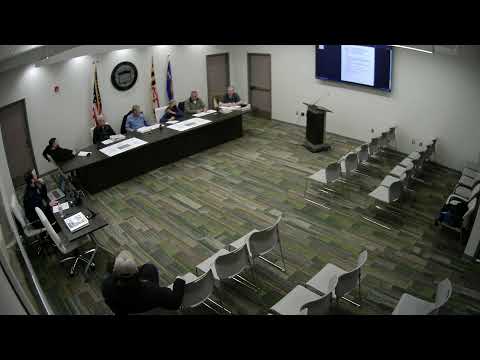
On Jan. 14, 2026, the Prosper Planning Commission voted to approve a site plan for Vertical Converting’s expansion at Prosper Industrial Park in Frostburg, Maryland. Presenters described an addition with 18 loading docks, wetlands mitigation and an estimate of 25 new skilled jobs over five years.
The Prosper Planning Commission voted Jan. 14 to approve a site development plan for Vertical Converting’s expansion at Prosper Industrial Park in Frostburg, Maryland.
Adam Felty, who identified himself as vice president of real estate development and construction for Bro Verde, presented the plan on behalf of Vertical Converting and said the project will add a connected structure to the existing manufacturing facility on Lots 5 and 8 off Hoffman Hollow Road. "The project scope is building an addition to our current structure including 18 loading docks, concrete pads," Felty said during his presentation, which the commission reviewed with plans dated Jan. 12, 2026.
The proposal covers about 12.2 acres of property with roughly 10.16 acres of disturbance and a proposed 6.3 acres of impervious surface, according to Felty. He described earthwork of about 62,500 cubic yards with a cut of roughly 10,200 cubic yards. The building would be concrete tilt-up construction with clear ceiling heights in excess of 20 feet and a proposed height of about 28 feet, under the 50-foot zoning limit cited by the presenter.
Felty said utilities are shown on the plans and that the applicant will request a new electrical service from Allegheny Power to meet equipment demand. Fire protection elements include hydrants, an on-site fire access road and a fully sprinklered building meeting NFPA code separation requirements. Stormwater design relies on environmental site design (ESD) features, micro-bioretention and other controls intended to avoid a net increase in runoff and to comply with Maryland Department of the Environment (MDE) standards.
Presenters acknowledged wetland impacts identified on the plan. An attendee pointing to sheet C2 described the wetland impact area as "a little over 1,000" (on the wetland summary) and a buffer of about 4,000 (as shown on the drawings). The applicant said a joint application with the state waste/resource administration and required NPDES permits would be pursued and that the impact is expected to be low; detailed mitigation information will be included in permit submissions.
On the economics of the project, Felty said Vertical Converting currently employs 52 people and "over the first five years, we anticipate 25 new skilled employees," with the potential to reach roughly 100 employees across shifts as operations scale. Commissioners discussed workforce needs and were referred to county workforce-development contacts to assist with recruitment.
After questions about wetlands, access, parking and construction timing — the presenter said construction could begin in 2026 or be pushed to 2027 depending on business timing and equipment procurement — Commissioner Jeff Snyder moved to "approve the project as presented." The chair stated the motion had been moved and seconded and the commission voted in favor; one abstention was recorded. The commission and the applicant clarified that city-engineer sign-off, community development permits and state permits (including MDE and soil conservation district reviews) remain required before work begins.
Commissioners asked whether landscaping details would need to be returned for approval; the applicant said a landscape plan will be provided as an addendum during later permit stages and that the city engineer and permitting process will review it.
The project will proceed to the required permitting and agency reviews; the Planning Commission’s approval clears the plan to move forward in the local entitlement process but does not replace subsequent reviews or required state permits.