
Charlottesville schools ask city for $2.9M to fund 10.5% raise for support staff; council weighs $2M
Get AI-powered insights, summaries, and transcripts
Sign Up Free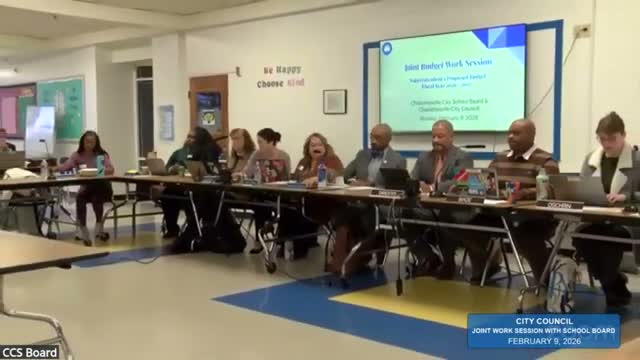
Summary
Superintendent Dr. Gurley asked the city for $2.9 million to fund a 10.5% raise for support professionals; city staff said $2.0 million is currently in the city draft and councilors debated tax and budget tradeoffs ahead of a Feb. 19 vote.
Superintendent Dr. Gurley told a joint Charlottesville City School Board and City Council work session that the school division and the Charlottesville Education Association have a tentative agreement that, if ratified, would provide a 10.5% raise for support professionals. He said the bargaining unit will vote on the contract before the board considers its budget on Feb. 19 and that the school board is asking the city to fund an overall request of about $2.9 million to cover collective-bargaining costs and other priorities.
The request follows a presentation in which Dr. Gurley outlined state funding constraints, including the Local Composite Index (LCI). He said Charlottesville’s LCI fell from 77.02% to 76.66%, and combined with a slight enrollment decline the division will receive less state aid. Dr. Gurley described personnel and operating assumptions used in the draft budget, including use of a lower Virginia Retirement System rate, vacancy savings and about $1.1 million in savings from reconfiguring 10 FTE positions (one principal, one assistant principal, seven teaching positions and a guidance secretary), which the presentation described as position changes rather than individual layoffs.
City staff at the meeting said the city draft currently includes $2.0 million toward schools’ requests; councilors and staff described a remaining gap of roughly $900,000 between the city’s number and the schools’ $2.9 million ask. City staff said the city had narrowed a starting imbalance of about $13 million to just over $4 million through budget adjustments and that decisions about additional revenues or program changes remain. Councilors discussed tax levers — real estate, personal property, lodging and meals — and noted that a 1¢ change in the real estate tax was estimated in the discussion at about $1.2 million.
The presentation included program investments that the division proposes to expand, such as converting a health and medical sciences position to full time, making an agricultural/veterinary teacher a full-time FTE at Charlottesville High School and creating a lead gifted specialist. Dr. Gurley also showed contract increases for maintenance and transportation (presentation figures cited a maintenance increase of about $232,000 and a transportation increase of about $238,000 to the annual totals).
Dr. Gurley described the schools’ ask as inclusive of the elements in the current draft collective-bargaining agreement. When asked whether the $2.9 million figure covered the full CEA package, he replied that the $2.9 million is “inclusive of everything that’s in the current, draft collective bargaining agreement.” City staff said they would continue working through details ahead of the city’s proposed-budget presentation to council on March 2 and the school-board budget vote on March 3.
The meeting produced no formal vote on the school budget itself; several procedural motions were taken at the start of the session to permit remote participation and to approve the agenda. The joint session closed after an extended public-comment period in which teachers, support staff and parents urged council to fund the full 10.5% and raised concerns about morale and retention.
Next steps: the CEA bargaining-unit vote is expected before Feb. 19, the city’s proposed budget presentation is scheduled for March 2, and the school board plans to bring its budget back on March 3.