Lifetime Citizen Portal Access — AI Briefings, Alerts & Unlimited Follows
Lewiston planning board urges council to trim FY2027 capital plan, preserves TIFs and parks
Loading...
Summary
The Lewiston Planning Board unanimously recommended the City Council adopt the FY2027 Capital Improvement Program with targeted guidance: consider cuts to police take-home vehicles, large school-space requests and a Lisbon Street fire-station chunk while preserving investments that leverage outside funding (TIFs, MDOT projects, parks).
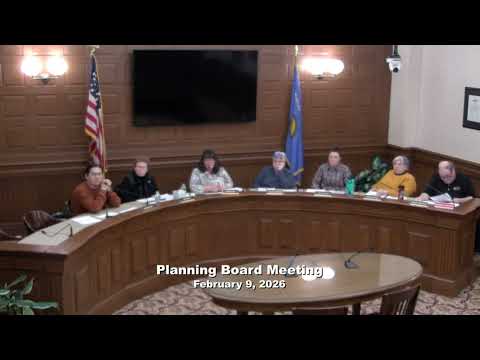
The Lewiston Planning Board voted unanimously to send a favorable recommendation to the City Council on the fiscal year 2027 Capital Improvement Program, while urging councilors to consider targeted cuts and to adhere to the city's debt-reduction policy.
Chair Shanna Cox read the board's recommendation into the record and asked that the council "aim to the adherence of the debt reduction policy." Board members coalesced around several recurring concerns: the scale of the overall $34 million request, insufficient detail on some large line items, and the risk of deferring needed maintenance.
Board member Michael Marcotte argued the package was excessive and singled out three candidates for cuts: police take-home vehicles (itemized in the LCIP at roughly $5,000,002.46), the Lisbon Street fire-station replacement (approximately $7,041,006.87) and unspecified school education-space requests. "$34,000,000 is outrageous to put before us," Marcotte said as he explained his priorities.
Several members agreed that routine maintenance and water-sewer projects should be preserved. Penthea Burns, citing a recent audit, said she would not support cutting water, sewer or stormwater projects because "do not defer maintenance" should guide capital choices. Amy Smith highlighted a consistent omission in the LCIP: operational (OPEX) costs tied to new capital purchases, noting the document listed large capital amounts with little accompanying OPEX analysis.
On the police fleet, members recommended scaling the purchase to hires and treating an initial buy as a pilot rather than a full upfront program. "There is good rationale for a pilot program," Cox said, urging the council to consider a phased approach tied to actual hiring.
The board also recommended preserving projects that leverage outside funding and create economic return, including the Continental Mill TIF, MDOT-administered projects, park investments and the Riverfront Island implementation (noted as largely federally funded this year). Board members repeatedly cited the importance of prioritizing items that attract outside dollars or generate future tax revenue.
The board approved a motion that the council consider cuts to take-home vehicles, education-space requests (or the broader school budget), street maintenance and the Lisbon Street fire station while explicitly recommending preservation of investments that leverage outside funds (TIFs, parks, MDOT areas). The motion passed on a unanimous roll call.
Next steps: staff will include the board's recommendations and guidance in the council packet; the board directed staff to return with clarifying details where departments did not fully answer prior questions. The LCIP recommendation will be included in the City Council review process.
Vote at a glance: the final motion to transmit the recommendation passed unanimously on roll call.