Get Full Government Meeting Transcripts, Videos, & Alerts Forever!
Get email alerts on the Land Use Moratorium topic
No spam. Unsubscribe anytime.
Milton council extends moratorium on small AG‑1 subdivisions after staff presentation on lot‑coverage trends
Summary
After a staff presentation on rising footprints and lot‑coverage on AG‑1 properties and public comment urging preservation of rural character, the Milton City Council voted 6–1 to extend an emergency moratorium (up to 120 days) barring acceptance of minor subdivision plats creating lots under 3 acres.
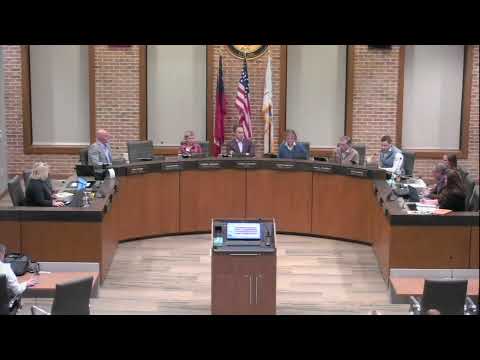
Milton — The Milton City Council voted 6–1 on Feb. 9 to extend an emergency moratorium that halts acceptance of new minor subdivision plats in the AG‑1 zoning district that would create any lot smaller than 3 acres, giving staff time for broader public outreach and potential code changes.
City Attorney Angela Davis read the resolution's scope into the record, saying the extension could run "up to 120 days, which gets us to June 9," but that the council could terminate the moratorium earlier by subsequent vote. The measure is agenda item 26‑052 under the City of Milton Unified Development Code, Article 12 (Subdivision of Land).
The vote followed a staff presentation led by Community Development and Public Works Director Sarah Leeters and Deputy Community Development Director Tracy Wildes. Staff told the council that, based on CityView permitting data from roughly 2021–2025 limited to AG‑1 lots, recent building trends show larger house footprints and rising lot‑coverage ratios on the same or smaller parcel sizes. Leeters summarized the key procedural concern: "The minor plat process is quick and easy with limited upfront review," and that can push site‑specific development issues into the later building‑permit stage.
Why it matters: Staff said the combination of larger homes (the "root cause") and an expedited minor‑plat process (the "amplifier") can produce lots that meet minimum code but produce outcomes some residents say conflict with Milton's 2040 comprehensive‑plan vision for a rural, equestrian character. Staff flagged adjacency concerns where a new side yard adjoins an existing rear yard and noted examples in which applicants either modified designs, used pervious materials or, rarely, sought small variances from the Board of Zoning Appeals.
During the presentation staff gave several data points and examples: 36 minor plats produced 83 lots in the past five years for parcels between 1 and 3 acres; the staff dataset showed 123 new home permits on 1–1.5‑acre lots across the 2022–2025 window used for certain analyses; and, in some years, the lower third of lot‑coverage approvals fell in a 10–15% range while 2025 saw fewer plans below 15% coverage. Staff also noted that, in the past three years, five BZA approvals were granted (four pool variances and one driveway variance) and that many other inquiries were resolved with alternative solutions.
Council members pressed staff on trade‑offs. Several asked whether eliminating the minor‑plat process and moving all subdivisions through the preliminary/final plat track would unfairly burden landowners or developers and what the cost and time differences would be. Staff recommended a two‑track approach: a faster, focused review to address the minor‑plat procedure and a longer, data‑driven review of lot‑development standards (for example, standardized lot‑coverage percentages, floor‑area‑ratio calculations and required as‑builts).
Public input shaped the debate. Three speakers urged the council to extend the moratorium so staff can fully vet code options and hold broader community engagement. Tony Rich, of Bethany Way, urged the council to preserve "what makes Milton different" and said incremental subdivision "erodes" the city's rural and equestrian character. Homeowners and beekeepers who spoke emphasized that smaller lots can constrain agricultural uses, tree canopy and long‑term land stewardship.
Council members discussed timing and flexibility. Staff said the most compressed schedule could deliver a planning‑commission review and a council decision by April 13 if all hearings and advertisements align, but legal counsel warned that public‑notice and zoning‑procedure rules can require lead time. The resolution as adopted permits up to 120 days but allows the council to end the moratorium sooner if work completes earlier.
The motion to adopt agenda item 26‑052 was made by Council member Cookerly and seconded by Council member Brian Dolan; the motion carried 6–1. Council members said they plan additional public forums and stakeholder outreach to define concrete outcomes and realistic constraints for any future code changes.
Next steps: Staff told the council they would expand outreach beyond the limited stakeholder survey used for the presentation, hold open forums for residents and developers, and prepare code amendment options and schedule draft zoning hearings. The council indicated an intention to aim for an April 13 target to complete the expedited minor‑plat review track while retaining flexibility to extend the moratorium if necessary.
The meeting adjourned following routine closing items.