Get Full Government Meeting Transcripts, Videos, & Alerts Forever!
Get email alerts on the Disability Policy topic
No spam. Unsubscribe anytime.
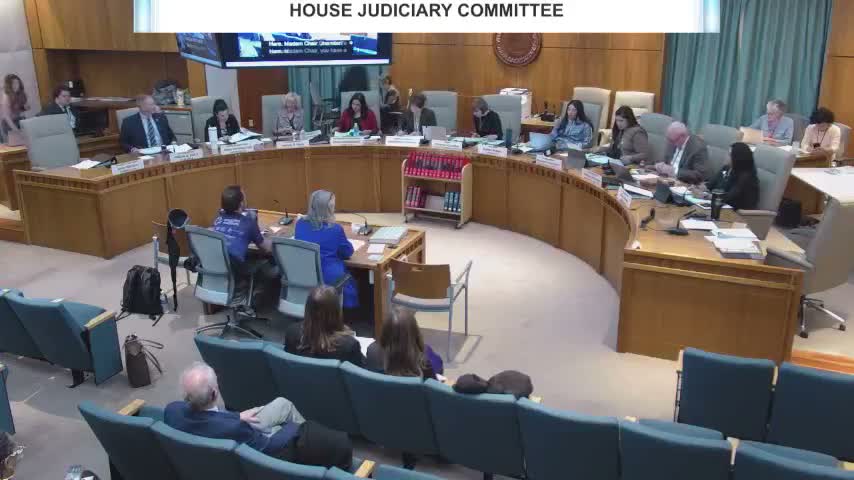
Representatives hear testimony on HB38 to expand insurance coverage for activity wheelchairs
Summary
Representatives considered House Bill 38 to require insurers to cover activity-specific wheelchairs and related devices; advocates and clinical witnesses described denials, clinical benefits and negotiated guardrails limiting devices per member.
Representative Kathleen Cates introduced House Bill 38, which would require health plans to cover activity-specific wheelchairs and related complex-rehabilitation technology in addition to basic daily-use devices, aiming to allow people with limb loss to remain active. "This bill...is really just adding activity chair or wheelchairs to the...devices that are approved so that individuals can continue to be active," Cates said.
Advocates and clinicians made the case during the public-comment portion. Kyle Stepp, a para athlete and national disability advocate, described repeated denials for activity prosthetics after an above-knee amputation: "I received 6 denial letters, and the last denial said the artificial leg that you've requested exceeds your basic and minimum needs." He and others said New Mexico's prior prosthetics legislation inspired similar efforts in other states and that expanding coverage is a matter of parity.
Varian Acheva of the Office of Superintendent of Insurance said HB38 "clarifies that people with limb loss have access to mobility devices and wheelchairs on a non discrimination matter," and urged committee support. Jim Jackson of Disability Rights New Mexico and Ellen Pines of the Disability Coalition emphasized inclusion and access, and Deborah Condit of the American Physical Therapist Association described clinical benefits for functional independence.
Sponsors described negotiated guardrails with health plans intended to prevent overutilization while ensuring access: the draft limits coverage to no more than two complex-rehab-technology devices per member and no more than three prosthetics per affected limb per member, and specifies a three-year period for device counts. In response to questions from the committee, Cates said the three-device limit is "up to 3 devices every 3 years, but only if that is a recommendation." The bill draft does not appear to amend the Public Assistance Act for Medicaid coverage in this version; sponsors noted implementation questions remain.
The committee concluded public comment and placed the bill on the committee calendar for follow-up and due-date scheduling.