
Assembly approves $90 million in one-time grants to support Planned Parenthood clinics
Get AI-powered insights, summaries, and transcripts
Subscribe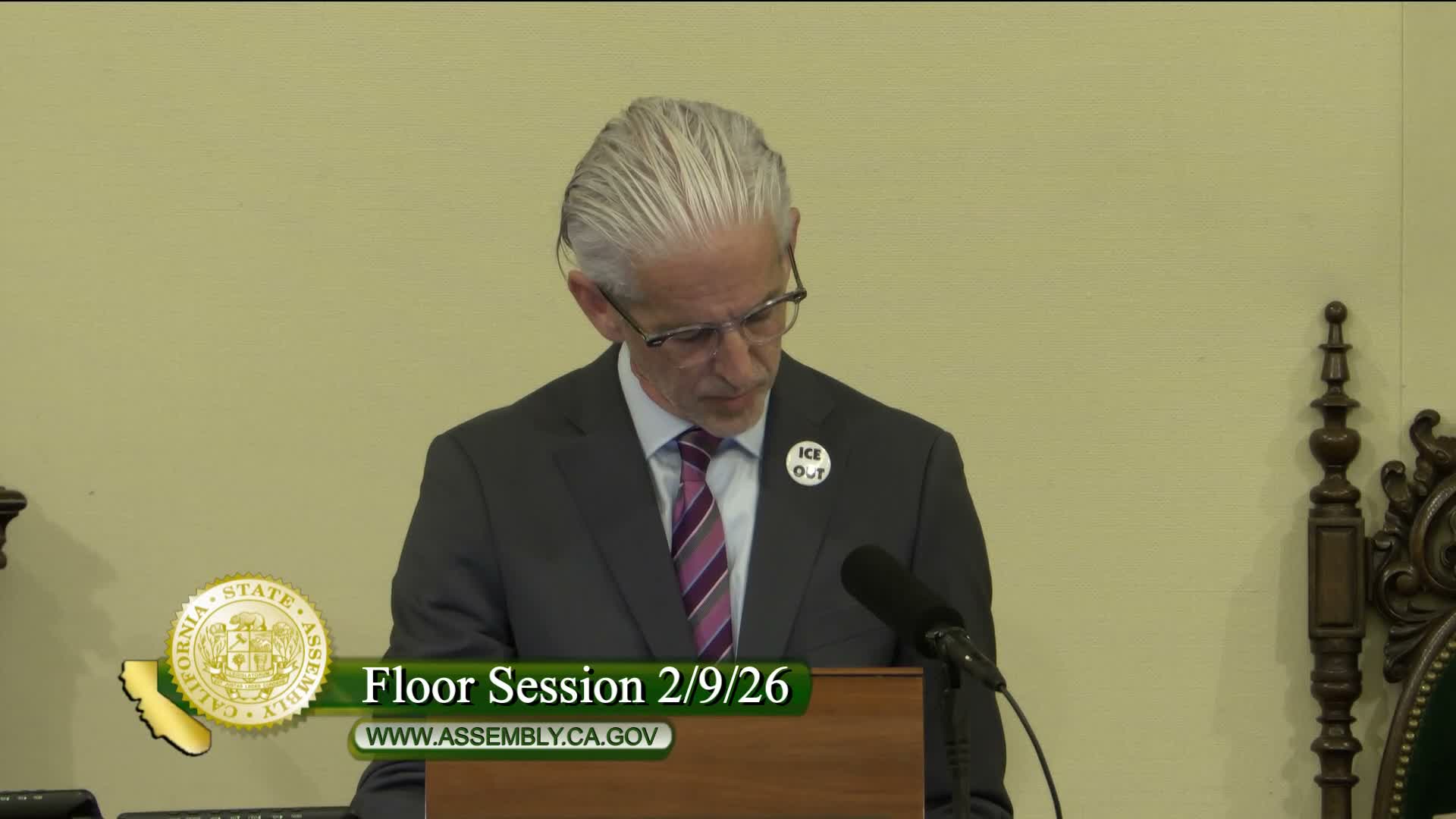
Summary
The California Assembly on Feb. 10, 2026, approved SB 106, a $90 million one-time appropriation intended to backfill federal cuts affecting Planned Parenthood health centers; the measure passed 55-10 after a floor debate that split lawmakers over transparency and prioritization of health funding.
The California State Assembly voted 55 to 10 to pass SB 106 on Feb. 10, approving a one-time $90,000,000 appropriation intended to shore up Planned Parenthood health centers after federal funding changes.
Assemblymember Gabriel, who presented the bill, said the appropriation will "provide essential funding to support women's health care and family planning services to communities across California" and described the action as a response to federal cuts: "President Trump and congressional Republicans have specifically and intentionally defunded Planned Parenthood as part of their broader attack on reproductive freedom and abortion rights." Gabriel urged colleagues to view the funding as a backfill for services such as contraception, cancer screening and other preventive care.
Opponents on the floor criticized the expedited timeline and questioned oversight. "We have not had one single public hearing, yet we are being asked to approve $90,000,000 in taxpayer funds," said Assemblymember Johnson, who urged a no vote and called for greater transparency and public scrutiny. Assemblymember De Maio and others argued hospitals and other providers facing closures had not received similar expedited support and suggested the appropriation favored a politically connected organization.
Supporters countered that Planned Parenthood provides primary and preventive care — including cancer screenings, STI testing and contraception — and that clinic closures would overload emergency departments and reduce access for underserved communities. Assemblymember Sharp Collins, speaking on behalf of the women's caucus, said funding those providers protects access for low-income patients, rural residents and communities of color.
Procedural history: earlier in the day the Assembly laid amendments on the table related to SB 106 (Ayes 41, Noes 13), and the final passage vote on the bill was recorded as 55 ayes and 10 noes. The clerk announced the measure would be transmitted to the Senate immediately following passage.
What remains: The appropriation is a one-time backfill and does not itself create a new entitlement; implementation details, including grant recipients and reporting requirements, were discussed on the floor but supporters and critics differed over how much transparency would accompany the distribution. The Assembly debate included competing claims about whether the funding shifts resources away from hospitals; supporters said the bill is targeted payment for services and will preserve clinics that serve Medi-Cal patients.
The Assembly adopted SB 106 and sent it for transmittal to the Senate. The immediate next steps are administrative implementation of the appropriation if enacted into final budget form and any oversight or reporting directions required by later actions or language in the enacted measure.