
Rules attorney flags federal preemption risk for HB 2171 property restrictions
Get AI-powered insights, summaries, and transcripts
Subscribe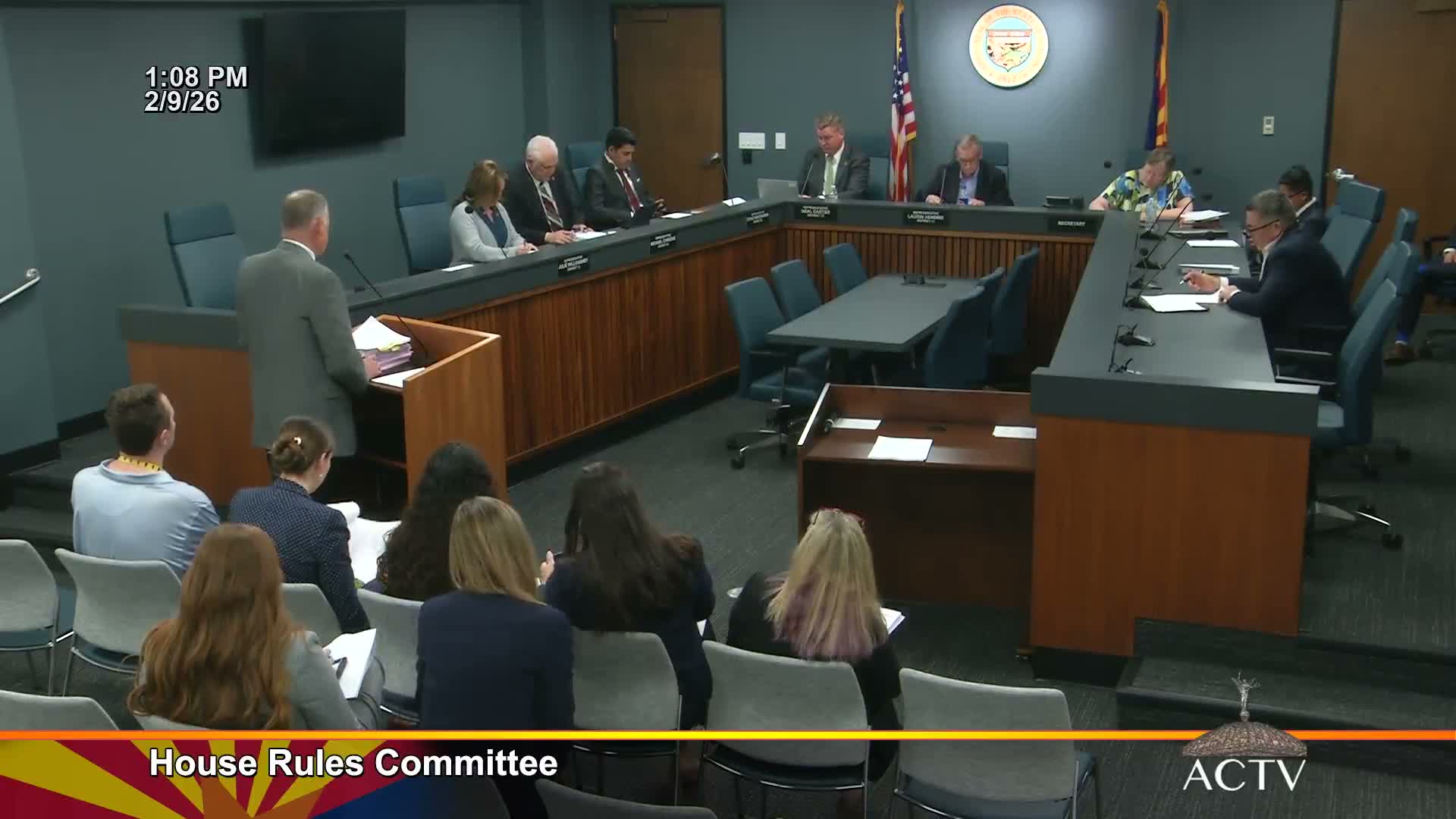
Summary
House Bill 2171 would bar certain hostile governments and associated persons from owning or possessing real property in Arizona and require divestiture; the rules attorney noted potential conflict with federal law, citing the Foreign Investment Risk Review Modernization Act of 2018, and said courts have not yet resolved similar statutes in the Ninth Circuit.
The Arizona House Rules Committee voted to recommend House Bill 2171 as constitutional and in proper form after the rules attorney warned that the bill's restrictions on property ownership by persons associated with hostile governments could raise federal preemption issues.
Tim Fleming told the committee HB 2171 "provides that certain hostile governments and certain persons associated with those hostile governments, are prevented from owning or possessing real property within the state of Arizona" and would "recreate a requirement for an existing owner to dispossess of their interest" with enforcement mechanisms and a class 4 felony penalty for violations (SEG 011–021).
Fleming said there is "always a possibility of federal law conflict" because Congress and the president have authority over relations with foreign countries. He cited the Foreign Investment Risk Review Modernization Act of 2018 (FIRRMA) as one federal statute that authorizes review and divestiture and could create preemption concerns; Fleming noted several other states have enacted similar statutes and some challenges are working through the courts, but the committee had not found Ninth Circuit case law resolving the issue (SEG 031–049).
The committee voted 5-2-1 to recommend the bill as constitutional and in proper form; Fleming said he was available to answer further questions (SEG 071–073).
What’s next. Any future litigation would likely test the interaction between state property restrictions and federal authorities under FIRRMA and the foreign affairs powers of the national government.