
Parent and Student Tell Prince William County School Board In-Person Cued-Language Transliterator Is Needed, Allege Civil‑Rights Failures
Get AI-powered insights, summaries, and transcripts
Subscribe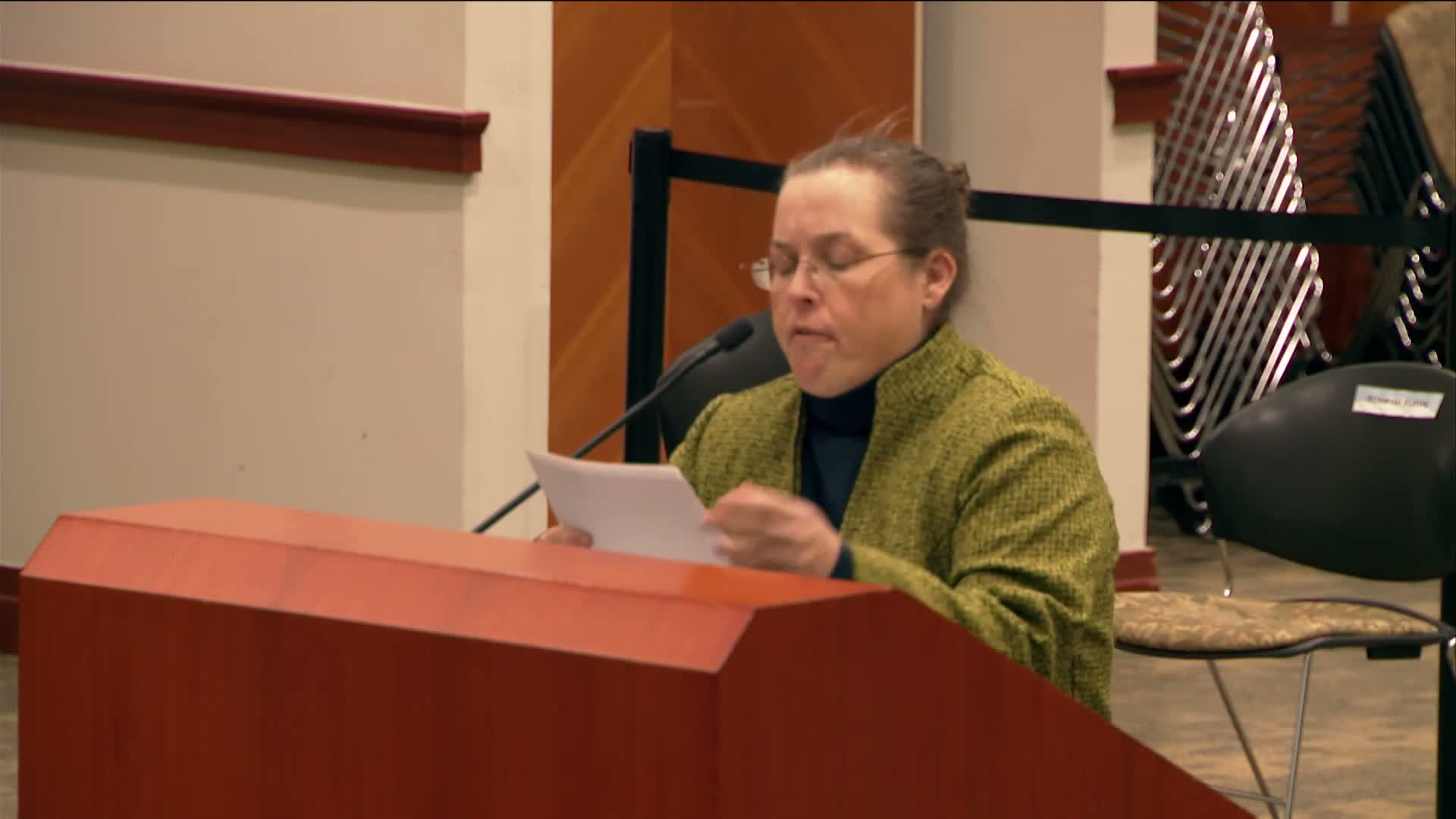
Summary
A parent and a student told the Prince William County School Board the district has denied in‑person cued language transliterators for three years, calling the practice discriminatory under ADA Title II and announcing a draft regulation and a federal civil‑rights referral; the board reiterated a Feb. 18 public hearing and a March 11 budget work session.
Elizabeth Sipkard, a parent of a student in Prince William County Public Schools, told the school board the district has denied her son an in‑person cued‑language transliterator for three years and called that denial "discrimination" under ADA Title II. She asked the board to prioritize hiring qualified, in‑person cued language transliterators in the FY2027 budget and said she has submitted a draft regulation to the clerk's office to require immediate hiring when a parent selects cued speech.
Why it matters: The commenters said the shortage of in‑person cued‑language transliterators is causing academic failure for deaf students who rely on cued speech. Elizabeth cited the district's proposed $2.4 billion budget and its $160 million wage package and questioned why the district can fund new teacher assistants, behavior specialists and vape sensors but not guaranteed in‑person access for her son.
What they said: "For 3 years you have denied him in person cued language transliterator during every school day," Elizabeth Sipkard said during public comment. She added that "an iPad with a dead battery and a room where the teacher cannot be heard is not effective." She warned that the cost of a federal civil‑rights lawsuit and compensatory damages could exceed the cost of hiring qualified staff.
A student who identified himself as Augustus (listed on the meeting sign‑up as Augustus Sipkard) described daily barriers with virtual access: "I am struggling with dead batteries, dropped Wi Fi, and screens I cannot see," he said, adding that continuously staring at a screen caused "visual fatigue and headaches" and that without an in‑person cued‑language transliterator he is failing his classes.
Asked remedy and next steps: Both speakers said they were formally submitting a draft regulation to ensure a parent's selection of cued speech is honored and to require immediate, in‑person hiring of qualified cued‑language transliterators. Elizabeth said she issued a 10‑day demand for recruitment logs and that the Virginia Department of Education had referred her civil‑rights case to the U.S. Department of Education's Office for Civil Rights for potential federal investigation.
Board process and schedule: The board's clerk reiterated that a public hearing on the FY2027 budget is scheduled for Feb. 18, 2026 (with sign‑ups required by noon that day) and that a budget work session and final markup will occur March 11, 2026, at 6 p.m. at the Kelly Leadership Building. No board action or vote was recorded at this public meeting.
Context and limitations: The speakers framed the issue as an ADA Title II communication access concern and urged that the FY2027 budget explicitly fund recruitment and hiring of cued‑language transliterators. The record at this meeting contains no staff response, no formal district commitment, and no vote; the district's staffing and procurement constraints were raised by the speakers but not addressed on the record.
What happens next: The speakers' draft regulation and the parent's 10‑day demand create a potential administrative and legal pathway that could prompt staff follow‑up before the scheduled Feb. 18 public hearing and the March 11 budget markup.