
Forsyth County staff preview federal/state legislative goals and flag property-tax reform as a threat to services
Get AI-powered insights, summaries, and transcripts
Subscribe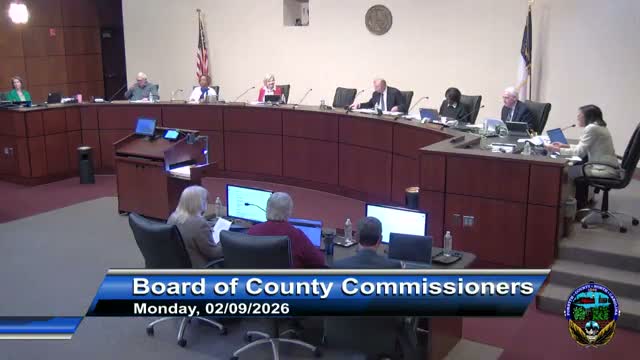
Summary
Deputy managers outlined federal and state priorities for advocacy — including funding gaps from SNAP and Medicaid changes and capital requests for airport and emergency operations — while county legal staff warned that state proposals to cap or restructure property taxes could slash county revenue (property tax currently funds ~59% of the county budget).
Forsyth County staff used a Feb. 9 briefing to ask commissioners to weigh proposed state and federal priorities, warning that recent legislative activity on property tax reform could have major consequences for local services.
Deputy County Manager Denise Price and other staff walked the board through the county’s draft legislative goals. Price said a change in federal administrative reimbursement for Food and Nutrition Services (SNAP) that shifts local recovery from 50% to 25% beginning Oct. 1, 2026, will reduce county revenue by almost $2 million a year. She also summarized implementation changes tied to Medicaid expansion redetermination that will increase county administrative duties (biannual redetermination and a possible 80‑hour monthly work requirement for some enrollees) and recommended seeking about $158,750 annually from the state to offset the reduced federal reimbursement for community engagement services.
Public‑safety and capital requests: Deputy County Manager Kyle Haney reviewed capital asks recommended for federal or state support, including roughly $11.5 million for repair and replacement work at the MRO hangar at Smith Reynolds Airport and approximately $4 million for a second hangar; staff also requested $1 million to build a dedicated emergency operations center at the public safety complex.
Public-health and procurement items previewed for the Feb. 12 meeting included a resolution authorizing an agreement with Wake Forest University Baptist Medical Center for mammography, chest X‑ray and diagnostic services not to exceed $65,000 (state funds $35,900; county $29,100) and a Dell contract for Microsoft subscriptions at about $1.113 million per year.
Property-tax alert: Gordon Watkins, the county attorney, briefed commissioners on recently formed House and Senate select committees that the staff summarized as studying property-tax “reduction and reform.” Watkins read committee language noting consideration of proposals to expand exemptions, freeze values or cap yearly increases, and warned commissioners that such steps would reduce local property-tax revenue. He noted that property taxes provide approximately 59% of Forsyth County’s budget and urged caution and outreach to the county’s legislative delegation.
Board reaction and next steps: Commissioners repeatedly urged the county to communicate to residents what county property taxes fund — schools, the sheriff’s office and other services — and to meet with state legislators. Staff asked commissioners to rank their top three federal priorities so staff can finalize materials for an upcoming trip to Washington, D.C. The board then approved a motion to go into closed session under North Carolina General Statutes 143.318.11(A)(4) to discuss economic development incentives and adjourned.
Sources and attributions: Statements and figures in this article are drawn from staff presentations and the county attorney’s briefing to the Forsyth County Board of Commissioners on Feb. 9. "Property taxes are about 59% of Forsyth County's budget," Gordon Watkins said during the briefing.