Lancaster County postpones decision on proposed 20-acre battery storage project after safety and property concerns
Loading...
Summary
After a two-hour public hearing on a proposed 20-acre battery energy storage system north of West Holdridge, commissioners postponed a vote to Feb. 24, 2026, citing substantial public safety, drainage and property-value concerns raised by neighbors and questions from staff about emergency plans and permitting.
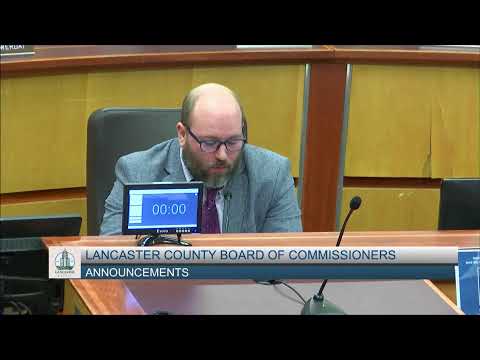
The Lancaster County Board of Commissioners on Feb. 10 heard more than two hours of testimony on a special permit application for a battery energy storage system (BESS) proposed on roughly 20 acres north of West Holdridge Street near NW 140th Street and the NPPD substation. After presentations from county staff, the applicant and multiple residents, the board announced it would delay a decision and vote on Feb. 24, 2026.
Planning staff told the board the project meets Lancaster Countyregulations for the newly listed BESS land use but recommended conditions including an approved emergency action plan, screening and a surety tied to a voluntary decommissioning plan. "The applicant's own decommissioning plan . . . showed a cost of over $7,000,000 for decommissioning," Planning and Development Services representative George Wesselhawk said, noting the planning commission had added a surety requirement as a condition.
Developer representatives described the site and safety measures. "This is about a $240,000,000 investment, estimating a useful life of 20 years. That's about $20,000,000 in property tax revenue," said applicant counsel David Levy, adding that roughly 25% of that would go to Lancaster County, about 60% to Malcolm schools and about 10% to the Malcolm fire district. The applicant said the project would be built on private land, with containers bolted to concrete pads in a gravel yard and monitored by battery management systems.
Safety consultants argued modern, containerized lithium iron phosphate systems and current testing standards reduce propagation risk and that emergency-response training is part of permit conditions. "We say a 100 foot is the is the hot zone," Paul Brown of Energy Safety Response Group told the board when describing recommended operational zones and training for first responders; he said vendor subject-matter experts would be available on-scene and that the emergency response plan and training would be finalized with Malcolm Fire and Rescue prior to building permit approval.
Neighbors urged rejection. "Primarily, it was the value of my property is going to go down," resident Kelly Jensen told commissioners, also raising concerns about noise, topography and access for emergency vehicles. Adjacent landowner Kevin Lostrow said he and his family declined a lucrative lease offer because of safety, drainage and community impacts and cited what he said were nine BESS-related fires in 2024 and 2025 as a reason to oppose the project.
The Lincoln-Lancaster County Health Department offered context on smoke and air quality. "I wouldn't categorize a specifically elevated health risk . . . breathing smoke from this as opposed to other potential types of fires that could occur in the county," said Gary Bergstrom, who recommended standard public-health precautions: avoid smoke exposure, evacuate or shelter in place when appropriate.
Commissioners asked staff about drainage mapping, whether future expansions would require additional approvals and the differing appeal fees between county and city jurisdictions. County engineering staff explained they request a 120-foot drainage easement where USGS blue-line streams appear on maps and recommended Corps of Engineers review if jurisdictional status is uncertain.
Applicant counsel noted further state-level review: stand-alone battery projects require Power Review Board review, which can include full hearings and intervention by utilities. The applicant also said some technical details, including exact battery model and final sound modeling, would be resolved during permitting and prior to building permits. The applicant's site plan and noise mitigation may be altered based on subsequent permitting steps, the company said.
After discussion the board announced it would take no vote that day and scheduled the final decision for the Feb. 24, 2026 meeting; the board said no further public testimony would be taken but the public could observe the Feb. 24 hearing remotely.
The public hearing record includes written opposition letters from Paul Godert, Jason Hepler and the letter submitted by Kelly Jensen.