
Docket roundup: 252nd District Court resets, deferred probations and a bond increase tied to drug-patch monitoring
Get AI-powered insights, summaries, and transcripts
Subscribe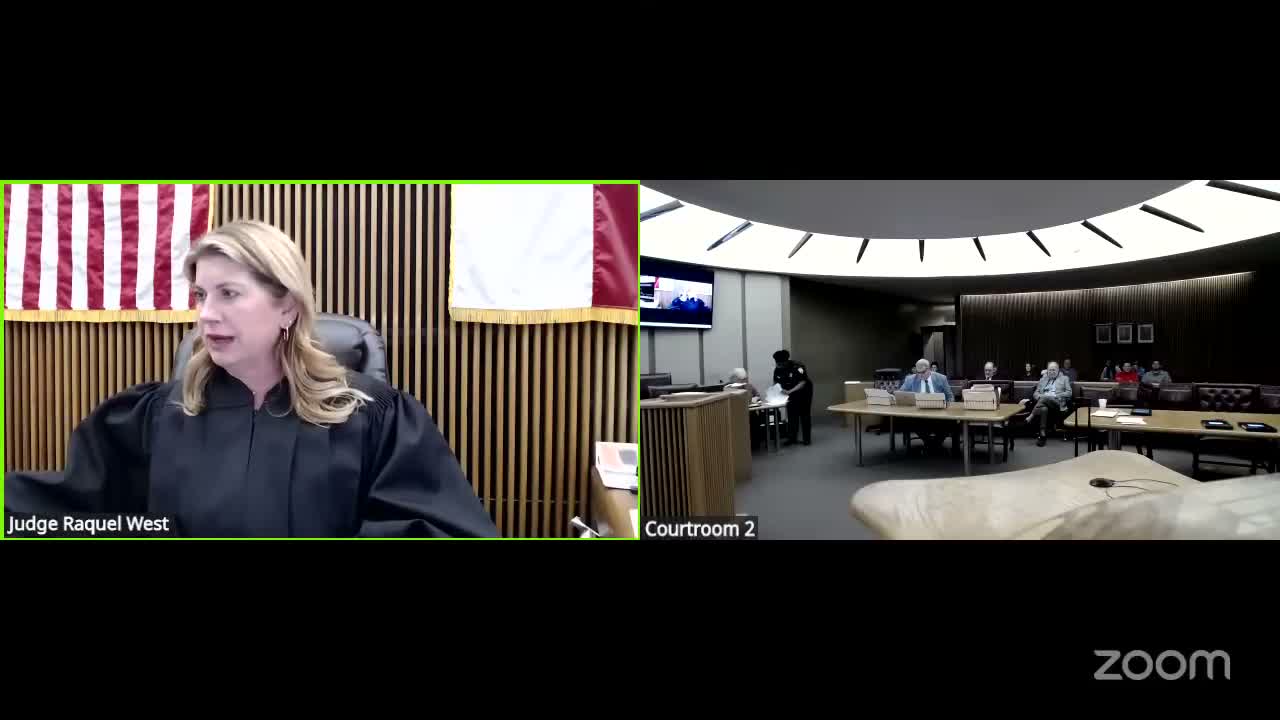
Summary
The 252nd District Court heard an extended docket of initial appearances, plea agreements and sentencing resets. The judge approved multiple five-year deferred-probation arrangements, signed a dismissal after an identity-theft review and raised one bond to $35,000 with a drug-patch condition; GPS monitoring was removed for a supervised defendant.
The 252nd District Court convened for a lengthy docket call during which the presiding judge handled numerous initial appearances, plea agreements and sentencing resets.
Among the outcomes, the court followed plea agreements and deferred proceedings that placed multiple defendants on probation: Crystal Latula was placed on five years’ probation in two separate matters and ordered to pay $500 in each case; Isis Craddles received deferred proceedings with five years’ probation and an order to pay $472.26 in restitution while being prohibited from childcare employment and from unsupervised contact with children. In several initial-appearance matters the judge reset cases about 30 days to give defendants a chance to hire counsel and explicitly instructed defendants who cannot pay to consult with at least three attorneys and report back to the court.
The court also addressed pretrial compliance. On a drug-test refusal and related conduct, the judge found that a defendant identified earlier in the docket as Diana Paul had violated bond conditions and raised her bond to $35,000. The judge imposed a condition that, if she makes bond, she must have a drug patch applied within 24 hours of release and maintained with periodic testing; the judge warned that if test levels do not decline the bond could increase further. As the judge stated during that exchange, “I’m going to raise that bond to $35,000. A condition of that bond, if you make it, is that you have to have a drug patch put on within 24 hours of your release from custody.” (Presiding judge)
The calendar included a judicial-review matter in which the court considered GPS-monitoring compliance for a defendant on supervision. Probation reported repeated technical problems with the monitoring unit and the defendant described unstable housing but steady employment. After weighing the supervision concerns and the defendant’s recent efforts, the court ordered the GPS-monitoring device removed while stressing the importance of close contact with probation and updated reporting of residence and employment.
The court also signed a dismissal for Patrick Brooks after reviewing documentation supporting his claim of identity theft; the judge noted the arrest will remain on record but advised Brooks he may be entitled to expunction and to consult counsel about next steps.
Throughout the docket the judge repeatedly warned defendants that failing to follow court orders — for example, not meeting the three-attorney consultation requirement or refusing ordered tests — could lead to raised bonds, revocation of community supervision, or, if probation terms are violated later, imprisonment under the applicable sentencing ranges discussed on the record.
No specific statutory citations were read into the record during the matters summarized here; the judge and attorneys referred generally to “state jail felony” designations and to federal immigration consequences when admonishing noncitizen defendants. The session included routine scheduling and trial-setting decisions, including several trial settings and requests for status resets to allow the state to issue subpoenas or to obtain records.
The court session closed after the judge directed clerks and probation staff to provide particular paperwork to defendants (reset notices, pre-sentence report instructions and probation contact information) and reminded all present to silence phones and be prepared for their scheduled time in court.
The presiding judge (unnamed in the transcript) and court staff managed a docket that combined procedural resets, plea-following sentencing orders, supervisory decisions (including GPS removal), bond adjustments and at least one dismissal following investigative review. Several cases will return to the court for sentencing or further hearings on the dates set by the clerk.